Essential Oils Toxic to Dogs List
Discover which essential oils are toxic to dogs. A clear, vet-first guide for pet owners covering high-risk oils, symptoms, and safer home alternatives.
By the EssentialTail Team — pet owners, Wellness Advocates & doTERRA enthusiasts
If you have ever stood in your kitchen, diffuser in hand, staring at a shelf of little brown bottles and wondering which one is safe for the paws padding across the floor, you are not alone. The direct answer is that many common essential oils are toxic to dogs, including Tea Tree (Melaleuca), Wintergreen, Pine, Peppermint, Eucalyptus, and most citrus oils like Lemon and Wild Orange. Clove, Cinnamon, and Oregano are also on the high-risk list. Toxicity usually enters through the skin, by ingestion, or from inhalation when a diffuser runs heavily in an unventilated room the dog cannot leave. The safest path is simple: never apply a pure oil to your dog, never let them lick it, and always ask your veterinarian before you diffuse anything in your shared space. Even a “dog-friendly” oil can cause trouble if the concentration is wrong or your individual dog reacts badly, so veterinarian guidance is non-negotiable.
The High-Risk Category, Oils Most Dangerous to Dogs
When I first started learning about essential oils, I was genuinely surprised that a few drops of something so pleasant-smelling could send a dog to the emergency vet. Through many conversations with fellow dog owners and lots of reading, I have come to understand that toxicity is not a distant, theoretical risk, it is real and it happens quickly. The table below groups twenty of the most commonly mentioned hazardous oils into categories so you can recognise them at a glance.
| Risk Category | Oils to Avoid | Why They Are a Concern |
|---|---|---|
| Phenolic & “Hot” Oils | Oregano, Thyme, Clove, Cinnamon Bark | Extremely irritating to skin and mucous membranes; liver stress is a known risk with repeated exposure. |
| Mint & Camphoraceous Oils | Peppermint, Spearmint, Wintergreen, Eucalyptus | High in menthol or methyl salicylate; dogs are far more sensitive to these compounds than humans are. |
| Citrus Oils | Lemon, Wild Orange, Lime, Grapefruit, Bergamot | Can cause gastrointestinal upset and dermal irritation; phototoxic when applied topically and then exposed to sun. |
| Tree & Conifer Oils | Tea Tree (Melaleuca), Pine, Black Spruce, Siberian Fir | Tea Tree is especially dangerous, even a modest topical amount has been linked to tremors and neurological signs in dogs. |
| Other High-Risk Singles | Wintergreen, Birch, Ylang Ylang, Cassia, Clary Sage | Each carries specific compounds that dogs metabolise poorly; Wintergreen and Birch are particularly concerning because they behave like aspirin in the body. |
What I have found most helpful is printing a short list of the oils we keep in the house and sticking it inside the diffuser cupboard. If a spill happens, there is no time to Google. You scoop up the bottle, the label, and the dog, and you call your veterinarian or an animal poison control centre immediately. No home remedy, no waiting, professionals handle it, period.
What to Do If Your Dog Is Exposed (and How to Keep the House Safe)
None of us ever expects a dog to knock a bottle off the counter or lick a spill, but it happens in seconds. Having a clear mental checklist takes the panic down a notch and gets you moving in the right direction. Here is the order I follow, based on advice from our own vet and what I have seen work in real-life owner communities:
- Stop the exposure immediately. Move the dog to fresh air if the oil was diffused in a closed room. If it is on the skin, wipe off as much excess as you can with a dry paper towel first, water can spread an oil faster so I never wet the area straight away.
- Grab the bottle and note the exact name. Veterinarians need the full label, including the Latin species, to know what compounds they are dealing with. Snap a photo with your phone.
- Call your veterinarian or a pet poison control hotline right now. Do not wait for symptoms. Do not search for a DIY milk-or-water remedy. Time matters and the right answer comes from a medical professional who knows your dog’s weight and health history.
- Do not induce vomiting unless a vet tells you to. Some oils can do more damage if they come back up, so this decision belongs to the person with the medical degree.
- Give the vet the full story. How much was ingested or spilled, how long ago, what you have already done, and any change in behaviour, even small details help.
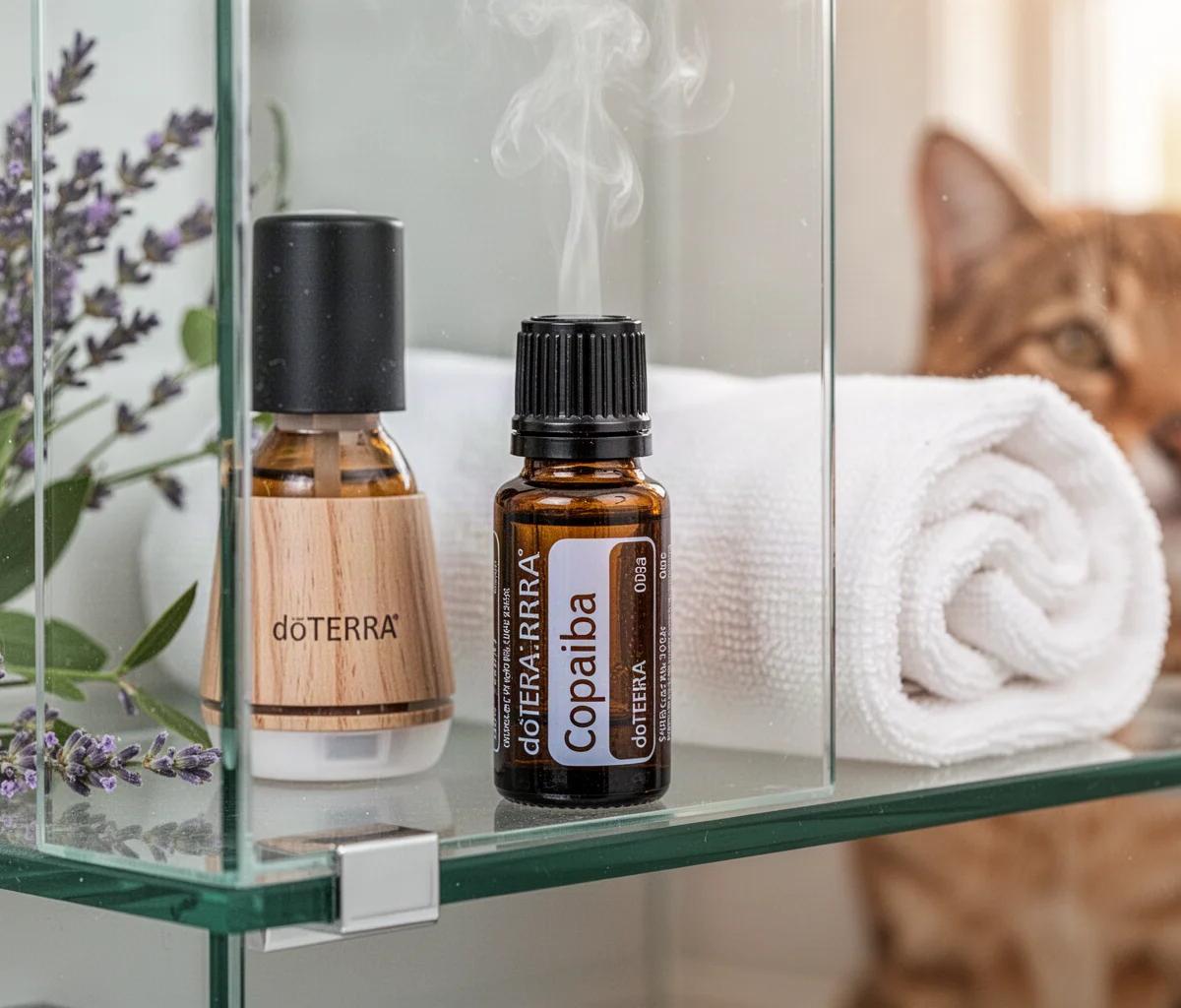
Once the urgent moment passes, most of us want to make sure it never happens again. I have moved our entire oil collection to a high, latched cabinet in the laundry room, far from the kitchen and the dog’s favourite napping spots. When I diffuse, I choose the gentlest, most-researched oils I can find, Copaiba and Frankincense are two of the few I feel comfortable using in a well-ventilated living area, and even then I keep the sessions short and the door open so our dog can always walk away. For anyone who wants to take the guesswork out of it, doTERRA has developed specific animal-focused blends that consider the unique sensitivity of our pets, products like TerraShield are formulated for outdoor companionship and are widely discussed among horse and dog owners I know, always with the caveat of vet approval first. Another gentle single I often see recommended by experienced dog owners for a soft, restful atmosphere is Roman Chamomile; its aroma is mild and it is frequently included in blends that focus on calm surroundings.
It is also worth noting that many pet households keep a few foundational wellness products around for the humans, and if you are building your own collection, a Lifelong Vitality Pack is something you can take yourself while keeping every bottle securely closed and stored away from curious muzzles. The principle is simple: you look after your own routine, and you protect your dog by choosing what enters the shared air with extreme care.
Related reading
- Essential Oils Toxic to Dogs, The Complete List
- Is Tea Tree Oil Safe for Dogs
- Essential Oils Toxic to Puppies
Frequently Asked Questions
Can I diffuse any essential oil safely around my dog? No oil is automatically safe just because it is natural. Even the mildest oils should be diffused in a well-ventilated room with an open door so your dog can leave whenever it wants. Always get your veterinarian’s green light before diffusing anything new, and watch your dog for panting, drooling, or trying to leave the room.
What symptoms tell me my dog may have reacted badly to an oil? Look for drooling, pawing at the mouth, vomiting, diarrhoea, trembling, unsteady walking, lethargy, or sudden behaviour changes. Because oils absorb fast, you may also notice redness or a rash where the oil touched the skin. If any of these appear, skip the internet and head straight to your vet.
Is Tea Tree oil really that toxic to dogs? Yes, Tea Tree (Melaleuca) is one of the most concerning oils for dogs. Just a modest amount applied to the skin has been associated with tremors, weakness, and neurological signs in canines. I keep our bottle locked away and never diffuse it in a home with a dog present.
Are doTERRA’s animal-specific products automatically safe for my dog? They are formulated with companion animals in mind, which is an important step beyond generic human oils, but they are not a free pass. There is a good reason the label still says to consult your veterinarian: every dog is an individual, and factors like age, breed, and existing health conditions change the picture.
What should I keep in my home instead of the high-risk oils? Look for the gentlest options like Copiaba, Frankincense, and Roman Chamomile, and only diffuse them at low intensity in a room your dog can leave. Remember that the reason to choose doTERRA is the CPTG testing and purity standard, knowing exactly what is (and is not) in each bottle is real peace of mind when you share your space with a four-legged family member.
This is the list I wish someone had handed me the day I brought my first dog home. Knowing which oils are toxic does not mean living in fear, it means you can make a smart choice fast, keep your dog safe, and still enjoy a beautiful-smelling home. The key is the veterinarian, every time.
This content is for general information only and is not veterinary advice. Always consult a qualified veterinarian before using essential oils in a home with animals.