Gentle Ways to Calm an Anxious Dog
Wondering how to create a calmer home for your anxious dog? Learn what many dog owners try, which oils to avoid, and why the vet always comes first.
By the EssentialTail Team — pet owners, Wellness Advocates & doTERRA enthusiasts
Has your dog ever paced the hallway during a thunderstorm, whined at the first pop of a firework, or pressed against you with trembling legs when a visitor arrived? If you are reading this, you are probably watching your own dog struggle through moments like that and feeling a little helpless yourself. The direct and most important answer I can give you, from one dog owner to another, is this: no essential oil will cure anxiety in a dog, and any routine that involves scent around a pet must start with your veterinarian. What many of us do explore, under that veterinary guidance, is whether a gentle, well-ventilated home aroma can help build a feeling of calm in the spaces our dogs share with us. It is never a replacement for training or a vet’s advice, but for the humans in the house, a peaceful scent ritual can set a quieter tone, and some owners notice their dogs settle into that quieter rhythm alongside them.
A Scent Routine That Starts with Your Vet
Before you open a single bottle, call your veterinarian. Every dog is an individual, and your vet knows your dog's health, breed sensitivities, and any current medications. What I have learned over time is that the safest path is to let the vet guide which aromatic plants are even worth considering, if any, and then to keep the experience almost absurdly light. This means diffusing a tiny amount in a large, airy room your dog can leave at any time. If your dog cannot walk away, do not diffuse. Always watch for signs of discomfort: lip licking, yawning, walking away, or watery eyes. If you see any of them, stop the diffuser and let fresh air in. The goal is never to treat the dog directly; it is to create a human environment that simply feels a little gentler.
Oils You Might Discuss with Your Vet, and Others to Avoid Completely
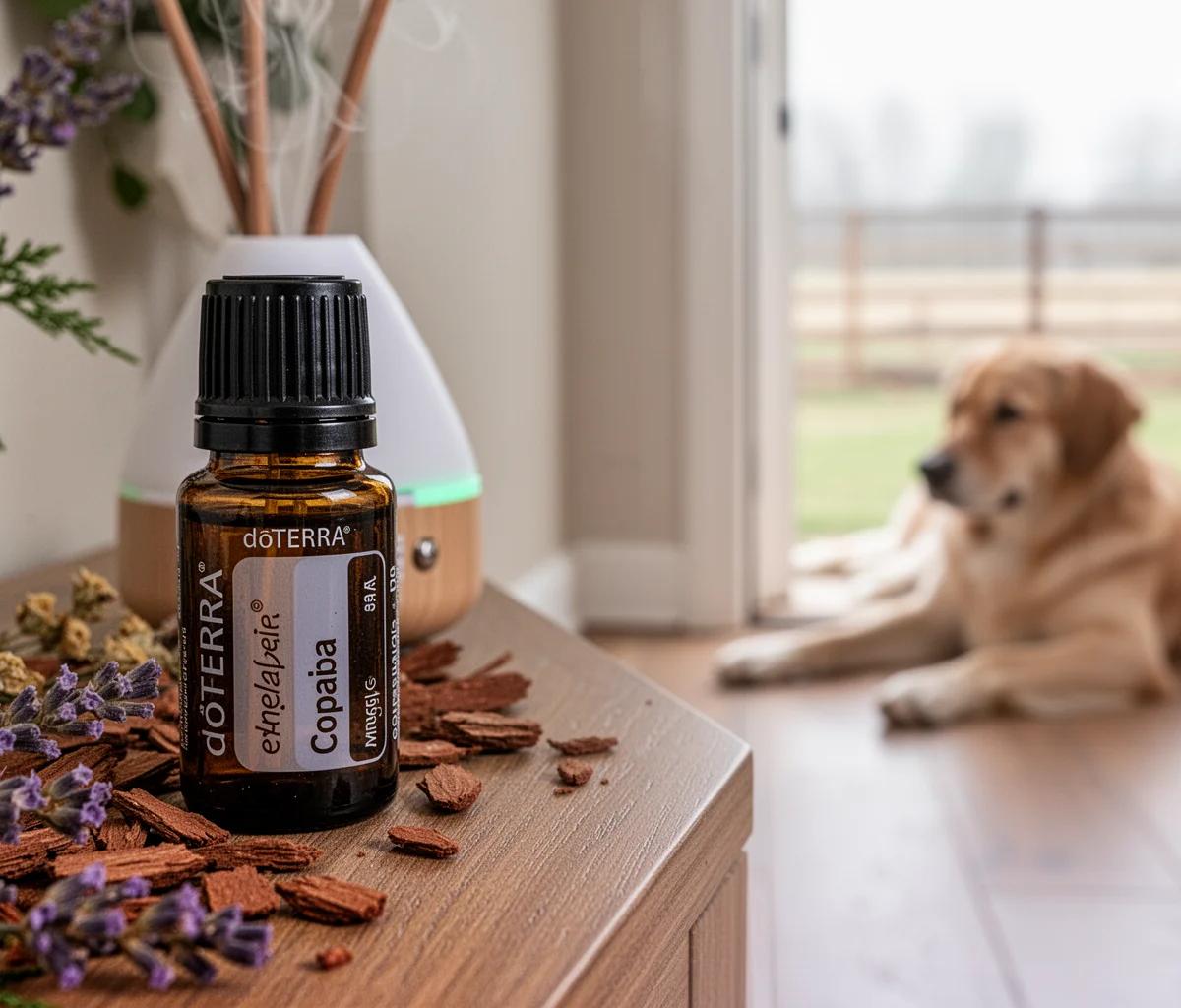
In my own conversations with other dog owners, I have heard a few names come up repeatedly, not as recommendations, but as the ones they ask their vets about. Some vets may be open to discussing certain gentle oils like Lavender, Frankincense, or Copaiba because they have relatively mild aroma profiles and a long history of human use. Other owners mention Roman Chamomile or Vetiver as ones they have researched. I want to be crystal clear: I am not telling you any of these are safe for your dog. I am telling you these are the names I hear dog owners discuss with their vets. Your veterinarian has the final word, every single time.
What is not up for debate is the list of oils that are widely known to be dangerous for dogs and must be avoided. Tea Tree (Melaleuca) is at the top of that list, it can be toxic to dogs even in small amounts. Wintergreen, Oregano, Thyme, Clove, Cinnamon, and the mints like Peppermint and Spearmint should stay far away from your dog. Eucalyptus and most citrus oils, including Lemon and Wild Orange, are also broadly considered risky. If you spot any of these in a blend, keep the bottle closed around your dog and ask your vet. A quick reference table can help you remember which ones to avoid.
| Oils Widely Considered Risky for Dogs | Why They Are a Concern |
|---|---|
| Tea Tree (Melaleuca) | Known to be toxic; can cause serious symptoms even in small amounts. |
| Wintergreen | Very high in a compound that can overwhelm a dog's system. |
| Oregano, Thyme, Clove | Phenol-rich oils that are harsh on canine livers. |
| Peppermint, Spearmint | Can cause respiratory and gastrointestinal distress. |
| Lemon, Wild Orange | Citrus oils are generally too strong for a dog's sensitive nose and skin. |
A Step-by-Step Approach to Building a Peaceful Home
If your vet gives the green light to explore a gentle home aroma, this is the process many experienced owners follow. It is deliberately slow and puts the dog’s comfort above everything else.
- Secure the space first. Use a baby gate to keep your dog out of the room while you are setting up, and always keep essential oil bottles in a closed cabinet well out of reach.
- Choose one, vet-approved oil. If your vet says okay to Frankincense or Lavender, select that single oil. Blends introduce too many unknowns, so start with simplicity.
- Diffuse lighter than you think necessary. Use a small, cool-mist diffuser with a fraction of the amount you would use for yourself. The aroma should be barely noticeable to you, which means it is strong enough for a dog's far more sensitive nose.
- Introduce the scent with a wide-open exit. Turn the diffuser on in a large room with good airflow and an open door. Let your dog discover the room on their own terms. Never close them in with the diffuser.
- Watch for a quiet, positive change, not a drugged calm. You are not looking for your dog to collapse into sleep. A gentle sniff of the air, a softer gaze, or simply choosing to settle down is what you are watching for. If they leave the room, do not coax them back in.
When owners ask me what they should use for themselves while supporting their dog, I often point them toward the emotional aromas in doTERRA’s own line. Many people find the grounding aroma of the Balance blend or the reassuring warmth of Console comforting for their own nerves during a storm, and a calmer owner is one of the best gifts you can give an anxious dog. If you are interested in building a broader home wellness toolkit, the Home Essentials Enrollment Kit includes several gentle, popular oils and a diffuser, all at the member price, and always as a choice for you, the human, to support a peaceful atmosphere.
Related reading
Frequently Asked Questions
What essential oil is safe to calm a dog? No essential oil can be declared universally safe for calming a dog. Your veterinarian is the only person who can advise on what, if anything, might be appropriate for your particular dog’s health and breed.
Where do you apply calming oil on a dog? I never apply essential oils to my dog’s skin or coat, and you should not either unless your vet has given you an explicit, dilution-specific instruction for a particular concern. Diffusion into a shared, ventilated space is the only route some vets will cautiously discuss.
Can I diffuse peppermint oil around my dog? Peppermint is widely considered unsafe for dogs and can cause respiratory distress. I keep all mints, including Peppermint and Spearmint, far away from my dog and recommend you do the same.
A calm dog starts with a calm owner and a trusted veterinarian. The gentlest thing you can offer is a safe, predictable home where your dog feels protected, not a scented solution that promises more than it can deliver.
Related reading
This content is for general information only and is not veterinary advice. Always consult a qualified veterinarian before using essential oils in a home with animals.