Which Essential Oils Are Dangerous for Cats
Many essential oils are toxic or even fatal to cats. Learn which oils to avoid, why cats are at risk, and how to keep your feline safe at home.
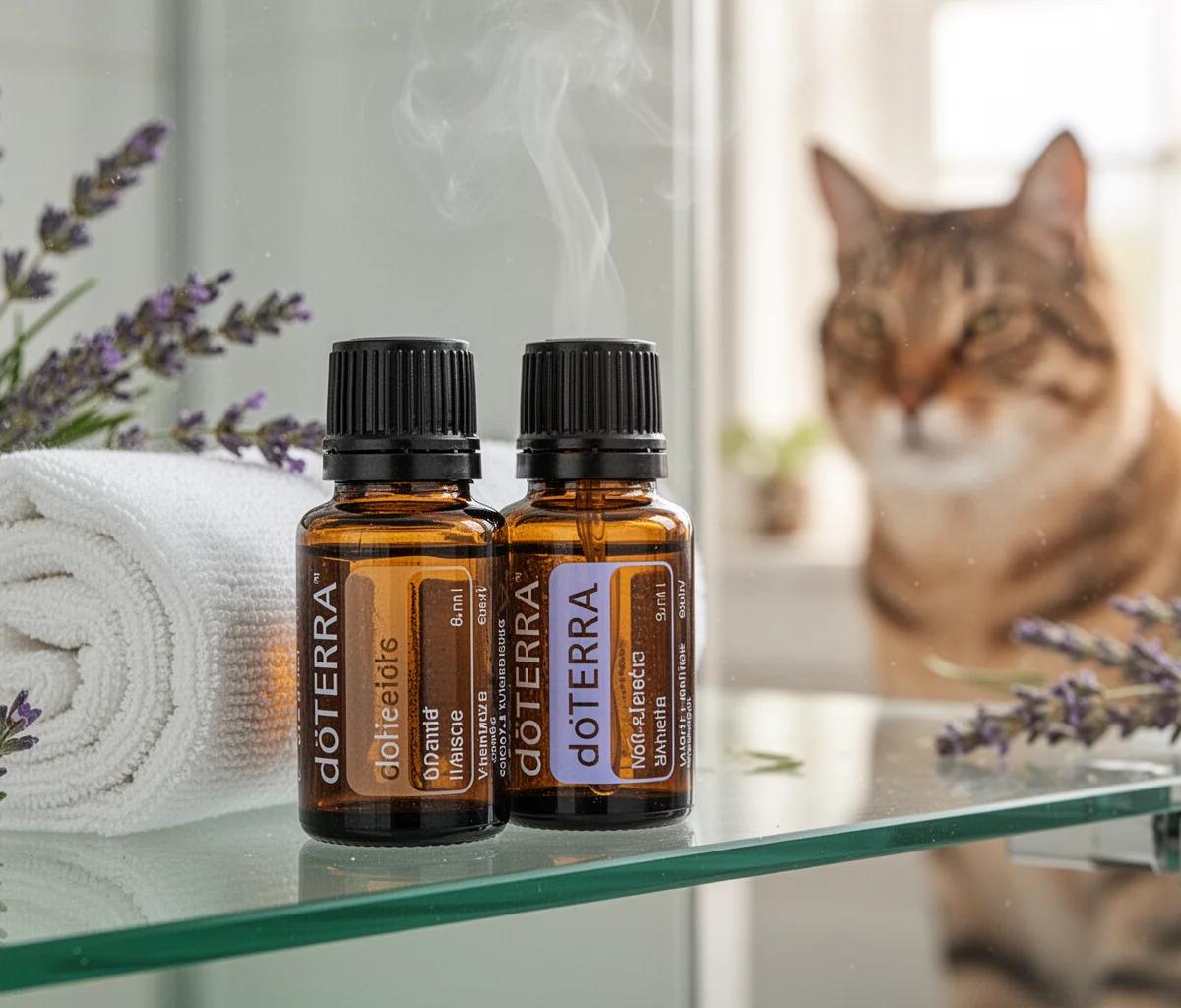
By the EssentialTail Team — pet owners, Wellness Advocates & doTERRA enthusiasts
The short answer is: many essential oils are dangerous for cats, and some can be fatal. Cats lack a liver enzyme (glucuronyl transferase) that other animals use to break down certain compounds, so oils that seem safe for dogs or humans can build up to toxic levels in a cat's body. The highest-risk oils include Tea Tree (Melaleuca), phenolic "hot" oils like Oregano, Thyme, Cinnamon and Clove, most citrus oils (Lemon, Wild Orange, Bergamot, Grapefruit, Lime), Peppermint and other mints, Eucalyptus, Wintergreen and Pine. Even passive exposure, a diffuser running in a room the cat cannot leave, or residue on skin the cat licks during grooming, can cause liver damage, respiratory distress or death. If you are reading this because you want to enjoy essential oils at home without risking your cat's health, you are doing exactly the right thing: understanding the danger is the first step to keeping them safe.
Why Cats Are Uniquely Vulnerable to Essential Oils
Cats metabolise the world differently than we do. That missing enzyme means phenols, terpenes and other oil compounds linger in their liver instead of being cleared, and toxic levels build quickly. Add to that a cat's grooming instinct, anything that lands on fur ends up in the mouth, and their tiny body weight, and you see why even a small amount can be catastrophic. Cats also have extremely sensitive respiratory systems, so diffused oils can irritate airways or worse. This is not about one "bad" oil; it is about feline biology and a long list of compounds their bodies simply cannot handle. Always consult your veterinarian before introducing any essential oil into a home with cats, and follow doTERRA's product labels and safety guidance.
The Most Dangerous Essential Oils for Cats
The table below lists oils that are especially toxic to cats. This is not exhaustive, when in doubt, keep oils away from your cat.
| Oil | Why Dangerous |
|---|---|
| Tea Tree (Melaleuca) | Extremely toxic; even small amounts cause tremors, vomiting, liver failure |
| Oregano, Thyme | High in phenols; severe liver and mucous-membrane damage |
| Cinnamon, Clove | Phenolic "hot" oils; burns, liver toxicity, respiratory distress |
| Citrus oils (Lemon, Wild Orange, Bergamot, Grapefruit, Lime) | Contain d-limonene; vomiting, drooling, liver stress |
| Peppermint, Spearmint | Gastrointestinal upset, central nervous system effects |
| Eucalyptus | Respiratory irritation, salivation, vomiting |
| Wintergreen | High in methyl salicylate; aspirin-like toxicity, organ failure |
| Pine | Respiratory and liver toxicity |
Never assume an oil is safe for cats because it is "natural" or you have used it on yourself. Natural does not mean safe for felines.
How Cats Are Exposed (and How to Prevent It)
Cats encounter oils in three main ways:
Diffusion. A diffuser fills the air with tiny droplets. If the cat is in an enclosed room and cannot leave, it is inhaling those compounds continuously, and its delicate respiratory system takes the hit. Always diffuse in a well-ventilated space the cat can walk away from, and never lock a cat in a room with a running diffuser.
Topical contact. Oils on your hands, clothes or furniture transfer to the cat's fur, and grooming brings them into the mouth and digestive tract. Cats lick themselves constantly, so residue becomes ingestion. Wash your hands after handling oils, and keep bottles and blends out of paw's reach.
Direct application or ingestion. Never apply essential oils directly to a cat's skin, never add them to food or water, and never let a cat lick or chew a bottle. Cats are curious, and a spill or knocked-over bottle can be a veterinary emergency.
What to Do If Your Cat Is Exposed
If your cat has licked, touched or been exposed to an essential oil and shows any of these signs, drooling, vomiting, tremors, difficulty breathing, lethargy, stumbling, contact your veterinarian or an animal poison control centre immediately. Do not wait, do not try a home remedy, do not "watch and see." Time is critical. Have the oil bottle or name ready so the vet knows exactly what the cat encountered.
Related reading
- Tea Tree Oil and Cats, A Serious Danger
- Essential Oils Safe for Cats to Smell
- Essential Oils Toxic to Cats
Frequently Asked Questions
Are any essential oils actually safe for cats?
The safest answer is: very few, and only under direct veterinary guidance. Most oils carry some risk, and because cats cannot metabolise many compounds, the default is caution. Never assume an oil is safe without your vet's explicit approval.
Can I diffuse oils in my home if I have a cat?
You can, but only in a well-ventilated space the cat can leave freely, and never with high-risk oils like Tea Tree, citrus, Peppermint or phenolic oils. Even then, watch for any signs of distress, watery eyes, sneezing, hiding, and stop immediately if you see them. Ask your veterinarian first.
What if the oil touched my cat's fur?
Bathe the area gently with mild dish soap and lukewarm water to remove the oil before the cat grooms itself. If the cat has already licked the area or shows any symptoms, call your vet right away.
Is Tea Tree oil the most dangerous?
Tea Tree (Melaleuca) is extremely toxic to cats and often cited in poisoning cases, but phenolic oils (Oregano, Thyme, Cinnamon, Clove) and others on the list above are equally dangerous. None of them belong near a cat.
Does doTERRA have products specifically safe for cats?
doTERRA offers some products formulated for animals, but always check the label and consult your veterinarian before using anything on or around your cat. Purity matters, doTERRA's CPTG testing ensures you know exactly what is in the bottle, but purity does not override feline biology.
Conclusion
Cats and essential oils do not mix the way cats and dogs do. Many oils we love are toxic to felines, and the consequences can be severe or fatal. When in doubt, keep oils away from your cat, diffuse only in spaces they can leave, and always ask your veterinarian first. Their safety is worth the caution.
When you're choosing oils for a home with animals, what's actually in the bottle matters, which is why many pet owners start with doTERRA for its CPTG purity and testing, always with your veterinarian as the first port of call.
Related reading
This content is for general information only and is not veterinary advice. Always consult a qualified veterinarian before using essential oils in a home with animals.