Are doTERRA Oils Safe for Cats Review
Wondering which doTERRA oils are risky around cats? Our honest review of purities, cautions and 4 oils to avoid diffusing entirely, vet-first.
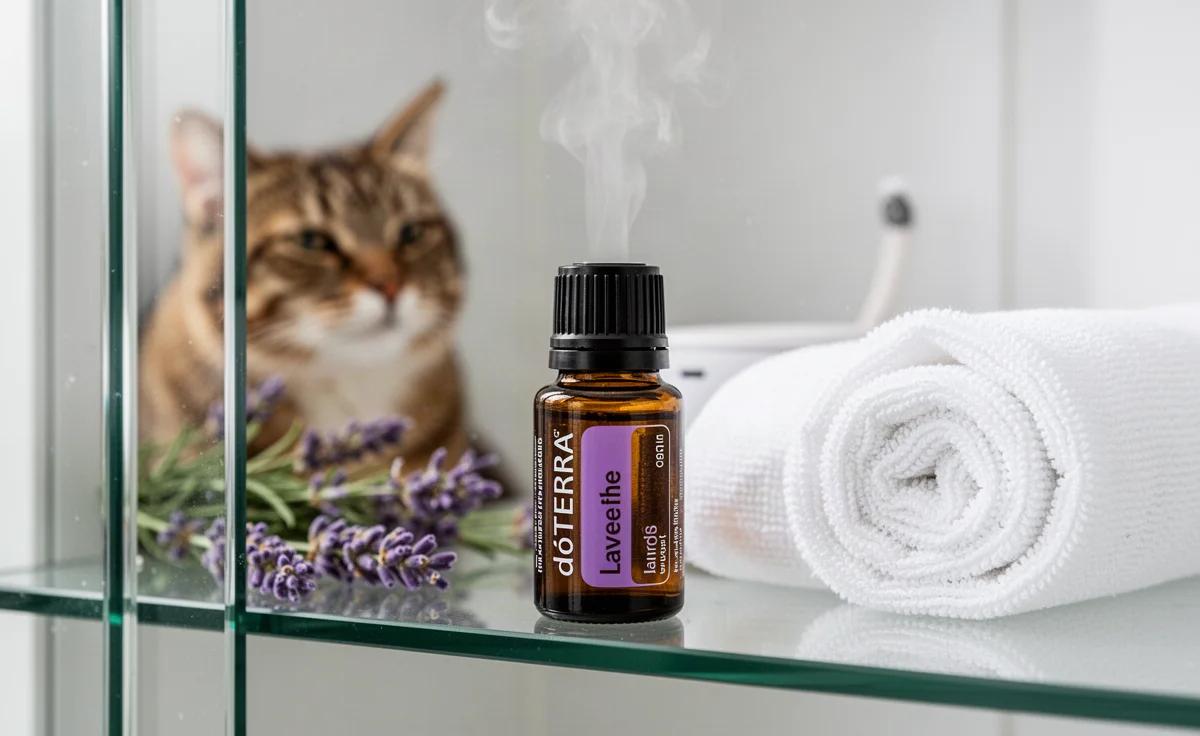
By the EssentialTail Team — pet owners, Wellness Advocates & doTERRA enthusiasts
If you have ever stood in front of your diffuser with a bottle in one hand and a curled-up cat on the sofa, you have probably asked the exact question we are reviewing today. Our verdict, right up front: doTERRA oils can be part of a home that includes cats, but only under strict, veterinarian-first conditions, and many popular oils should not be diffused where a cat lives. This is not a yes-or-no product; it is a yes, but category. For most cat owners, the honest recommendation is to treat every oil as guilty until your vet says otherwise.
What Makes Cats Different
Cats are uniquely sensitive to essential oils because their livers lack glucuronyl transferase, the enzyme needed to metabolise many compounds found in plants. That is not a general caution, it is a physiological fact. What smells gentle to us can build up in a cat’s body.
doTERRA’s Certified Pure Tested Grade standard means every batch is tested for purity, but purity does not equal safety for animals. A pure oil can still be toxic. The ASPCA Animal Poison Control Center and the Pet Poison Helpline both list essential oils as a common household hazard for cats, especially when diffused continuously in closed rooms.
| Oil | Our Verdict for Cat Homes |
|---|---|
| Lavender | Occasionally diffused in open rooms only, never on the cat |
| Frankincense | Low-aroma option some owners keep very light, vet approval needed |
| Cedarwood | Mentioned by owners, but still a wood oil requiring caution |
| Tea Tree (Melaleuca) | Avoid entirely in cat homes, even diffused |
| Citrus oils (Lemon, Wild Orange) | Avoid entirely in cat homes |
| Peppermint, Eucalyptus, Wintergreen | Avoid entirely in cat homes |
Review, Our Honest Take
What we like is that doTERRA labels every bottle clearly and publishes its testing standards. For an owner who wants to know exactly what is in the bottle, that transparency helps. Oils like Roman Chamomile and Vetiver are ones we see owners mention most often for calm, shared spaces, always diffused lightly and never applied to the animal.
What gives us pause is how easily a routine becomes a risk. A diffuser in the same room where a cat sleeps, a spill licked from the floor, or an oil applied to your hands before petting can undo every careful step. The oils that make doTERRA popular for people are often the exact ones cats cannot process.
If a cat ever licks spilled oil or reacts oddly after exposure, the AVMA’s guidance is clear: contact a veterinarian or an animal poison control centre immediately. There is no home remedy step, and we will not invent one.
A helpful starting point for deeper reading is our article on Safe doTERRA Oils for Cats, What I Know, which walks through the reasoning in more detail.
How We Would Use Oils in a Cat Home
- Ask your veterinarian before diffusing anything around a cat.
- Choose only oils your vet has approved for your specific cat and home.
- Diffuse in a room the cat can leave freely, with ventilation.
- Keep every bottle behind a closed door, and never apply oil to your own hands before petting.
Common Mistakes Cat Owners Still Make with Diffusers
The most dangerous mistakes are rarely dramatic — they are ordinary habits that seem harmless. One we see often: running a diffuser near a closed door, assuming the cat will simply leave if bothered. Cats do not always avoid discomfort the way we expect; a sleeping cat may stay in the room, breathing the mist for hours because leaving means abandoning a favourite resting spot. Another frequent error is wiping oil spills with a paper towel and tossing it in a bin the cat can reach. A curious cat may dig through rubbish and chew that towel, getting a concentrated dose directly into the mouth. And many owners forget that essential oils linger on fabric: a diffuser session in an armchair, followed by a cat sleeping on that chair the next day, still exposes the cat through skin contact and grooming.
A third mistake is using oil-containing cleaning sprays on surfaces a cat walks across, then licking its paws. Even a tiny amount of citrus or peppermint residue on a kitchen counter can accumulate over days of normal grooming.
A Practical Weekly Checklist for Multi-Pet and Cat Households
If your veterinarian has approved a short list of oils, build safety into your routine with a simple checklist rather than relying on memory. Before each diffusing session, check three things: the room has an open window or door for airflow, the cat is not confined to that room by a closed door or a baby gate it cannot jump, and the diffuser is positioned where the cat cannot knock it over. After the session, wipe the diffuser reservoir and surroundings, then wash your own hands before touching the cat or its food bowls. If you diffuse in a bedroom and the cat sleeps there at night, stop four hours before bedtime to let the mist clear before the cat settles in. If you use multiple oils, keep a small written card next to the bottles listing only the vet-approved ones for your cat, so a visitor or family member never guesses. When in doubt during a busy day, skipping the session is always the safer default.
Frequently Asked Questions
Which doTERRA oils are absolutely unsafe around cats? Tea Tree (Melaleuca), citrus oils like Lemon and Wild Orange, Peppermint, Eucalyptus, Wintergreen, Pine, Cinnamon, Clove, Oregano and Thyme are the ones we treat as strict avoid-in-cat-homes. The ASPCA and Pet Poison Helpline consistently flag these botanical families for feline sensitivity.
Can I diffuse doTERRA Lavender if my cat is in another room? Only your veterinarian can approve that for your home. Even then, the room should be ventilated, the diffusion short, and the cat must be able to leave. Avoid treating “another room” as automatically safe, especially in an open-plan home.
Is doTERRA safe for cats because it is pure? No. CPTG testing confirms purity and quality for human use, but a pure essential oil can still be toxic to a cat. Purity and species safety are two completely separate questions.
What should I do if my cat licks a spilled oil? Contact your veterinarian or an animal poison control centre without waiting. Do not try a home remedy, and do not wait to see symptoms. Speed matters more than anything else.
Our Conclusion
In our analysis, doTERRA oils deserve respect in a cat home, not automatic trust. The quality is real, but quality does not override feline physiology. For owners willing to work closely with a veterinarian and keep every session short, light and escapable, a few oils can fit into the home; for everyone else, the safest choice is none at all.
This content is for general information only and is not veterinary advice. Always consult a qualified veterinarian before using essential oils in a home with animals.