Safe doTERRA Oils for Cats, What I Know
Wondering if any doTERRA oils are safe for cats? Here is what I have learned as a pet owner about the risks, the cautions, and the need to ask your vet first.
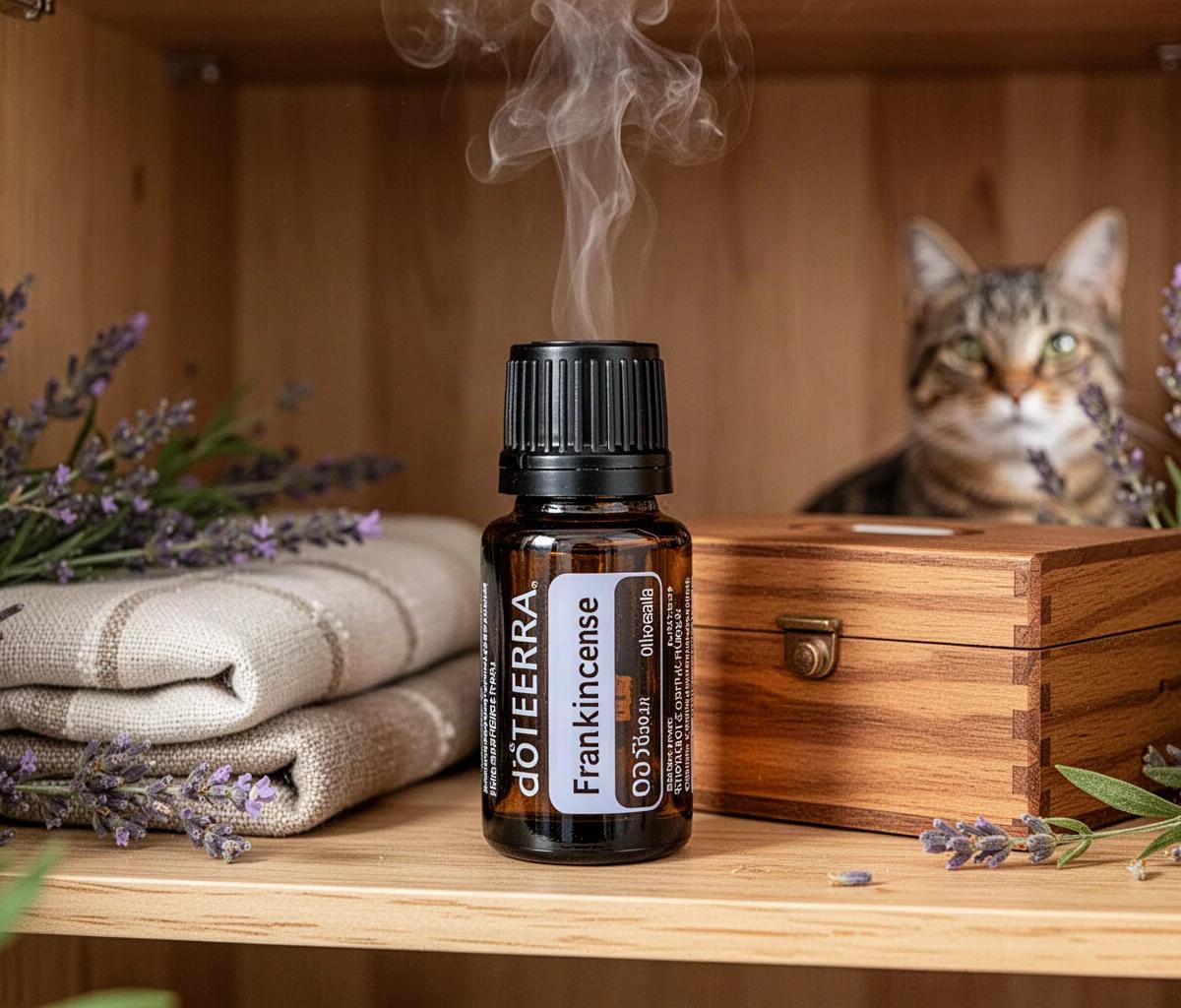
By the EssentialTail Team — pet owners, Wellness Advocates & doTERRA enthusiasts
If you are reading this, you are probably standing in your kitchen, oil bottle in hand, looking down at your cat and wondering, "Can I even use this around you?" I have been exactly there. So let me give you the direct answer before we go any further: there is no doTERRA oil I can call "safe for cats" on my own authority. Cats metabolize many essential oil compounds differently than we do, and some oils can be dangerous or even fatal to them. The only person who can tell you what is appropriate for your specific cat is your veterinarian. What I can do is share what I have learned about which oils people ask about most, why caution matters so much with cats, and how to think about using doTERRA in a home with a feline friend.
Why Cats Are Different, and Why I Stay Cautious
Cats lack certain liver enzymes that help process many compounds found in essential oils. This means substances that are mild to us can build up in a cat's system over time. That is not an opinion, it is simply how their biology works. So when someone asks me which oils are "safe," I always turn the conversation toward which oils I personally avoid entirely around cats.
Here is a quick comparison of how I think about a few common doTERRA oils in a cat household:
| doTERRA Oil | My Personal Rule Around Cats | Why |
|---|---|---|
| Lavender | Use only in a room the cat can leave, diffused lightly | Aroma is beloved by owners, but I never apply it to a cat |
| Frankincense | Same rule, never on the cat | It is a classic grounding oil, but caution still wins |
| Tea Tree | I do not use it in a home with cats at all | Widely recognized as especially risky for cats |
| Wild Orange | I avoid diffusing around cats entirely | Citrus oils are on my personal "no" list for felines |
The pattern is simple: I do not put oils on my cat, and I never trap her in a room with a diffuser running. If she cannot walk away, the diffuser stays off.
How I Approach Oils in a Home with a Cat
What I have come to understand is that the real question is not "which oil is safe?" but "how do I use oils responsibly in a shared space?" Here is the step-by-step approach that has worked for us, always with our veterinarian's input.
- Ask the vet first. Before introducing any new aroma into the home, I check with our veterinarian and follow doTERRA's own guidance.
- Choose the room carefully. If I diffuse anything, it is in a large, well-ventilated space, never a small bedroom with the door closed.
- Let the cat choose. Our cat always has an open door and another room to go to. If she leaves, I turn the diffuser off.
- Keep every bottle closed and stored away. Cats are curious, and a knocked-over bottle is an emergency, not a chore.
- Use only very small amounts. No numbers, no recipes, just far less than I would use in a home without pets. The veterinarian guides the specifics.
- Watch and adjust. If my cat seems uneasy or leaves the room, that is the end of the experiment for the day.
None of this makes an oil "safe for cats." It just makes me a more careful owner. For a deeper look at how diffusion works in a cat household, I wrote more in this guide on diffusing essential oils safely around cats.
When friends ask me which specific oils I feel more comfortable having in a home where a cat is present but never touched, I mention a few doTERRA favorites many owners know for their aroma. Frankincense is one I reach for in my own space, always in a room away from the cat. Cedarwood has a woody, grounding scent that many pet owners recognize. Roman Chamomile is another gentle aroma people often ask about. Vetiver is rich and earthy, and many of us enjoy it for our own routines. Copaiba is one I have used in my personal diffuser, never around the cat. Lavender is perhaps the most frequently mentioned oil in any pet household conversation, and I understand why: the aroma is lovely. But lovely does not mean safe for a cat, so I keep it out of her space. For a broader view of which oils raise questions for cat owners, I also put together this piece on essential oils safe for cats doTERRA.
What draws me to doTERRA is not a health promise for my cat. It is the CPTG testing standard, the purity and quality control that doTERRA builds into every bottle. That matters to me because it means I know exactly what I am bringing into my home. It does not change how I behave around my cat, but it does give me confidence in the product itself.
Related reading
Frequently Asked Questions
Is lavender oil safe to diffuse around cats?
I do not diffuse lavender in a room where my cat is present without her being able to leave. Lavender is widely loved by owners, but that does not make it safe for a cat's body. Ask your veterinarian before diffusing any lavender around your cat.
Can I put doTERRA oils on my cat's fur or skin?
No, I never apply essential oils to my cat. Cats groom themselves constantly, which means anything on their fur can end up in their mouth. This is a veterinarian question, not a do-it-yourself question.
What should I do if my cat licks or spills an essential oil?
Contact a veterinarian or an animal poison control center immediately. Do not wait, do not try a home remedy, and do not guess. This is an emergency, and a professional needs to guide you right away.
Are doTERRA's pet-specific products safer for cats?
doTERRA's dedicated animal products are designed with animals in mind, but I still consult my veterinarian before using any product around my cat. The product label and your vet's guidance come first.
Can I use a diffuser in a house with a cat?
A diffuser is not automatically safe for an animal. My rule is simple: the cat can always leave the room, the space is well ventilated, and the veterinarian has approved the general approach. Otherwise, the diffuser stays off.
My Honest Conclusion
Living well with a cat and enjoying doTERRA oils in your own space is possible, but it is a life of caution, not shortcuts. No oil is safe for cats simply because it is natural, and the only person who can answer for your cat is your veterinarian. I choose doTERRA for the purity and quality, then I use those oils in a home where my cat always comes first.
This content is for general information only and is not veterinary advice. Always consult a qualified veterinarian before using essential oils in a home with animals.