Essential Oils Safe for Cats doTERRA
Wondering which doTERRA oils you can use around your cat? Learn why most oils are risky for felines, how to diffuse responsibly, and which products to avoid.
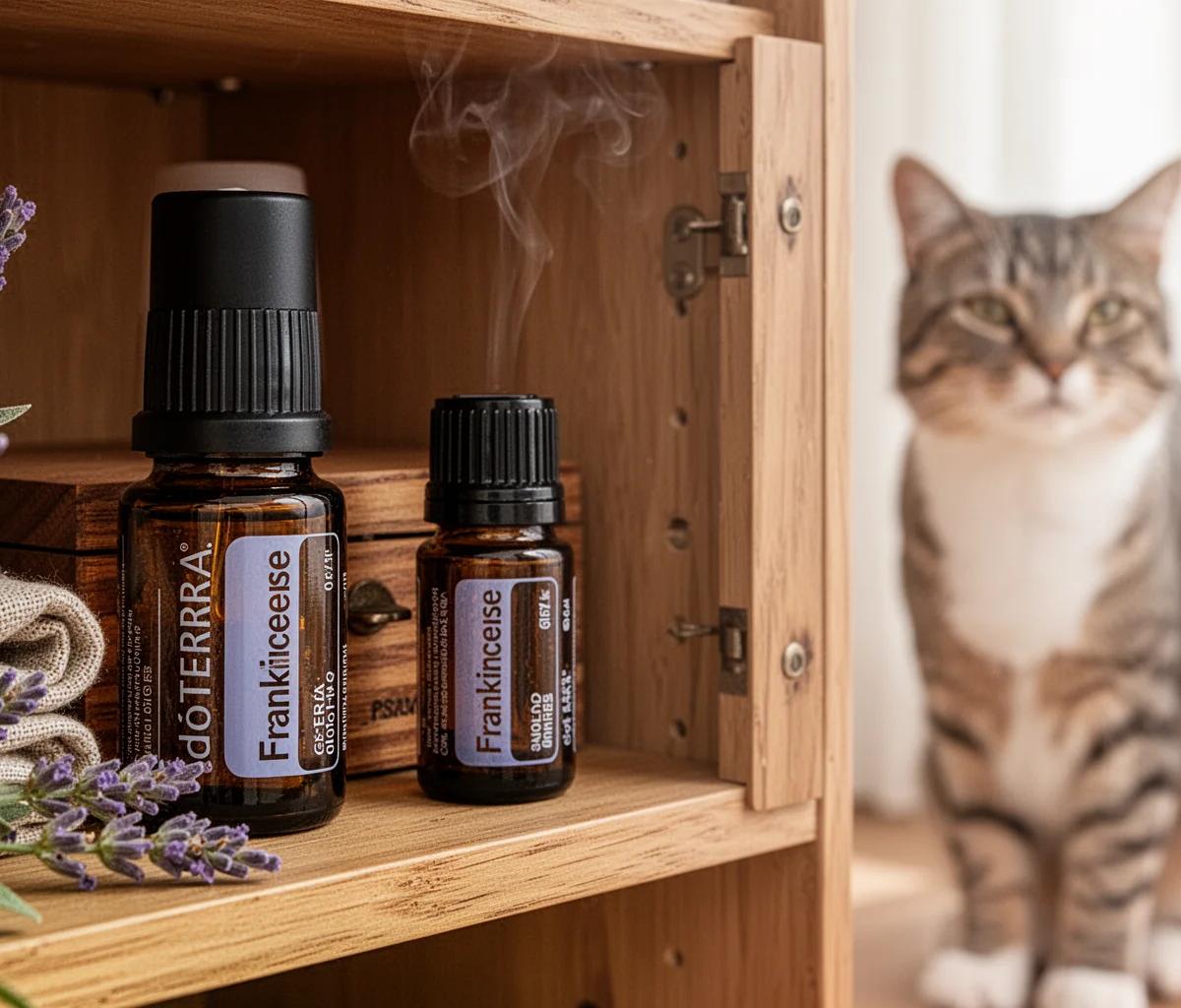
By the EssentialTail Team — pet owners, Wellness Advocates & doTERRA enthusiasts
Last week, a friend came over and immediately got a worried look when she saw my diffuser. “Is that thing on right now?” she whispered, glancing at my cat dozing on the windowsill. That little moment sums up exactly why you are probably reading this.
The short answer is that no essential oil should be considered universally safe for cats, and many common doTERRA oils are outright dangerous for them. Cats lack a key liver enzyme that helps break down certain compounds in essential oils, making even small amounts potentially toxic. Oils like Tea Tree, citrus oils, peppermint, eucalyptus, and most “hot” spice oils should never be used on, near, or around a cat. If you want to diffuse in a home with cats, the safest approach is extreme caution, a well-ventilated room the cat can leave freely, and a conversation with your veterinarian before you begin. What I can share with you is what the risks are, which oils are definitely off the table, and how I personally think about enjoying doTERRA aromas while living with a feline friend.
Understanding the Real Risk to Cats
I know it can feel confusing at first. We love natural products, we love our cats, and we want both in our lives. But a cat’s liver simply cannot process many of the same plant compounds that humans and even dogs handle without issue. This means an oil that smells lovely to you can build up in your cat’s system and cause serious harm, especially if inhaled over time or licked off fur.
The oils that worry me most are the ones many people keep right on their shelves. Tea Tree has been involved in numerous confirmed feline toxicity cases and I would never use it in a home with cats. The same goes for Oregano, Thyme, Cinnamon, and Clove. Citrus oils like Lemon, Wild Orange and Bergamot are also on my personal no-diffuse list around cats, along with Peppermint, Eucalyptus, Wintergreen, and Pine. These are not close calls or grey areas, these are the oils I genuinely believe every cat owner should keep far away from their pet.
A Calmer Home, Safely
So where does that leave someone who still wants a calm, pleasant-smelling home? For me, it means shifting my focus to how I use oils rather than hunting for a “safe for cats” list that will never truly exist. I diffuse only in rooms my cat does not frequent, and I keep the door open so air moves. I put the diffuser up high, out of reach, and I use far less oil than I would in a cat-free space, think a very light, barely-there aroma at most.
When I do want a gentle, grounded scent, the oils I reach for are ones many experienced owners feel more comfortable having in a well-ventilated home, always with a vet’s approval. Frankincense has a soft, resinous warmth that never feels overwhelming. Lavender is familiar and calming, but I keep it light and always monitor. Copaiba is another one I have used sparingly for its subtle, grounding presence. Cedarwood has a quiet, outdoorsy scent that many dog owners love too, and in very light diffusion it is something I have felt comfortable with personally. Vetiver is deep and earthy, and a single drop in a large, open room is all I have ever used around my cat.
These are not endorsements of safety. They are simply the oils I know some thoughtful, veterinarian-guided cat owners choose to incorporate into their routines, always with extreme moderation. I cannot stress enough how important it is to talk to your own vet before diffusing anything around your cat.
Step-by-Step, How I Diffuse Around My Cat
- Ask my veterinarian first. I bring a list of the exact oils I am considering and get a professional opinion based on my cat’s age, weight, and health. No article replaces this step.
- Choose a large, open room with good airflow. A cramped bedroom with a closed door is a no-go. I want my cat to have fresh air circulating at all times.
- Use a water-based ultrasonic diffuser and run it sparingly. I stick to short bursts, ten or fifteen minutes, not hours of continuous mist. A light aroma, never a heavy cloud.
- Keep the diffuser physically inaccessible. High shelf, cord tucked away, nothing a curious cat can knock over or lick.
- Ensure the cat can leave freely. Doors stay open. If my cat walks away, I take that as feedback and stop diffusing for the day.
Oils I Never Diffuse Around Cats
| Oil / Oil Type | Why It Concerns Me |
|---|---|
| Tea Tree | Documented feline toxicity cases; I consider it a hard no. |
| Citrus oils (Lemon, Wild Orange, Bergamot, Grapefruit, Lime) | Limonene and other compounds cats struggle to process. |
| Peppermint and other mints | Menthol and related compounds can overwhelm a feline system. |
| Eucalyptus | Known respiratory irritant for many small animals. |
| Oregano, Thyme, Cinnamon, Clove | High in phenols that cats simply cannot metabolize. |
| Wintergreen, Pine | Strong aromatic compounds with significant risk. |
If you are reading this and feeling a bit discouraged, I understand. When I first learned how many oils were off the table for my cat, I felt the same way. But what I came to appreciate is that a cautious, minimalist approach actually deepened my relationship with the oils I do use, I started paying more attention to the quality of a single bottle rather than how many I owned. That is where doTERRA’s CPTG testing standard genuinely matters to me: knowing exactly what is in the bottle helps me have more informed conversations with my veterinarian about the specific constituents present. You can read more about which scents some owners explore in Essential Oils Safe for Cats to Smell and how to think about the broader household environment in Essential Oils Safe for Cats Around the House.
When it comes to finding your way as a doTERRA member while keeping your cat safe, my best advice is simple: lean into the non-aromatic products. The doTERRA Lifelong Vitality Pack is something I use for my own daily wellness, and it has zero impact on the air my cat breathes. The Aroma Essentials Collection gives me a few gentle staples I use sparingly and only with my vet’s knowledge. If you are just starting out and want to try doTERRA at the member price, the Basic Kit is a low-commitment place to begin, and nothing in the kit obligates you to diffuse around your cat.
Related reading
- Essential Oils Safe for Cats Around the House
- DoTERRA Oils and Cats What to Truly Avoid
- Diffusing Oils Safely Around Cats
Frequently Asked Questions
Can I use a diffuser in a room my cat never enters?
Personally, I think this is the safest approach, but even residual scent can drift under doors, so I still keep it light and well-ventilated. Talk to your vet before assuming any room is truly isolated.
Are any doTERRA oils officially labeled as safe for cats?
No. doTERRA’s animal products are formulated chiefly with dogs and horses in mind, and no single oil comes with a guarantee of feline safety. The label is your first guide, and your veterinarian is your final authority.
What should I do if my cat has a bad reaction to a diffused oil?
Turn off the diffuser, move your cat into fresh air immediately, and call your veterinarian or an animal poison control hotline. Do not wait, do not try home remedies, and do not search online for an antidote. Act fast and let a professional handle it.
A Gentle Reminder
Living with a cat and loving essential oils is not always simple, but it also taught me to slow down and listen more carefully to the animal I share my home with. When I honor my cat’s sensitivity, I am not missing out, I am choosing a quieter, more intentional way of living well together. That, more than any single bottle, is what I value most.
This content is for general information only and is not veterinary advice. Always consult a qualified veterinarian before using essential oils in a home with animals.