Best Calming Oil for Dogs in Thunderstorms
Discover the best calming oil for dogs during thunderstorms and how to use aromatherapy responsibly in a pet-friendly home, vet-first. A practical guide with.
By the EssentialTail Team — pet owners, Wellness Advocates & doTERRA enthusiasts
If your dog pants, paces, or hides the moment the sky rumbles, you know exactly how helpless a thunderstorm can make you feel. You want to comfort them, but you also don’t want to accidentally make things worse. So when someone asks us about the best calming oil for dogs during thunderstorms, our answer is always the same: start with your veterinarian, then think of aromatherapy as one gentle part of a calm, prepared home, never as a fix for your dog’s fear.
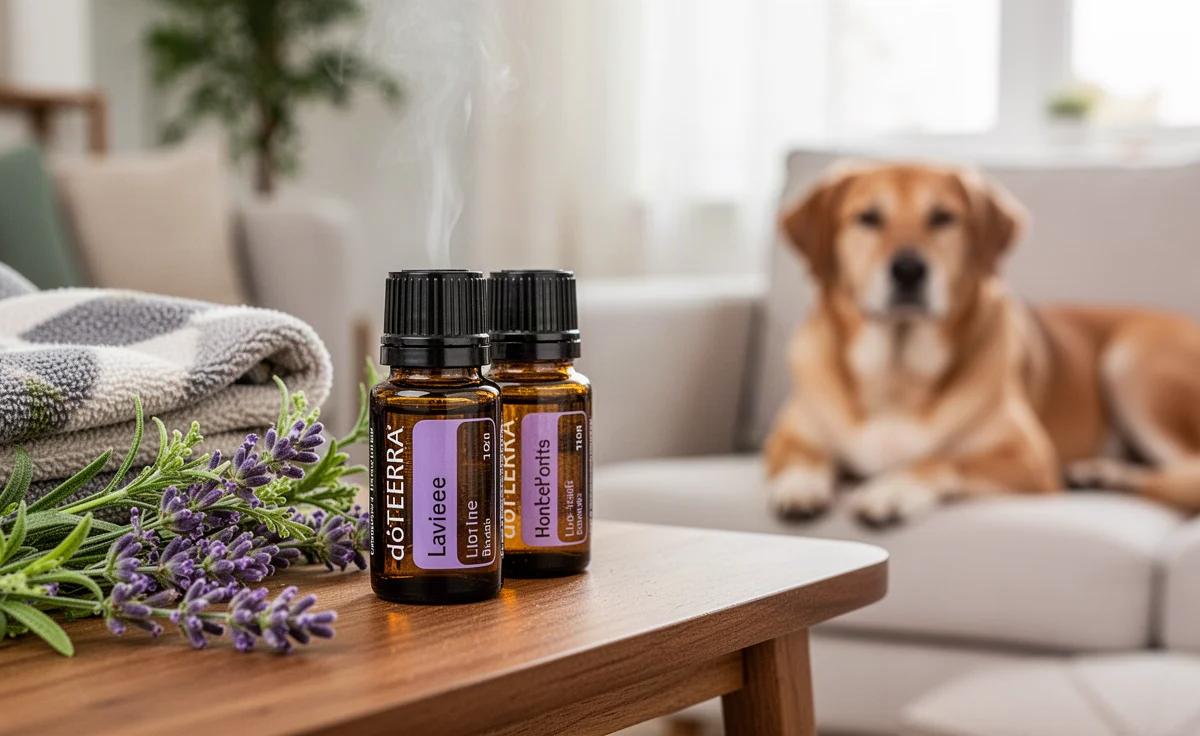
None of us on the team would ever claim an essential oil will stop storm anxiety in a dog. What we can share, owner to owner, is what experienced pet households often do: keep the environment predictable, use soft lighting, close the curtains against lightning flashes, and introduce calming aromas through a diffuser only after the vet has said it’s okay for your particular dog. The oils many dog owners reach for include Lavender, Roman Chamomile, Copaiba, and Vetiver, all valued for their soft, grounding aroma profiles rather than any promised effect on the animal.
Choosing a Calming Oil for Your Dog
Because a dog’s sense of smell is far stronger than ours, what feels light to us can feel intense to them. That’s why we keep the selection short and simple, and why we never suggest applying oils directly to a dog’s fur or skin without veterinary guidance.
| Oil | Aroma Character | Why Pet Owners Often Choose It |
|---|---|---|
| Lavender | Soft, floral, sweet | Familiar, gentle scent used in many calm-home routines |
| Roman Chamomile | Mild, apple-like, quiet | Often preferred by people who find lavender too heavy |
| Copaiba | Light, warm, woodland | Subtle grounding note that blends well with florals |
| Vetiver | Deep, earthy, very grounding | Popular as a base note in calm-evening rituals |
We tend to favor single oils like these over strong blends during storms, purely because simpler aromas are easier to keep gentle in a room where a stressed dog is present.
How We Diffuse Responsibly Around Dogs
This step-by-step approach is the one we share most often with friends who ask how we handle aromatherapy in a home with pets.
- Ask the vet first. Every dog is different, and your vet knows your dog’s health history better than anyone.
- Keep the room open and ventilated. Never diffuse in a closed space, and make sure your dog is completely free to walk away.
- Diffuse briefly and lightly. A 30-minute session is already plenty. Continuous diffusion in a small room is not something we recommend around animals.
- Never apply undiluted oil to the dog. Even diluted topical use is a conversation for your veterinarian, not a guess from a blog.
- Watch your dog’s body language. If they leave the room, tremble, or seem unsettled, turn the diffuser off and let the air clear.
If you’re exploring calming oils across the wider topic, we’ve written a longer companion piece on Calming Essential Oils for Anxious Dogs Guide that covers the same vet-first approach in more detail.
Common Mistakes Owners Make When Using Calming Oils Around Dogs
The biggest mistake we see is assuming that “natural” means “harmless at any amount.” It doesn’t. Another common error is diffusing in a small bathroom or laundry room where the dog can’t actually leave, even if the door is technically open. Dogs often stay near their owner out of loyalty, not comfort, so a stressed dog may remain in a heavily scented room simply because you are there. That means the “walk away” safety rule quietly fails.
We also see owners layer too many interventions at once: a diffuser, a calming collar, a thunder shirt, and a new supplement all on the same night. If the dog reacts badly, you won’t know which variable caused it. Introduce one thing at a time, and keep notes on what you observe.
Preparing the Room Before the Storm Arrives
If you only reach for the diffuser once thunder starts, you’re already late. Calming routines work best when they’re familiar, so set up the room before storm season begins. Choose a quiet interior space, close the curtains, and play soft background noise like a fan or low-volume classical music to blur sudden thunder cracks. If you use a calming oil, diffuse it during calm evenings first so the scent becomes part of the normal environment, not a surprising new element that arrives only when the sky turns dark. That way, the aroma won’t accidentally become a warning signal for an anxious brain.
Frequently Asked Questions
Can I diffuse lavender around my dog during a thunderstorm? Only if your veterinarian has said it’s appropriate for your specific dog. If they approve, keep the session short, the room open, and make sure your dog can leave freely at any moment.
What is the strongest calming oil for dogs in storms? We don’t think in terms of “strongest.” Dogs experience scent far more intensely than we do, so a softer, simpler oil like Frankincense or Cedarwood is usually a more sensible discussion to have with your vet.
Should I put calming oil on my dog’s fur or paws? Not without explicit veterinary guidance. A dog will nearly always lick whatever is on its coat, and essential oils should never be ingested by pets.
Are cats at risk from calming oils diffused for dogs? Yes, and this is where we are most careful. Tea Tree, cinnamon, clove, citrus oils, peppermint, eucalyptus, pine, and many others can be dangerous for cats, even when diffused. If a cat shares the home, the safest plan is to ask your veterinarian before using any new aroma.
What do I do if my dog accidentally ingests essential oil? Contact your veterinarian or an animal poison control center immediately. Don’t wait, don’t try a home remedy, and don’t rely on internet advice in an emergency.
We’ve also written a detailed look at the options and safety steps in our Calming Essential Oils for Anxious Dogs Guide, which we update whenever our understanding deepens.
Calming a storm-stressed dog is mostly about being present, predictable, and prepared. A gentle aroma, used only with veterinary approval, can be one small piece of that evening routine. The real comfort always comes from you, not from the bottle.
This content is for general information only and is not veterinary advice. Always consult a qualified veterinarian before using essential oils in a home with animals.