Calming Blend for Dogs with Separation Anxiety
A vet-first look at calming blends for dogs with separation anxiety, responsible diffusion around pets, and what we actually use at home. A practical guide with.
By the EssentialTail Team — pet owners, Wellness Advocates & doTERRA enthusiasts
If you have ever walked back through the door to a tipped-over water bowl and a dog who looks like they have been pacing since the moment you left, you already know how heavy separation anxiety can feel, for both of you. The short answer is this: no essential oil blend treats or cures separation anxiety in dogs, but many owners use calming aromas as one small part of a broader, veterinarian-guided routine. The safest path is always to talk to your vet first, then think about the room your dog spends time in, whether they can leave it freely, and how your own routines shape the energy of the house.
What a Calming Blend Actually Is
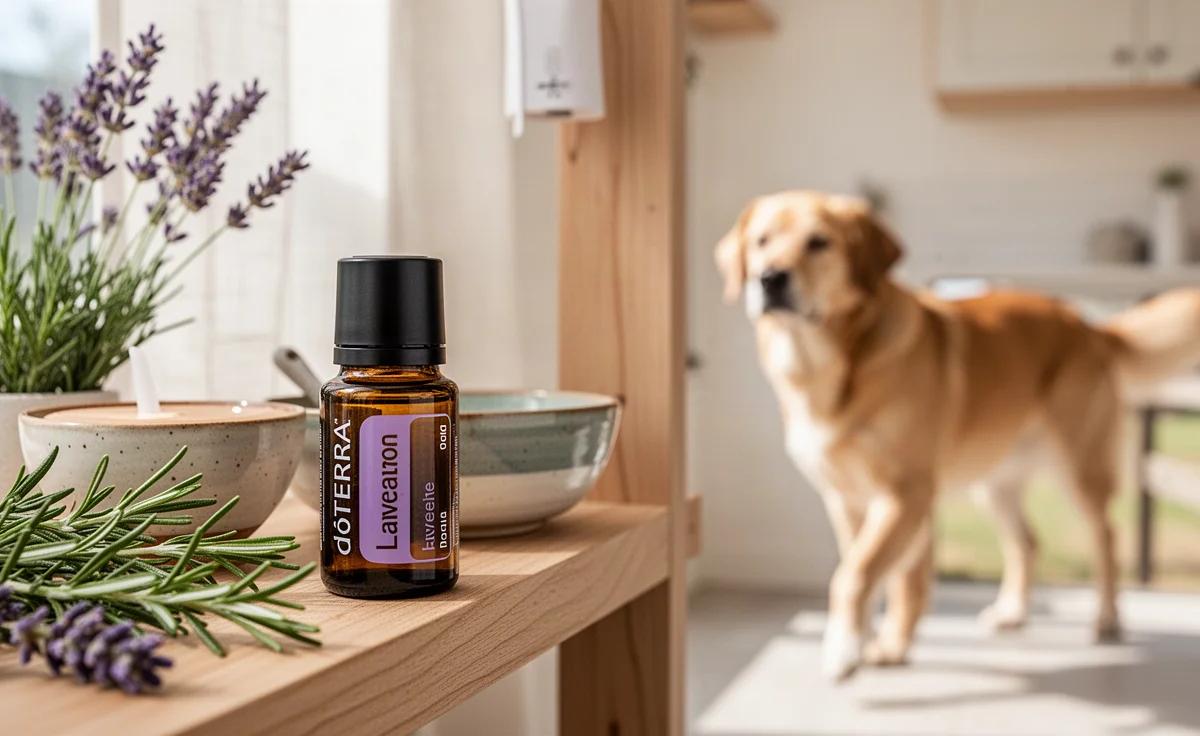
When we talk about a calming blend for dogs with separation anxiety, we are not talking about a medical product. We are talking about a diffused aroma that makes shared spaces feel softer and more predictable. Many doTERRA users reach for Lavender in these moments because it is the aroma most people associate with winding down, and because it is one of the gentler places to start. Others prefer Roman Chamomile, which has a softer, less perfumy profile, or Cedarwood, a grounded, woody note that many owners describe as steadying rather than sleepy.
What we recommend most often is not a single oil but a mindset: keep it light, keep the room aired, and let the dog come and go. Our own routines lean on Adaptiv, a doTERRA blend many people know for its fresh, balancing scent in human spaces. We diffuse it in shared rooms, never in a closed room a dog cannot leave, and we never position it as a treatment for what a dog is feeling. The selling point is purity and quality, the CPTG testing standard doTERRA uses, not a health claim for your pet.
| Blend or Oil | Aroma Profile | What We Actually Do With It |
|---|---|---|
| Lavender | Floral, soft, classic | Diffused briefly in open rooms; a familiar evening scent |
| Roman Chamomile | Herbal, gentle, less sweet | Good starting point for owners who find lavender too strong |
| Cedarwood | Woody, warm, grounded | Often used in calm shared spaces; never on the dog |
| Adaptiv | Fresh, bright, balancing | Our go-to for human spaces when the house feels unsettled |
How We Approach It at Home, Step by Step
Call the vet first. Before any aroma enters a room where your dog spends time, ask your veterinarian whether diffusing is appropriate for your specific dog, breed, age, and health status. This is not a formality. Dogs with respiratory sensitivities, allergies, or other conditions may need a completely different approach.
Choose the room, not the dog. We diffuse in an open living area, never in a crate, never in a bedroom where the dog is closed in, and never near their food or water. The dog must always be able to walk away. A dog who cannot leave a scented room is not benefiting from calm, they are being trapped in it.
Keep sessions short and light. We run the diffuser for brief intervals in a well-ventilated space, and we never go heavy on the amount. Dogs experience scent far more intensely than we do, so what smells gentle to us can be overwhelming for them.
Pair the aroma with the routine that already comforts your dog. The scent alone does nothing magical. What helps is sameness: the same soft music, the same blanket, the same quiet arrival and departure cues. Aromas work best as a background note in an existing rhythm, not as a replacement for training, exercise, or veterinary advice.
Watch for the walk-away signal. If your dog leaves the room, sneezes, rubs their face, or seems restless, stop diffusing and air the space out. That behavior is communication, and it matters more than any product claim. If anything ever looks wrong, contact your veterinarian or an animal poison control center like the ASPCA Animal Poison Control Center immediately.
If you want to go deeper on this topic, we have written more in our guides on calming essential oils for dogs anxiety and the broader question of calming essential oils for anxious dogs. Both take the same vet-first, room-focused approach.
Related reading
Frequently Asked Questions
Can a calming blend cure my dog's separation anxiety?
No essential oil blend can treat, cure, or resolve separation anxiety in dogs. Anxiety with a clinical component belongs in the hands of a veterinarian and, often, a qualified behavior professional. Aromas can be part of the atmosphere you create, but they are not a treatment.
Is diffusing around dogs always safe?
Not automatically. Dogs have far more sensitive respiratory systems than humans, and some oils are risky for them even in diffusion. Always use a well-ventilated room the dog can leave, keep sessions short, and confirm with your veterinarian before you start.
Which doTERRA oils do pet owners use most often for a calm home?
From what we see and read, Lavender, Roman Chamomile, Cedarwood, and blends like Adaptiv are the ones owners mention most when they talk about calm shared spaces. That is a statement about popularity and aroma, not a safety claim for any individual animal.
Where should I never diffuse around a dog?
Never diffuse in a closed room, a crate, a car with closed windows, or any space the dog cannot physically leave. Also avoid diffusing anywhere the dog sleeps if that space cannot be aired out afterward.
A calm home is built from routine, training, veterinary guidance, and the bond you already have with your dog. A well-chosen aroma can be a pleasant part of that picture, but it is never the foundation. When in doubt, keep the room aired, keep the diffuser light, and let your vet lead.
This content is for general information only and is not veterinary advice. Always consult a qualified veterinarian before using essential oils in a home with animals.