Calming Essential Oils for Anxious Dogs
A pet owner's guide to creating a calm home for an anxious dog with aroma. Learn which oils many owners talk about, how to diffuse responsibly, and why your vet comes first.
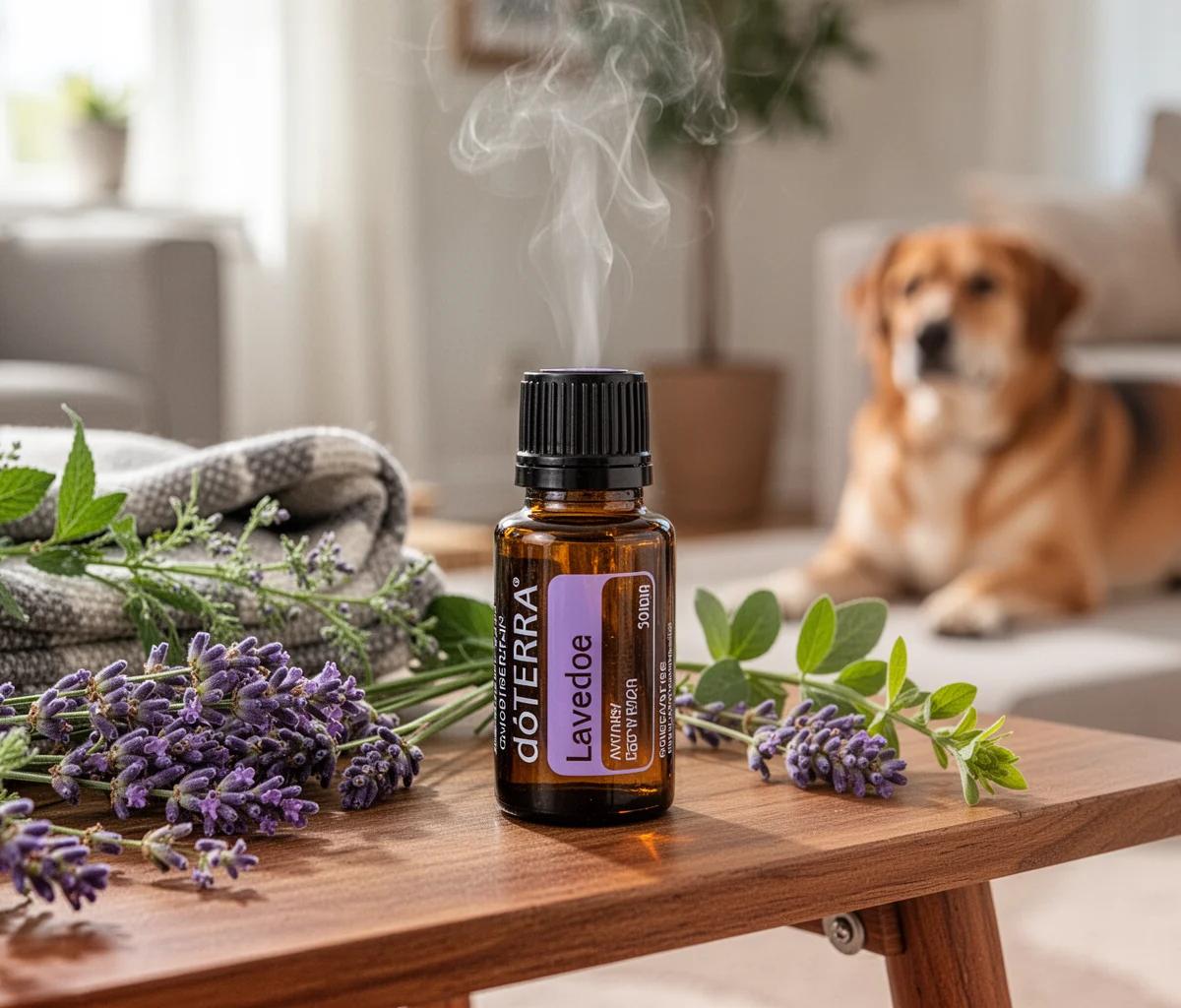
By the EssentialTail Team — pet owners, Wellness Advocates & doTERRA enthusiasts
If you have ever watched your dog tremble during a thunderstorm or pace when the doorbell rings, you know that feeling of wanting to help but not knowing how. Before we talk about anything else, the first quiet step is always the same: call your veterinarian. No oil, no diffuser, no routine replaces that conversation. What many people do ask their vet about, and what I want to share today, is whether a few pure essential oils, diffused in a calm, shared space, can help build a more settled atmosphere at home. The direct answer is that some dog-experienced owners do diffuse gentle oils like Lavender or Frankincense in a well-ventilated room the dog can leave at any time, always under veterinary guidance and never applied to the dog. This is not a treatment for anxiety; it is a human lifestyle habit, done thoughtfully and with the dog's complete freedom to walk away.
Oils People Often Mention, and Why Caution Comes First
When I first started learning about aromatics around pets, I quickly realised that "safe for dogs" is not a universal label. A dog's sense of smell is worlds beyond ours, and what smells delicate to us can be overwhelming to them. The core principle is never to apply oil to a dog's skin, fur, or food, and never to trap them in a closed room with a diffuser running.
What some dog-experienced households do, after a veterinary thumbs-up, is diffuse a tiny amount of oil in an airy living area for a short while, watching the dog's body language the entire time. The oils most frequently mentioned in those conversations are gentle and extensively tested for purity. Copaiba is one many owners appreciate for its mild, subtle aroma. Vetiver has a grounding, earthy scent that people describe as relaxing. It is crucial to understand that these are human observations about aroma and environment, not claims that an oil relieves, treats, or cures any condition in an animal. The real reason to choose doTERRA here is the CPTG testing, a purity standard that gives you confidence you are diffusing exactly what is on the label, with no surprises.
| Oil | Aroma Character | Why Owners Mention It |
|---|---|---|
| Lavender | Floral, herbaceous | A familiar, gentle scent many people use in their own evenings |
| Frankincense | Warm, resinous | Earthy and grounding; often used during quiet moments |
| Copaiba | Soft, slightly woody | Very mild; easily tolerated in shared spaces |
| Vetiver | Deep, earthy, smoky | Pairs well with other oils; described as very settling |
| Roman Chamomile | Sweet, apple-like | Softer than other chamomiles; frequently linked to calm in folk tradition |
Remember that cats are a different story entirely, many oils, including Lavender and peppermint, are simply too risky for them, but for dogs, the rule is never "this oil is safe." The rule is "ask your vet, diffuse sparingly, and let the dog choose to leave."
How to Diffuse Responsibly Around a Dog, A Step-by-Step Approach
If your veterinarian has given the green light and you want to try diffusing a calming oil in your own living space, here is the routine many considerate owners follow. It privileges common sense over ambition every time.
- Get veterinary clearance first. Describe exactly which oil you are considering and ask whether it is appropriate for your dog's age, breed, and health.
- Choose an ultrasonic, water-based diffuser and place it out of reach. A curious paw or wagging tail should never knock it over.
- Start with the dog out of the room. Begin diffusing a very small amount, nothing precise, just far less than you would for yourself, and let the aroma build slowly.
- Check the air flow. Open a window or keep a door ajar so the scent never becomes intense or trapped.
- Invite the dog back in and watch. Look for relaxed body language. If the dog seems restless, leaves, drools, or acts out of character, turn the diffuser off and air the room out.
- Keep sessions short and infrequent. A few minutes is more than enough to create a pleasant shared atmosphere without overwhelming sensitive noses.
Throughout this process, the product that many consider a gentle, foundational oil is Cedarwood, appreciated for its warm, woody scent. Again, the emphasis is on aroma and experience, not a pharmacological effect. For more context on the overall theme of calming oils and dogs, you might find our broader guide on the topic useful. And if you are specifically looking for oils that many experts talk about in this exact context, we also explored which oils are most frequently discussed in another article.
Related reading
- Calming Essential Oils for Anxious Dogs Guide
- Essential Oils Safe for Dogs with Anxiety
- DoTERRA Oils for Anxious Dogs at Home
Frequently Asked Questions
Can I put essential oils directly on my dog's collar or bed? No, you should never apply essential oils to a dog's collar, bedding, fur, or skin without explicit, species-specific guidance from your veterinarian. Even indirect contact can lead to skin irritation or overwhelming olfactory exposure for a dog.
Which diffuser is best for a home with pets? A water-based ultrasonic diffuser that allows you to control the output and run time is generally preferred, and it should be placed well out of your pet's reach. Avoid nebulizing diffusers, which release a much more concentrated mist of pure oil into the air.
Are there doTERRA oils I should never diffuse around my dog? Yes, and your veterinarian can confirm the full list for your individual dog. As a starting point, many oils considered high-risk include Tea Tree, oregano, thyme, cinnamon, clove, wintergreen, and all citrus oils. This is not an exhaustive list; always consult the professional who knows your animal.
What do I do if my dog has a bad reaction to a diffused oil? Turn the diffuser off immediately, move your dog to fresh air, and contact your veterinarian or an animal poison control center right away. Do not wait and do not try any home remedies; swift professional assessment is the only correct response.
A calm home is built on routine, trust, and care, not on any single bottle. If you decide to explore gentle aromatics, do it with your vet's blessing, a wide-open door, and your dog's comfort as the only measure that counts.
This content is for general information only and is not veterinary advice. Always consult a qualified veterinarian before using essential oils in a home with animals.