Essential Oils Safe for Dogs with Anxiety
Wondering which essential oils are safe for dogs with anxiety? Discover gentle, vet-first aromas and how to use them responsibly in a calm home.
By the EssentialTail Team — pet owners, Wellness Advocates & doTERRA enthusiasts
That moment when your dog paces by the door, whines at the slightest noise, or presses against you during a thunderstorm, I’ve been there, and I know how helpless it can feel. When you are searching for gentle ways to create a calmer atmosphere at home, understanding which aromas are considered safer for dogs is the first step. While no essential oil can treat anxiety in dogs, certain doTERRA oils are often diffused in shared spaces to foster a more tranquil environment. The key is respecting that a dog’s sense of smell is vastly more sensitive than ours, so "safe" always means a well-ventilated room, the freedom to walk away, and a conversation with your veterinarian before you start.
Aromas Many Dog Owners Keep in the Diffuser
Creating a serene shared space starts with choosing the right aroma. Through years of talking to fellow pet owners and Wellness Advocates, a short list of oils consistently comes up for their gentle, grounding scent profiles. These are never a replacement for veterinary care, but many find them pleasant for human spaces where a dog also rests.
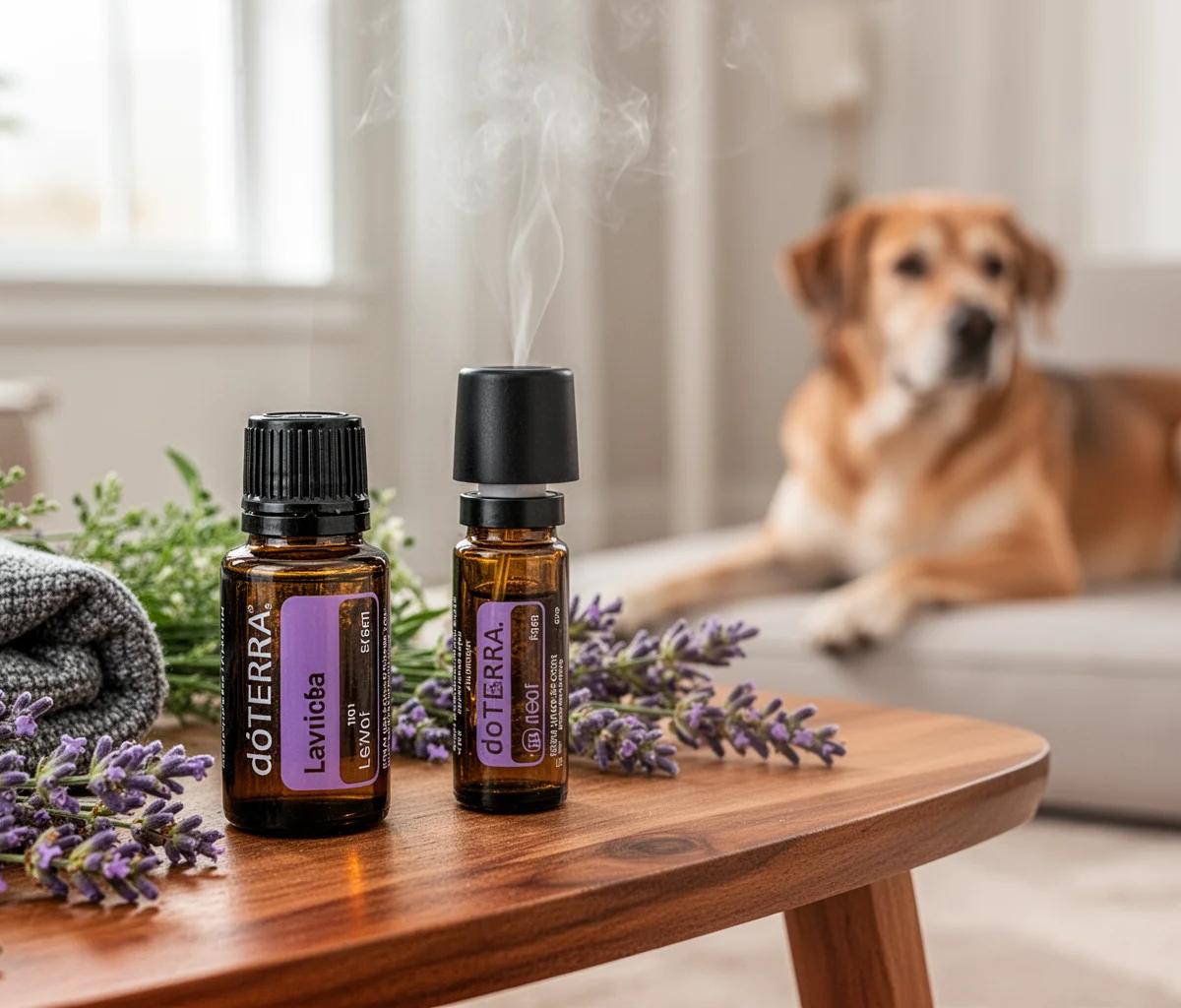
When I first brought a shy rescue home, Lavender was the first oil I diffused in my own living area. Its soft floral scent is a staple in many homes, and I kept the concentration so light I could barely smell it myself. The guiding rule is always to dilute the space, not just the oil.
Another constant in my home is Frankincense. Its rich, woody aroma feels grounding, and a small amount in a large, airy room is a favorite for quiet evenings. Alongside it, Cedarwood offers a warm, reassuring scent that evokes the outdoors, something my dog seems to naturally relax around when we are all winding down.
Here is a quick comparison of the scents many owners explore:
| Oil | Aroma Profile | Common Owner Experience |
|---|---|---|
| Lavender | Soft, floral, herbaceous | Frequently diffused at a very low concentration to create a calm shared space. |
| Frankincense | Rich, woody, slightly resinous | Used sparingly for a grounding, comforting atmosphere during quiet times. |
| Cedarwood | Warm, woody, earthy | Diffused in well-ventilated areas to evoke a sense of familiar, natural surroundings. |
| Roman Chamomile | Sweet, apple-like, herbaceous | Known for its gentle, soothing aroma in a room; often chosen for a very light diffusion. |
A drop of Vetiver can also be wonderful. Its deep, earthy scent is incredibly grounding, though it is strong, one drop is more than enough for a large space. The doTERRA Serenity blend, which combines Lavender, Cedarwood, and other comforting oils, is another one I have used personally. Its pre-blended formulation takes the guesswork out of creating a cozy aroma, provided it is diffused with the utmost restraint around pets.
1. How to Diffuse Responsibly, A Vet-First, Four-Step Approach
Your veterinarian is your best resource for understanding your individual dog. What I’m outlining here is a responsible framework for a conversation with them, not a protocol. This is the approach I follow in my own home after my vet’s approval, and it prioritizes the dog’s autonomy above all else.
Consult Your Veterinarian First. Describe the specific oil, method (diffusion), and the exact space where it will be used. Ask if it aligns with your dog’s unique health history. There is no substitute for this step.
Set Up a Safe Zone. Choose an open, well-ventilated room where your dog can freely enter and, crucially, freely leave. The diffuser should be in a human area, never near your dog’s bed, crate, or water, and out of tail-swatting range.
Start with an Extremely Light Touch. Diffuse a very small amount of oil for a short period, just 10 to 15 minutes. Watch your dog carefully from a distance for any change in behavior: squinting, disinterest in food, excessive panting, or a sudden desire to leave the room are all signs that the session should end.
Air Out and Observe. Turn off the diffuser, open the windows, and allow the room to clear for at least an hour before re-evaluating. Gentle Ways to Calm an Anxious Dog involve a whole toolkit of comfort strategies, and scent is just a small, optional piece of the puzzle.
Related reading
- doTERRA Oils Gentle Enough for Dogs
- Calming Essential Oils for Anxious Dogs Guide
- Best doTERRA Oils for Dog Anxiety
Frequently Asked Questions
Is Lavender oil safe to diffuse around dogs? Many dog owners, after consulting their veterinarian, diffuse a very small amount of Lavender in a well-ventilated room. The key is ensuring the dog can leave the space freely and the diffusion is short and light, never applied topically without direct veterinary supervision.
Which essential oils should I absolutely avoid diffusing around my dog? It is widely advised to avoid diffusing "hot" or phenolic oils, which include Oregano, Thyme, Cinnamon, and Clove. Tea Tree (Melaleuca), most citrus oils (like Lemon and Wild Orange), Peppermint, Eucalyptus, and Wintergreen are also commonly on the "avoid" list among cautious pet owners and should never be used without asking a vet.
Can I apply diluted oils to my dog’s collar or bed? Never apply any essential oil to your dog’s collar, bed, or skin without explicit, oil-specific guidance from your veterinarian. Even diluted oils can be too concentrated on a surface where a dog is forced to stay, and a dog’s skin absorbs substances differently than human skin. This route carries significant risk.
What if my dog doesn’t like the scent I’m diffusing? Trust your dog’s cues immediately. If they sneeze, leave the room, become restless, pant excessively, or lose their appetite, stop diffusing at once. Forcing a scent on an animal is stressful and counterproductive. Their comfort must always dictate the practice.
A calm home is built on trust, routine, and a deep understanding of your animal, not on a single product. The oils I’ve mentioned, like Lavender and Frankincense, are ones I’ve come to appreciate for their purity and gentle aroma in my own living space, but they are just a supporting note in a much larger symphony of care. When you’re exploring Calming Essential Oils for Dogs Anxiety, remember that the most powerful soothers are often a predictable schedule, a cozy safe space, and a human who listens to what they’re trying to say. Always, always let your vet lead the way.
This content is for general information only and is not veterinary advice. Always consult a qualified veterinarian before using essential oils in a home with animals.