Diffusing Oils When You Live With a Cat
What every cat owner needs to know before switching on a diffuser. A practical, vet-first guide to aromas in a feline home, no scare tactics.
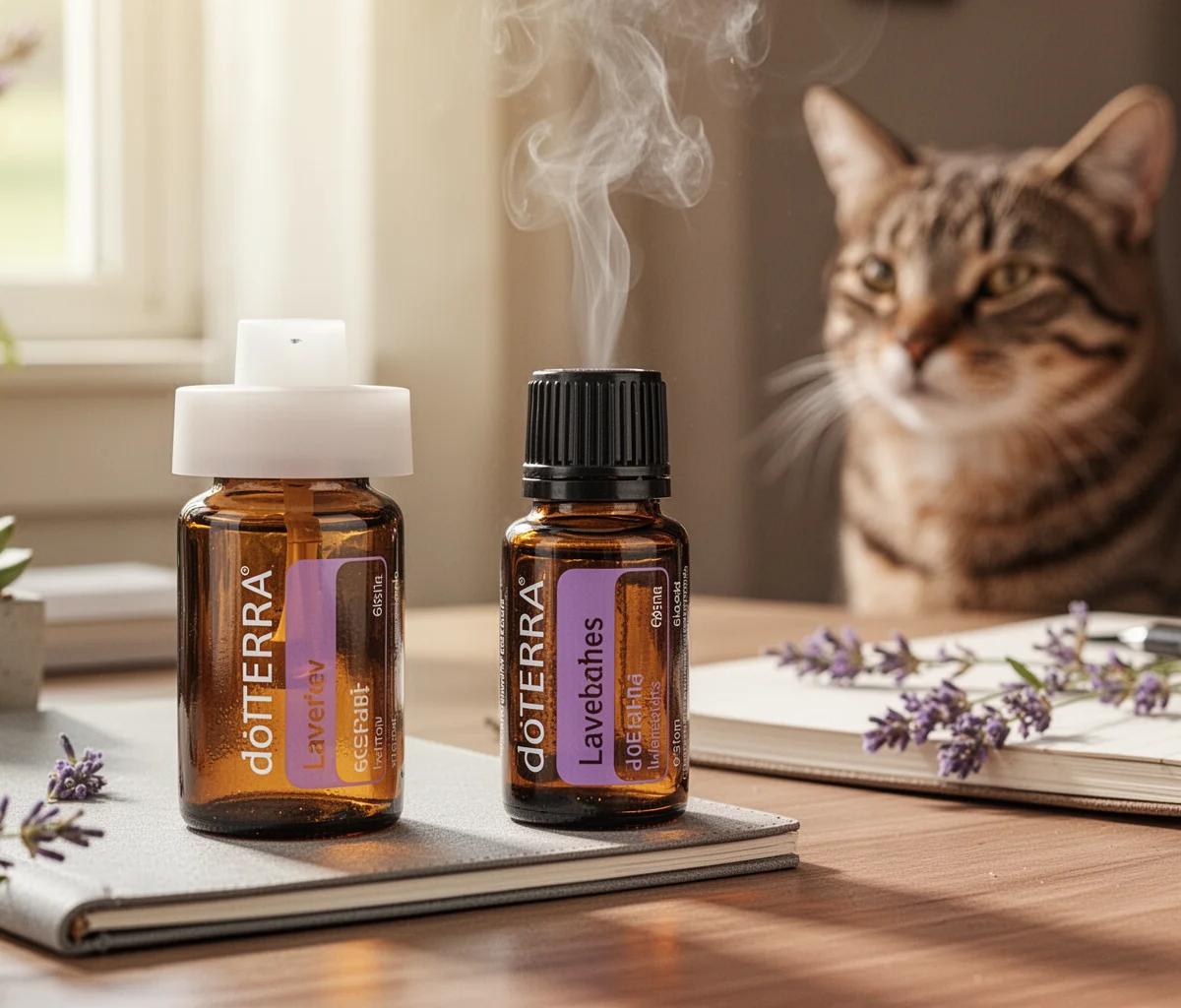
By the EssentialTail Team — pet owners, Wellness Advocates & doTERRA enthusiasts
I remember the afternoon I brought my first diffuser home, unboxed it on the kitchen counter, and watched my tabby, Luna, stroll into the room. She sniffed the air, gave me a slow blink, and settled on the sofa two metres away. That quiet moment left me with a question many cat owners share: is it actually okay to diffuse essential oils in a house where a cat lives?
The short, honest answer is that it depends entirely on how you do it and which oil you choose. Cats lack a key liver enzyme needed to process many aromatic compounds, so oils that smell lovely to us can be toxic or even fatal to a cat who cannot get away from them. That sounds alarming, and it should be taken seriously, but it does not mean you must throw your diffuser out. It means put your veterinarian first, treat your cat like a full member of the family when you scent your home, and follow a few firm safety habits every single time. This article walks through what I have come to understand about responsible diffusion around cats, which oils I completely avoid in a feline household, and how clean, carefully sourced oils such as doTERRA’s CPTG-tested range fit into a thoughtful, cat-conscious routine.
Which Oils I Keep Far Away From My Cat
Before picking a scent, I think about the bottle itself. Some essential oils are on my permanent no-diffuse list in any room the cat can enter, because the compounds they contain are particularly difficult for a feline metabolism to handle.
| Oil Category | Why I Avoid It Around Cats |
|---|---|
| Phenolic / “hot” oils (Oregano, Thyme, Cinnamon, Clove) | Rich in phenols that cats struggle to metabolise, even in tiny airborne amounts. |
| Tea Tree (Melaleuca) | Notoriously toxic to cats; even external exposure can be absorbed and cause serious harm. |
| Citrus oils (Lemon, Wild Orange, Bergamot, Grapefruit, Lime) | High in limonene, which poses a real risk when a cat breathes it over time. |
| Peppermint and other mints, Eucalyptus, Wintergreen, Pine | Potent compounds that can overwhelm a cat’s sensitive respiratory system. |
This table is not a complete list; it is my personal starting point. Every time I doubt whether an oil belongs in a feline home, I pause and call my veterinarian before unscrewing the cap. What I have come to appreciate about the doTERRA catalogue is that its CPTG testing and transparent sourcing make it simpler to know exactly what is inside the bottle, so I can have an informed conversation with my vet instead of guessing.
When I want to diffuse in a cat-friendly way, I reach for oils with a gentler, simpler aroma profile. The one I reach for most is Lavender, a soft floral that many owners know for its calming atmosphere. I keep the amount tiny, the room wide open, and the cat free to leave. Frankincense is another I use sparingly; its warm, resinous scent feels grounded without being sharp. If I want something woodsy, I try Cedarwood, which brings a cosy, outdoorsy note that does not dominate the space. And on days when I just want the lightest possible scent profile, Copaiba has become a quiet favourite in our home.
None of that changes the golden rule: the veterinarian knows my cat better than any blog ever will, so I run each new oil past them before diffusion.
How I Diffuse With a Cat at Home, Step by Step
Over time, my family has settled into a simple routine that keeps the home smelling pleasant without compromising our cat’s safety. Here is the pattern we follow every day.
- Consult the veterinarian first. Before introducing any new oil into a living space the cat breathes, I ask the vet whether it is appropriate for our individual animal. No internet list replaces that conversation.
- Pick a CPTG-tested, pure oil. Because I want zero surprises when it comes to fillers or synthetic additives, I stick with oils I can trace, such as those from doTERRA’s line.
- Choose the right room. I diffuse only in a spacious, well-ventilated room where the cat can wander out at any time. A closed bathroom or bedroom door is a deal-breaker for us.
- Use a minuscule amount. No numbers here, because every room and every cat is different. I use far less than I would in a pet-free home and let the veterinarian guide what feels appropriate.
- Watch the cat, not just the clock. I run the diffuser in short intervals and observe. If Luna walks out, flicks her tail, or squints, I turn it off immediately and open the window.
- Store everything securely. Oils, diffuser cords, and water reservoirs stay out of paw’s reach, every time.
We also use a dedicated room diffuser that produces a light mist rather than dense clouds, and I clean it between oils so no residue builds up. One item that supports a gentle home baseline is the Petitgrain oil, whose soft, citrus-adjacent green note I sometimes diffuse on its own for a brief, bright freshness the cat seems to accept well, always after a vet conversation.
For the diffuser itself, I rely on doTERRA’s ultrasonic models because they deliver a fine, airy stream without heat, which I prefer in a household with animals. The Lumo Diffuser has been a steady companion on our sideboard, silent enough not to bother the cat and easy to clean after each session.
Related reading
- Diffusing Oils Safely Around Cats
- doTERRA Oils to Diffuse Around Kittens Safely
- doTERRA for Cat Owners Getting Started
FAQ, Cat Owners Ask These Questions Most
Can I diffuse lavender with a cat in the house? Many owners choose lavender as a lighter floral option, but you should only do so after your veterinarian has reviewed your specific cat’s health and confirmed it is appropriate for your home setup. Keep the diffuser in a spacious, open room the cat can leave freely.
What should I do if my cat shows discomfort near a diffuser? Switch the diffuser off immediately, open windows to flush the air, and take your cat to a different room. If you notice any persistent sign such as drooling, wobbliness, or laboured breathing, contact your veterinarian or an animal poison control centre without delay.
Is there a doTERRA oil that is guaranteed safe for cats? No essential oil can be declared universally safe for every cat, because individual health, age, and metabolism vary enormously. Always let your veterinarian evaluate any oil, including blends crafted specifically for animals.
How can I tell if a scent is too strong for my cat? Watch your cat’s body language. Walking away, tail flicking, squinting, or hiding are signals that the aroma is too intense. A cat that chooses to stay in the room, blinks slowly, and continues its usual routine is likely comfortable, but you should still run the diffuser gently and for limited periods.
Does CPTG testing make an oil safer for cats? CPTG testing ensures rigorous purity and quality control, so you know exactly what is in the bottle and that no surprise additives are present. It does not change the metabolic reality for a cat, but it gives your veterinarian a transparent profile to work from when advising you.
Living with a cat and loving the aroma of essential oils is not an either-or choice, it is a practice built on respect, careful selection, and an unshakable habit of putting the vet’s advice first. What has worked for Luna and me is keeping it light, keeping it ventilated, and never assuming that something safe for me is automatically safe for a tiny feline body. If you already know which scents are generally considered more neutral around cats, you have a starting point, but the real anchor is always your veterinarian. Before a cat enters the equation, some oils deserve a hard no every time, and Tea Tree sits firmly in that category. Make your home smell beautiful and keep your cat safe.
This content is for general information only and is not veterinary advice. Always consult a qualified veterinarian before using essential oils in a home with animals.