Tea Tree Oil and Cats, A Serious Danger
Tea tree oil is toxic to cats and can be fatal. Here's why melaleuca is so dangerous for felines and how to keep your cat safe at home.
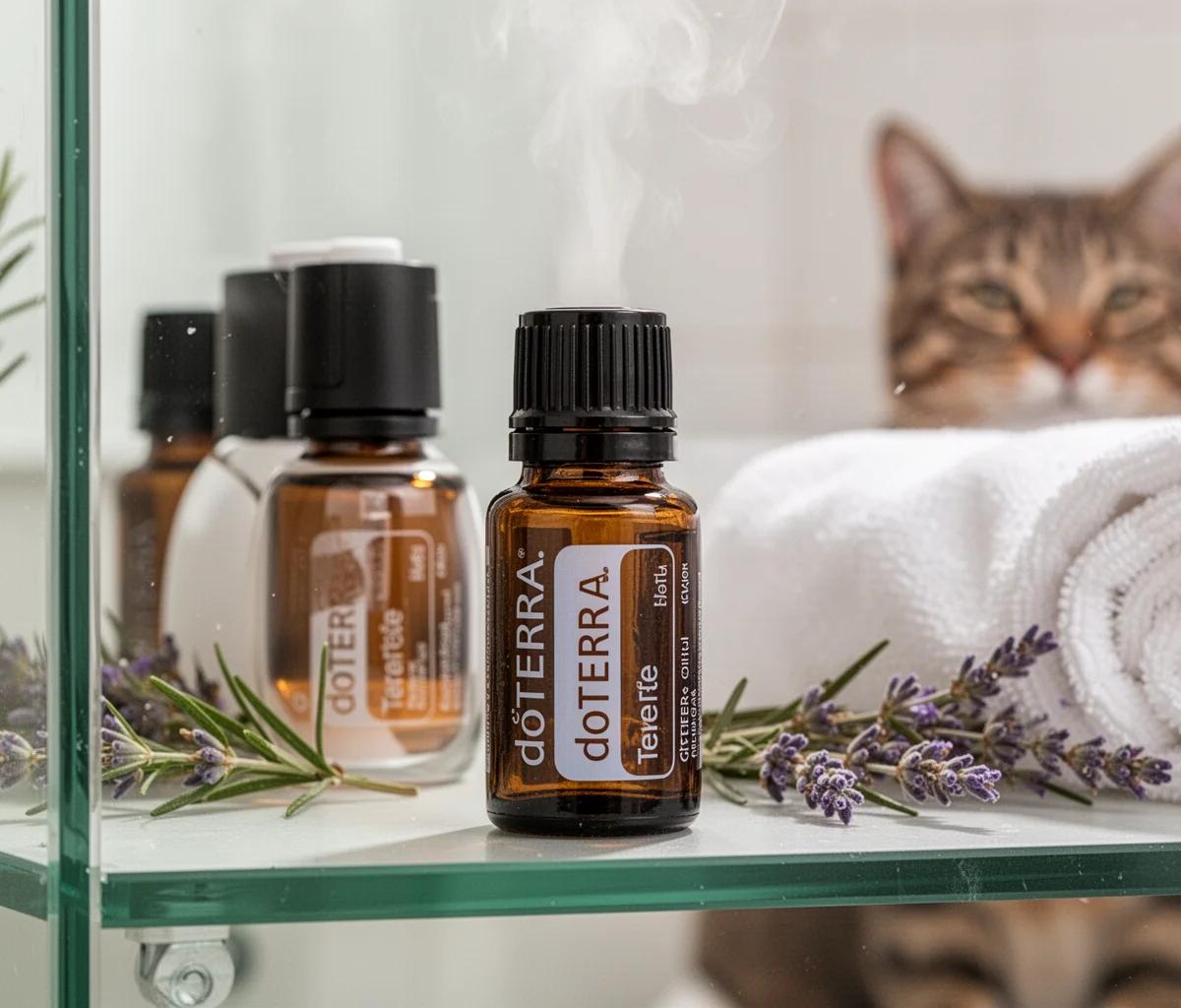
By the EssentialTail Team — pet owners, Wellness Advocates & doTERRA enthusiasts
If you're wondering whether tea tree oil is safe for cats, the short answer is no, it absolutely is not. Tea tree (also called Melaleuca) is one of the most toxic essential oils for cats and can cause serious harm or even be fatal. Cats lack a critical liver enzyme called glucuronyl transferase, which means they cannot metabolise the compounds in tea tree oil the way humans or dogs can. Even small amounts, whether applied directly, diffused in an enclosed space, or ingested, can lead to severe poisoning. Symptoms can appear within hours and include drooling, vomiting, tremors, weakness, difficulty walking, and collapse. If your cat has been exposed to tea tree oil in any way, contact your veterinarian or an animal poison control centre immediately. This is not a "wait and see" situation; it is a veterinary emergency.
I know how confusing it can feel when you're trying to create a calm, pleasant-smelling home and you also share that space with a beloved cat. What works beautifully for you or your dog can be genuinely dangerous for your feline. Here's what I've learned, and what every cat owner needs to know about tea tree oil.
Why Tea Tree Oil Is So Toxic to Cats
Tea tree oil contains compounds like terpinen-4-ol and 1,8-cineole that are perfectly manageable for humans and even for many dogs, but cats simply cannot process them. Without that key liver enzyme, these substances build up in a cat's system and quickly become toxic.
Even products marketed as "natural" or "pure" are not automatically safe for cats, in fact, higher purity can mean higher risk. doTERRA Tea Tree is known for its CPTG purity and third-party testing, which makes it a trusted choice for human use, but that same purity and potency is precisely why it must be kept far away from cats.
Tea tree poisoning in cats is not rare. Veterinary toxicology centres report cases regularly, and many of those cases involve well-meaning owners who had no idea of the risk.
How Cats Are Exposed (and How to Prevent It)
| Exposure Route | Risk Level | What to Avoid |
|---|---|---|
| Direct topical application | Extreme | Never apply tea tree oil or tea tree-based products to a cat's skin, paws, or fur. |
| Diffusion in enclosed space | High | Never diffuse tea tree in a room a cat cannot leave. |
| Ingestion (licking, spills) | Extreme | Cats groom constantly, any oil on their fur will be ingested. Store bottles securely. |
| Indirect contact (owner's hands, laundry) | Moderate | Wash hands thoroughly after handling tea tree oil before touching your cat. |
Cats are curious, they walk across counters, they groom themselves obsessively, and they cannot tell you they feel unwell until it's serious. The simplest rule is this: if you have a cat, do not use tea tree oil in your home. If you must use it (for your own skin, for example), do so in a space the cat never enters, store the bottle in a locked cabinet, and wash your hands completely before any contact with your cat.
What to Do If Your Cat Is Exposed
If your cat has licked, touched, or been near spilled tea tree oil, or if you've diffused it and your cat now seems unwell, act immediately:
- Remove your cat from the area and into fresh air.
- Do not attempt a home remedy, no milk, no oil, no bathing without veterinary instruction.
- Contact your veterinarian or an animal poison control hotline right away. In the US, the ASPCA Animal Poison Control Center is available 24/7.
- Bring the product bottle or label with you to the vet so they know exactly what your cat was exposed to.
Symptoms of tea tree poisoning can include drooling, vomiting, lethargy, tremors, difficulty walking, weakness, collapse, or low body temperature. Time matters, early veterinary intervention can be lifesaving.
A Safer Home for You and Your Cat
I've learned that living well with a cat means making deliberate, informed choices about what we bring into shared spaces. That doesn't mean giving up on a pleasant-smelling home, it means choosing doTERRA oils for a home with pets with care, always consulting your veterinarian first, and understanding that many oils that are safe for humans or dogs are simply not safe for cats.
doTERRA's CPTG purity and testing are real advantages when you're using oils responsibly for yourself, but purity does not equal safety for every species. Cats are not small dogs, and they are not humans, they are metabolically unique, and that makes them vulnerable.
If you're ever in doubt about an oil, the answer is simple: ask your vet, and when it comes to tea tree and cats, just don't.
Frequently Asked Questions
Can I diffuse tea tree oil in a large room if my cat can leave?
No. Even in a large, ventilated space, diffused tea tree oil poses a risk to cats. Their respiratory systems are far more sensitive than ours, and they cannot metabolise the compounds. Never diffuse tea tree in a home with cats.
Is tea tree safe for my cat if it's diluted?
No. Dilution reduces concentration but does not eliminate toxicity. Cats still cannot process the compounds in tea tree oil, and even small amounts can cause harm. There is no safe dilution for cats.
What if my cat walked across a surface I cleaned with tea tree oil?
If your cat's paws contacted a surface with tea tree residue and they have since groomed themselves, contact your veterinarian immediately. Cats ingest whatever is on their fur when they groom, and tea tree is toxic when ingested.
Are there safer alternatives to tea tree for a home with cats?
Some oils are less risky than others, but no essential oil should be used around cats without veterinary guidance. Many oils, including most citrus, mint, and phenolic oils, are unsafe for cats. Your vet can help you choose what, if anything, is appropriate for your household.
My cat seems fine after exposure, should I still call the vet?
Yes. Symptoms of poisoning can be delayed, and by the time they are visible, the situation may be more serious. If there has been any exposure to tea tree oil, contact your vet or poison control right away, even if your cat appears normal.
Conclusion
Tea tree oil and cats simply do not mix. The risk is real, it is serious, and it is avoidable. Keep tea tree oil, and many other essential oils, out of reach, out of diffusers, and out of any space your cat inhabits. When in doubt, ask your veterinarian, and always choose your cat's safety first.
This content is for general information only and is not veterinary advice. Always consult a qualified veterinarian before using essential oils in a home with animals.