doTERRA for Cat Owners Getting Started
A practical, vet-first guide to doTERRA for new cat owners. What is riskier, what to skip, and how to keep your home calm without guesswork.
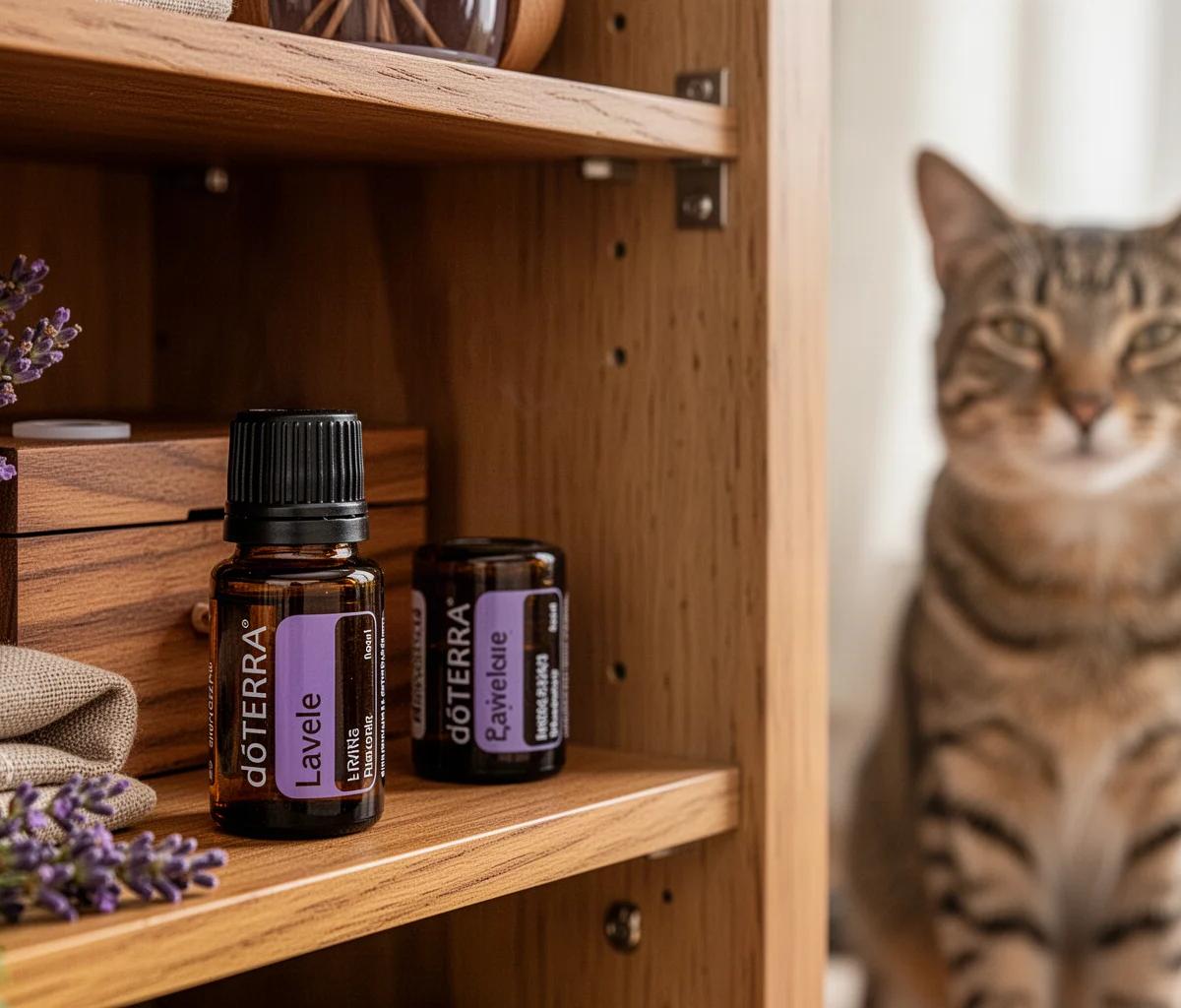
By the EssentialTail Team — pet owners, Wellness Advocates & doTERRA enthusiasts
When I brought home my first cat, I remember standing in the kitchen holding a diffuser and wondering if I was about to make a very expensive mistake. I had been using essential oils myself for years, but suddenly the rules felt different. If you are reading this, you are probably wondering the same thing.
The direct answer is this: doTERRA for cat owners getting started means moving slowly, keeping every oil and diffuser in a space your cat can leave, and asking your veterinarian before introducing anything new. Cats process many plant compounds differently than humans or dogs, so the oils that feel lovely to you are not automatically appropriate around them. Your starting point is not a big collection. It is understanding which aromas belong in shared rooms, which oils stay on you as personal fragrance, and what to do if your cat ever reacts. The calm home you want is possible, but for cats it is built on boundaries, ventilation, and professional guidance rather than enthusiasm.
A Safe Starting Mindset for Cat Homes
The most important thing I have learned is that a diffuser is not a decoration. It changes the air your cat breathes, and cats are far more sensitive to inhaled compounds than we are. That is why the first rule in our home is always the same: the cat can leave the room, the door stays open, and the diffuser runs in a well-ventilated area.
Some oils are widely considered riskier around cats and I keep them out of shared spaces entirely. This includes Tea Tree, Oregano, Thyme, Cinnamon, Clove, Peppermint, Eucalyptus, Wintergreen, and most citrus oils like Lemon and Wild Orange. I do not apply them to myself before spending the evening with my cat either, because personal fragrance lingers on skin and clothing.
The doTERRA products I feel most comfortable keeping in a cabinet as a cat owner are single oils with softer aromatic profiles, such as Lavender, Frankincense, and Roman Chamomile. These are not a claim that they are safe for cats. They are simply the ones I treat as a lower-risk starting point when a veterinarian has already approved a diffusing routine for the specific animal in the house.
| Oil | My approach as a cat owner | Main caution |
|---|---|---|
| Lavender | Occasional, light, open room | Never apply to the cat; always allow exit |
| Frankincense | Personal use, rarely diffused | Still needs vet approval around cats |
| Roman Chamomile | Very sparing diffusion | Not a calming treatment for the animal |
| Tea Tree | I do not use it around cats | Considered especially dangerous for cats |
| Peppermint, Eucalyptus, Citrus | Kept out of shared air | Stronger aromatic profile, higher caution |
How I Diffuse Around My Cat, Step by Step
When I do run a diffuser in a home with a cat, the process is very deliberate. Here is exactly how I approach it.
- Ask the veterinarian first. I describe the specific oil, the room, and the cat's routine, and I follow their answer without improvising.
- Choose a room the cat rarely uses or can leave freely. A door that can be pushed open matters more than which room it is.
- Keep the amount light. I never think in drops around animals, only in small, diffuse amounts, and I ask the vet about anything specific.
- Ventilate. A window cracked open changes the whole equation and gives both of us fresher air.
- Watch the cat. If she avoids the room, sneezes, or acts differently, I turn the diffuser off and we stop for the day.
If there is ever a spill, a licked drop, or a sudden reaction after diffusion, the only step is immediate. I call a veterinarian or an animal poison control centre such as the ASPCA Animal Poison Control Center or the Pet Poison Helpline right away. There is no home remedy for that moment.
Why Purity Still Matters, Even for Human Use
A fair question is whether doTERRA is even worth it if you have to be this careful around a cat. For me, the answer is about what I use for myself. The draw is CPTG, doTERRA's own Certified Pure Tested Grade purity and testing standard, and the consistency of the sourcing behind oils like Copaiba, Vetiver, and Cedarwood. I keep those for quiet personal moments, not animal routines.
What we recommend most often is starting with a small kit designed for personal use, such as the Essentials Kit or the Basic Kit, then letting a veterinarian shape what happens in the shared air. If you are new to buying doTERRA, this guide on Buying doTERRA Oils as a Pet Owner Made Easy walks through the practical side, and this one on How to Buy doTERRA Products, Step by Step explains the process without pressure.
Frequently Asked Questions
Can I diffuse doTERRA oils around my cat?
Only with veterinary approval and only in a well-ventilated room the cat can leave freely. Cats metabolize many aromatic compounds differently than humans, so diffusion is never automatically safe simply because it is diluted in air.
Which essential oils are most dangerous for cats?
Tea Tree, Oregano, Thyme, Cinnamon, Clove, Peppermint, Eucalyptus, Wintergreen, and most citrus oils are the ones I treat with the most caution around cats. I keep them out of shared spaces entirely and never apply them to my own skin before holding a cat.
Is lavender safe for cats?
I cannot call any oil safe for cats, including lavender. While lavender is sometimes discussed more gently than stronger oils, the veterinarian decides what is appropriate for the individual animal, and diffusing should still happen in an open, ventilated room.
The Bottom Line
The right way to start with doTERRA as a cat owner is with fewer oils, more questions, and a home where your cat always has an exit. A pleasant, calm space is absolutely possible, but for cats it comes from boundaries and veterinary guidance more than from any single aroma.
This content is for general information only and is not veterinary advice. Always consult a qualified veterinarian before using essential oils in a home with animals.