doTERRA Oils for Dogs and Cats, Vet First
Wondering about doTERRA oils around dogs and cats? We cover the real risks, vet-first rules, and which oils pet owners approach most cautiously.
By the EssentialTail Team — pet owners, Wellness Advocates & doTERRA enthusiasts
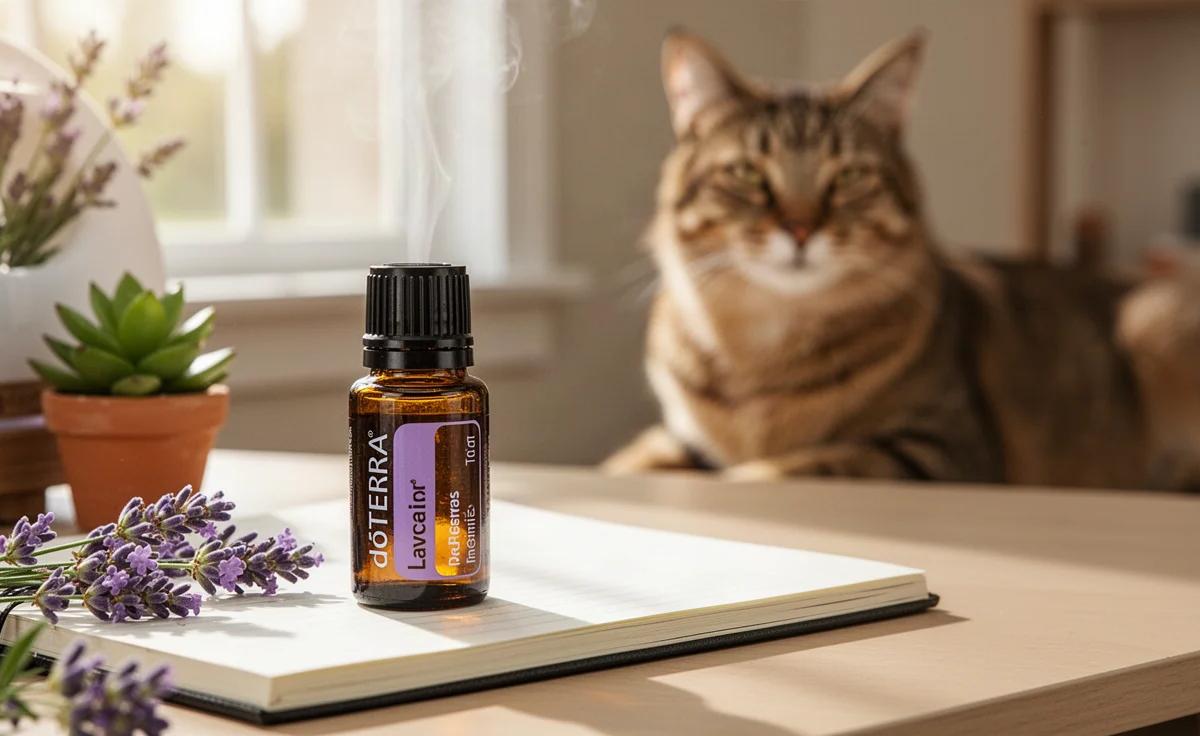
You are standing in your kitchen with a tiny amber bottle, your dog is asleep on the rug, your cat is watching from the hallway, and you are wondering if you can even use this stuff here. If that sounds familiar, you are asking the right question before doing anything, and that already puts you ahead of most pet owners. The direct answer is this: essential oils and animals are never a simple yes or no, because dogs and cats are not the same, and cats especially are far more sensitive. Some oils that are fine in a human diffuser can be genuinely dangerous for a cat, even at low levels. Before you use any doTERRA oil near, on, or around a pet, the first step is always your veterinarian, followed by doTERRA's own label and the official guidance on its dedicated animal products. We never treat that as a formality; it is the entire starting point.
What Changes When a Cat or Dog Is in the Room
The biggest mistake pet owners make is assuming that because an oil is pure, it is therefore mild for an animal. Purity, which is what doTERRA's CPTG testing standard is built around, tells you the oil is free of contaminants and matches the expected botanical profile. It does not tell you how a cat's liver will process it. Cats lack a specific enzyme pathway that helps metabolize many essential oil compounds, which means oils rich in phenols or certain aromatic compounds can build up in ways that a dog or a human simply would not experience the same way.
This is why you will see lists that separate dogs from cats so firmly. Tea Tree, oregano, thyme, cinnamon, clove, most citrus oils, peppermint and other mints, eucalyptus, and wintergreen are the names that come up again and again as high-risk for cats, even diffused. For dogs, the conversation is less extreme but still not casual: an oil that is fine for one dog may not suit another, and the only person qualified to make that call is your veterinarian.
When we have covered the dedicated doTERRA animal range before, the same pattern kept showing up in reader questions: people want a single safe list, and the honest answer is that no such universal list exists. What exists is a way of working, and it looks like this:
- Ask your veterinarian about your specific animal, species, age, and health status first.
- Check the doTERRA product label and any guidance for the specific product you own.
- If you diffuse, do it in a large, airy room where the animal can walk out at any time.
- Never apply an essential oil directly to a cat or dog without veterinary direction.
- Keep bottles closed and stored where curious noses and paws cannot reach them.
- If an animal ever licks a spill or reacts oddly, contact a veterinarian or an animal poison control centre such as the ASPCA Animal Poison Control Center or the Pet Poison Helpline immediately.
Oils We Approach Differently Around Pets
Some oils sit at the gentler end of the conversation in the wider pet-owner world, and you will hear them mentioned often. Lavender, for example, is one of the most recognisable oils in any home, and many owners know it for its soft floral aroma. Frankincense is another resinous classic with a warm, grounding scent that people often diffuse in shared living spaces. Cedarwood and Roman chamomile are also names that come up in conversations among dog owners.
Here is how we think about a few of them:
| Oil | What we consider before pets | Our general posture |
|---|---|---|
| Lavender | Floral, widely recognised, commonly diffused | Vet first, keep diffusion light, cat out of the enclosed space |
| Frankincense | Resinous, grounding, often used in shared rooms | Vet first, never near the face, ventilate well |
| Cedarwood | Woody, warm, popular in outdoor and home blends | Vet first, dogs more discussed than cats |
| Roman Chamomile | Mild, floral, often talked about for calm moments | Vet first, never a replacement for behavioural support |
Tea Tree, oregano, thyme, cinnamon, clove, citrus oils, peppermint, eucalyptus, and wintergreen are the ones we keep in the cabinet and out of the pet conversation entirely, especially for cats. Our doTERRA pet care guide goes deeper into how the animal line and the safer-usage mindset fit together, and our piece on doTERRA oils for animals walks through the species-by-species caution in more detail.
Frequently Asked Questions
Can I diffuse doTERRA oils around my cat? Cats are uniquely sensitive, and many oils including Tea Tree, citrus, mints, and eucalyptus are considered especially risky for them. The only responsible answer is to ask your veterinarian first, and if you ever do diffuse, the cat must be free to leave the space at any time.
Is lavender safe for my dog? No essential oil is automatically safe for every dog, because age, health, and individual sensitivity all matter. Ask your veterinarian before using it anywhere near your dog, and never apply it directly to the coat or skin.
Which doTERRA oils should I avoid around pets? The names most consistently flagged for cats are Tea Tree, oregano, thyme, cinnamon, clove, citrus oils, peppermint and other mints, eucalyptus, and wintergreen. For any animal, including dogs and horses, the veterinarian's guidance overrides any general list.
What should I do if my pet licks spilled essential oil? Contact a veterinarian or an animal poison control centre immediately. Do not wait, do not try home remedies, and do not give anything by mouth unless a professional tells you to.
We keep coming back to the same point because it is the only one that matters: essential oils are concentrated botanical products, and animals are not small humans. Purity and quality, the real strengths of the doTERRA range, do not change that biological reality. A calm, good-smelling home and a healthy pet are both possible, but only in that order, with the veterinarian's voice first every single time.
This content is for general information only and is not veterinary advice. Always consult a qualified veterinarian before using essential oils in a home with animals.