doTERRA Pet Care Essential Oils Explained
Discover which doTERRA essential oils belong in a pet household and which to avoid entirely. A warm, vet-first guide for dog, cat and horse owners who want to live well with aromas.
By the EssentialTail Team — pet owners, Wellness Advocates & doTERRA enthusiasts
The first time my dog wouldn't settle during a thunderstorm, I sat on the floor next to him and wondered if anything in my diffuser cabinet could help create a calmer-feeling room. If you're reading this, you're probably in a similar spot, curious, cautious, and unwilling to guess when it comes to your animal. The short answer is that doTERRA doesn't sell a stand-alone "pet care essential oil" kit, but it does offer several pure oils and blends that many owners choose to diffuse in shared spaces, always under veterinary guidance. The company's CPTG testing standard is the real reason people look here: every batch is screened for purity and potency, which matters when you're deciding what enters your home's air. Still, purity alone doesn't make an oil appropriate for an animal, and this article walks you through what the product line actually looks like, which oils are absolutely off the table for cats and which ones dog and horse owners tend to reach for, always with the vet as the first call.
Which doTERRA Products Are Relevant in a Pet Household
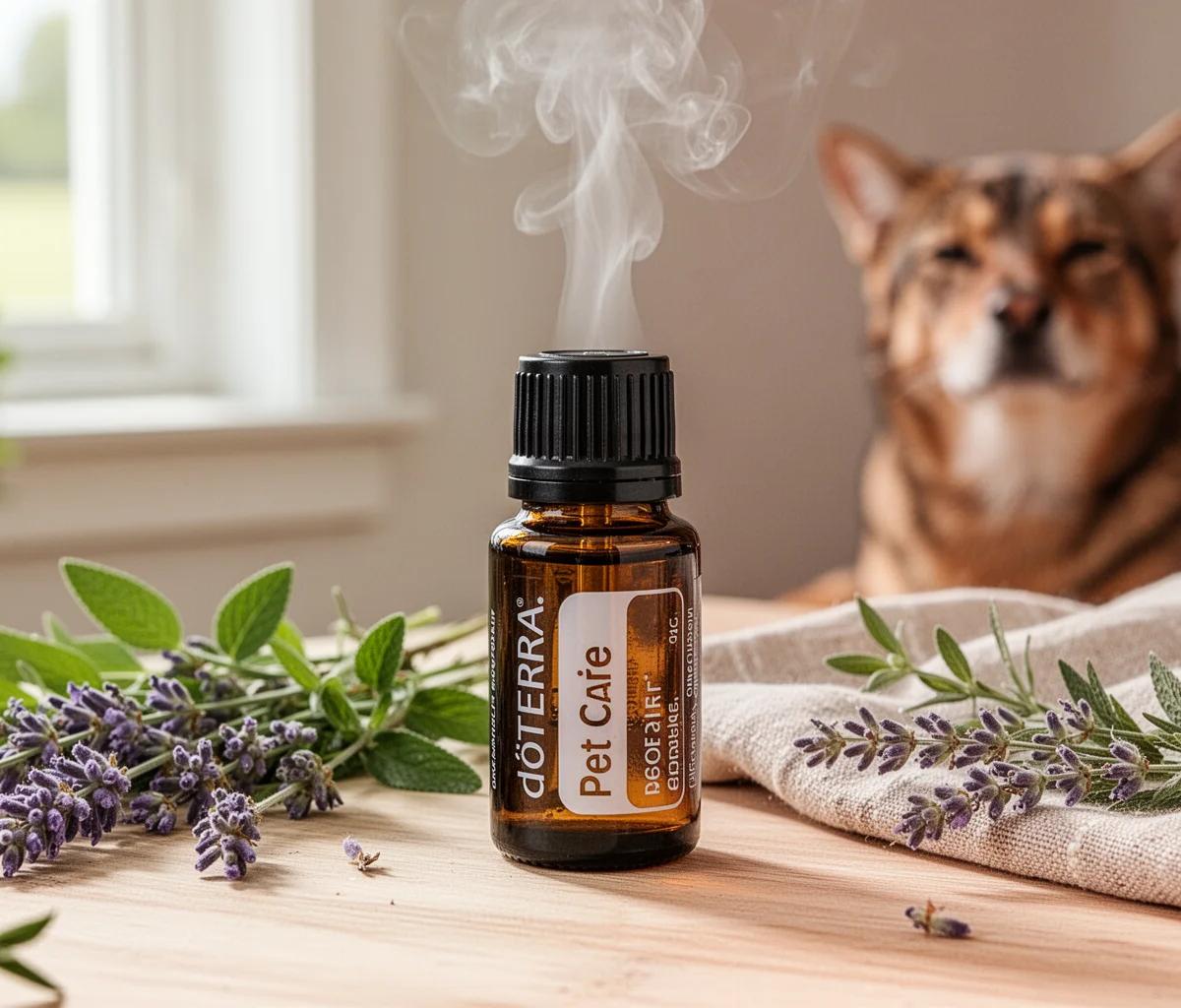
When someone says "pet care oils," the image is often a labelled bottle ready for the animal themselves. That isn't how doTERRA structures its line. Instead, what you'll actually use are single oils and gentle blends that shape the atmosphere of a room your pet shares with you. Several products are worth knowing by name.
Single oils many dog-friendly homes keep on hand:
- Lavender, widely recognised for its soft floral aroma; many diffuser routines start here.
- Frankincense, grounding and woody; a staple in quiet-evening blends.
- Roman Chamomile, delicate and apple-like; often chosen when the household mood needs quiet.
- Copaiba, mild and balsamic; found in doTERRA's Touch line for easy application to your own skin.
- Cedarwood, warm and woodsy; its scent profile makes it a popular choice for shared living areas.
doTERRA blends that dog owners frequently diffuse in open rooms:
- Console, a comforting floral-woody mix used in the human side of the house.
- Balance, familiar among dog owners who use it for their own grounding routines; diffused sparingly in a well-aired space the dog can leave.
- Serenity, a lavender-forward quiet-time blend, often mentioned in conversations about calm-feeling homes.
| Product | Scent Profile | Common Household Use |
|---|---|---|
| Lavender | Soft floral, herbaceous | Diffused in family rooms |
| Frankincense | Woody, warm, slightly sweet | Evening diffusion or personal wear |
| Roman Chamomile | Sweet, apple-like | Quiet-time blends |
| Copaiba Touch | Mild, balsamic | Owner's skin, not the animal's |
| Serenity | Lavender-forward, sweet | Bedroom or quiet-space diffusion |
Everything on this list assumes diffusion only, in a room the animal can exit freely, and never on or near the pet. Before the first drop hits water, your veterinarian needs to know what oil you're considering and in what part of the house.
What Needs to Stay Off Every Cat and Dog Owner's Shelf
Some oils are genuinely dangerous for animals, and the risk isn't theoretical. Cats lack the specific liver enzyme required to process many common essential-oil compounds, which means even small airborne amounts can accumulate inside their bodies. Dogs tolerate more, but the list of oils to avoid entirely in a pet household is still long.
Never diffuse around cats, at all, the following (this list is not exhaustive):
- Tea Tree (Melaleuca), particularly toxic to cats.
- Wintergreen, Birch
- Oregano, Thyme, Clove, Cinnamon
- Peppermint, Spearmint, Supermint, Eucalyptus
- Lemon, Wild Orange, Bergamot, Grapefruit, Lime
Oils to keep out of any closed room with a dog:
- Tea Tree, Oregano, Thyme, Clove, Cinnamon
- Wintergreen, Birch
- Most high-mentholic mints and Eucalyptus
- Any citrus in a small, unventilated space
If you run a Lifelong Vitality Pack for yourself alongside diffusion, great, but the supplements are human products and should never be shared with an animal. The same goes for products like DigestZen or Deep Blue: they belong in your wellness cabinet, never on or near your pet.
Our doTERRA Oils Gentle Enough for Dogs article goes deeper into what "gentle" actually means for canine noses, and the safety checklist below builds on that same cautious approach.
Step-by-Step, Diffusing with a Pet at Home
- Call your veterinarian first. Describe the oil, the room, your animal's age and health, and wait for their green light.
- Choose a mild, single-note oil like Lavender or Frankincense, not a complex blend you haven't tested before.
- Run the diffuser in an open room the pet can leave freely. Close the door only if the animal is on the other side of it.
- Start with extremely brief sessions, 10 to 15 minutes, and watch your animal's body language the whole time.
- If the animal's behaviour changes at all (retreating, drooling, panting, hiding, restless movement), switch the diffuser off, open windows, and get your pet into fresh air immediately. Call your vet if anything worries you.
- Never, ever apply an oil to an animal's skin, fur, paws or food. Ingestion and topical application are veterinary decisions, not home experiments.
Related reading
- How to Buy doTERRA Products, Step by Step
- Best Essential Oils for Sleep and Relaxation
- Equine Aromatherapy for Horse Owners Explained
Frequently Asked Questions
Does doTERRA make pet-specific essential oils? No, doTERRA does not sell an oil or blend marketed as being formulated "for pets." The products pet owners reference, Lavender, Frankincense, Cedarwood, are the same single oils used by humans, chosen for their scent profile in shared spaces, never for a claim about the animal.
Can I put doTERRA oils in my dog's water or food? No. Oral ingestion of essential oils can be toxic for dogs, and no amount should be added to water, food, or treats unless a veterinarian directly and specifically instructs you. This applies to every oil on the list, no exceptions.
Is it safe to diffuse around cats? Many oils are unsafe for cats, and the risk is serious enough that defaulting to "no" is the safest position. Cats lack the liver pathway needed to process certain compounds common in essential oils. If you're determined to explore it, you need a veterinarian who knows your cat's full health picture, and you'll need to follow their exact, written advice. Even then, the diffuser must run in a well-ventilated area the cat can leave without obstacle, and the session should be very brief.
What's the safest oil to start with in a dog home? If your veterinarian approves the idea of diffusion at all, many dog owners begin with Roman Chamomile or Lavender, both are mild in aroma and well-studied in human use. Start with a very small amount, an open room, and 10-15 minutes maximum while you observe. If you're unsure, wait until you've had that vet conversation.
Conclusion
Living well with aromas and animals together starts with knowing what to keep far apart. doTERRA's purity testing gives you confidence about what you're putting into your air, but it's the caution you bring, the ventilation, the escape route, the vet call, that keeps your dog, cat and horse genuinely safe. A calm, lightly scented home is possible; it just sits on a foundation of restraint, not on a bottle label.
This content is for general information only and is not veterinary advice. Always consult a qualified veterinarian before using essential oils in a home with animals.