Essential Oils and Dog Skin Allergies Explained
Wondering about essential oils for dog skin allergies? Learn what every dog owner must know first, why a vet visit comes before any oil, and how purity matters.
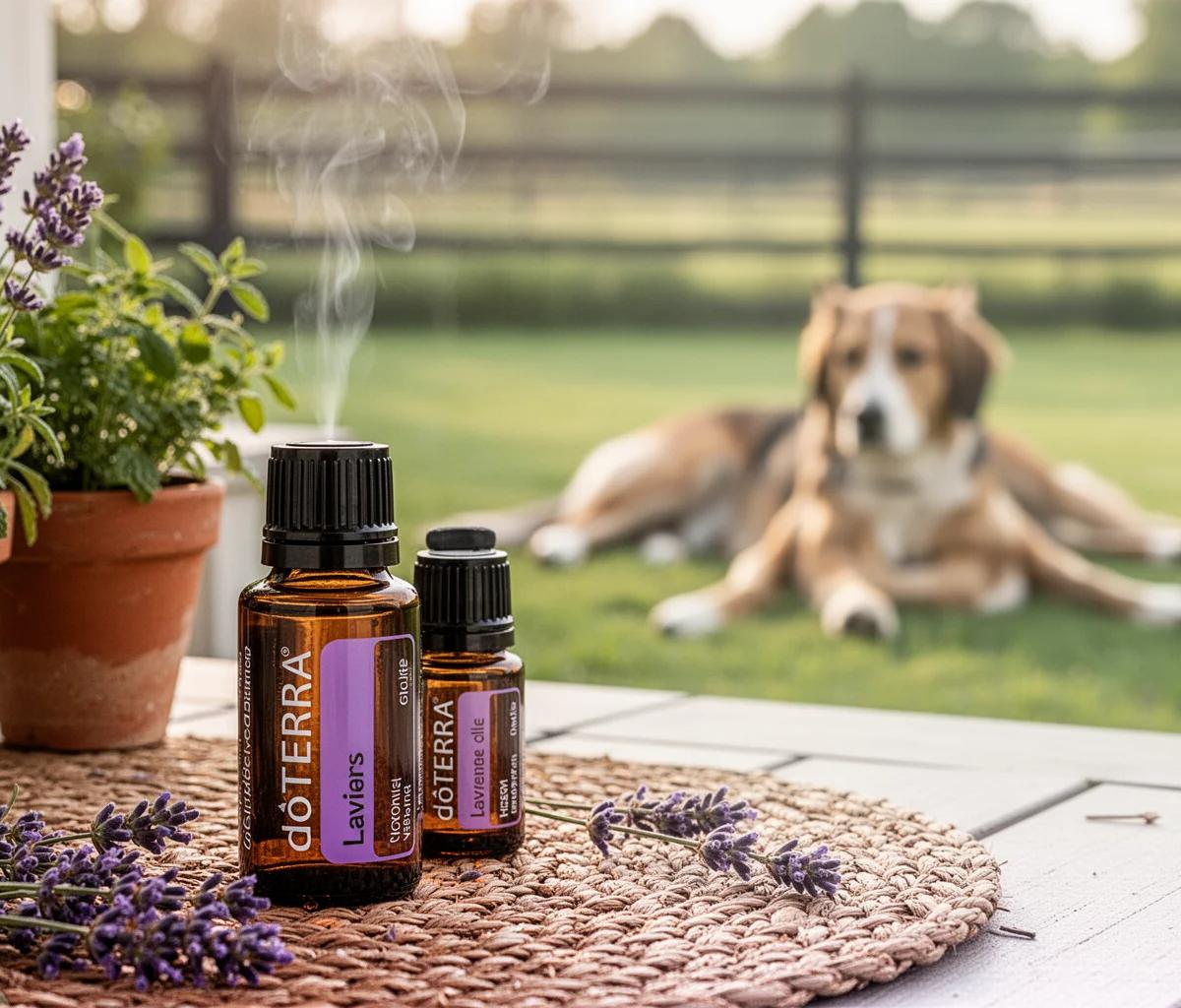
By the EssentialTail Team — pet owners, Wellness Advocates & doTERRA enthusiasts
If your dog has been licking their paws raw or rubbing their belly along the carpet again, you have probably already searched for anything that might bring them some comfort. The itchiness can feel relentless, and when you love them, watching it hurts. Many of us have landed on the same question: are there essential oils for dog skin allergies? It is a reasonable thing to wonder, but the direct answer is that no essential oil should take the place of a proper veterinary diagnosis. A dog’s itchy skin could be triggered by food, pollen, dust mites, contact irritants, or something else entirely, and only a veterinarian can pinpoint the cause and build a safe, effective plan. What pure essential oils can offer, as a complementary part of that plan and always with explicit veterinary approval, is a supportive home environment. The key is knowing exactly which oils your veterinarian considers appropriate for your specific dog, used only in the way they instruct. The real reason so many dog owners choose doTERRA is not a skin claim, it is CPTG purity: every batch is tested and transparent, which matters enormously when the bottle is coming anywhere near a creature you love, even indirectly through diffusion. We want to walk you through what that looks like in a real home, always with "talk to your vet first" as the first and loudest step.
A Quality Question, Why Purity Comes First
When a dog is already dealing with sensitive, reactive skin, the last thing they need is a low-quality product full of synthetic fillers or unknown contaminants. This is where the conversation shifts from "which oil fixes the itch" to "if my veterinarian and I decide to use an oil, how do I know it is truly pure?"
doTERRA’s Certified Pure Tested Grade standard is not a loose marketing phrase; it is a rigorous, third-party-tested framework. Every bottle of Lavender or Frankincense you open has been tested for purity and potency, free from pesticides and adulteration. In a home with a compromised animal, that peace of mind means something real. When we occasionally diffuse a gentle oil like Roman Chamomile in a well-ventilated room far from where our own dog sleeps, we do it precisely because we trust what is in the bottle, but only after our veterinarian confirmed that specific oil was okay for our specific dog to be around in that specific, highly diluted airborne way. It is a cautious protocol, not a casual habit. The purity gives us the confidence to have the conversation; the veterinarian then decides if and how the oil enters our shared space.
| If your veterinarian green-lights diffusion | If your veterinarian does not green-light diffusion |
|---|---|
| Use only the single oil they name, no blends or DIY combinations | Remove all diffusers from the house entirely |
| Choose a CPTG-tested, pure oil like Copaiba or Vetiver | Stick strictly to your veterinarian’s prescribed topical/oral treatment plan |
| Diffuse very lightly in a large, ventilated room the dog can freely leave | Revisit the conversation only if the veterinarian reassesses and recommends it |
| Never apply the oil to the dog’s skin, bedding, or collar | Keep all essential oil bottles stored cleanly away from the dog’s reach |
The doTERRA Oils Gentle Enough for Dogs article explores this in more depth, but the short version here is that no oil is automatically gentle enough for every dog, and your veterinarian’s words are the only ones that count.
How We Actually Approach This at Home
In our experience, the most important tool for a dog dealing with skin allergies is not any oil, it is a thorough veterinary workup. Once that is done and we have a clear treatment plan, these are the steps we follow for the ambient, environmental side of comfort:
- Veterinarian consultation first, every time. We bring a list of specific oils we are curious about, and we listen when the veterinarian says no. Many oils that are wonderful for humans are genuinely unsafe for dogs, especially in direct skin contact. For skin allergies specifically, the risk of an already-irritated skin barrier absorbing something harmful is too high to guess.
- Audit the dog’s entire environment. Before a single drop of oil enters the room, we strip out scented candles, plug-ins, and chemical cleaning residues. Often, a veterinarian will identify a contact irritant in the home that is a bigger culprit than we ever suspected.
- Diffuse only if approved, and only for ambient calm. If our veterinarian names a specific Cedarwood or a gentle floral they consider acceptable for our dog to be around in an airborne capacity, we diffuse very sparingly in a large, open area far from the dog’s bed, with an open window, and for less than 30 minutes. The dog is never confined in that room, and we watch for any sign of discomfort. This is about creating a soft, pleasant background for the humans, never a treatment for the dog’s skin.
- Never apply topically unless the veterinarian scripts it out. We have never, not once, rubbed an essential oil onto our dog’s skin without explicit, specific, drop-by-drop instruction from our veterinarian. Even then, we use only the exact product and carrier the veterinarian prescribes. For reference, Essential Oils Safe for Dogs with Anxiety covers the ambient approach in more detail, with a similarly cautious framework that applies just as much here.
Frequently Asked Questions
Can I put essential oils directly on my dog’s itchy skin? You should never do this without explicit, case-specific instruction from your veterinarian. A dog’s skin, especially when already inflamed and broken from scratching, can absorb substances differently. The wrong oil, or the right oil at the wrong dilution, can make the situation significantly worse or even toxic.
Is diffusion a safer way to help my dog’s allergies? Diffusion is still not automatically safe because a dog’s respiratory system is far more sensitive than ours. A dog with a skin allergy often has an underlying inflammatory state, and inhaling certain volatile compounds can add stress, not relief. Only diffuse if your veterinarian has approved the specific oil, the room is well ventilated, and the dog is free to walk away.
Why do people mention Tea Tree oil for dog skin? Tea Tree (Melaleuca) is a potent oil that many people assume is gentle because it appears in human skincare, but it is actually highly risky for dogs, particularly if absorbed through the skin. Many veterinarians explicitly warn against it, and it is even more acutely dangerous for cats. We never keep it in a home where a dog might accidentally lick a spill or a treated surface.
Should I trust a product just because it is labelled “natural”? No. Natural does not mean safe for animals. Pennyroyal and wintergreen are both natural, and both can be catastrophically dangerous. Trust purity testing like doTERRA’s CPTG standard for quality, but always trust your veterinarian for safety.
Living with a dog who has skin allergies is a slow, patient journey of identifying triggers and supporting the skin barrier. Pure essential oils can sometimes enter the conversation as a small piece of the environmental background, but only when a veterinarian leads, the door stays open, and the dog’s comfort signals are the final word. The real commitment to your dog is not the latest oil, it is the thousand small choices to keep their world calm, clean, and medically sound. This content is for general information only and is not veterinary advice. Always consult a qualified veterinarian before using essential oils in a home with animals.