Essential Oils Safe for Dogs to Breathe
Which essential oils are safe for dogs to breathe? Learn what we've discovered about diffusing responsibly, CPTG purity, and always asking your vet first.
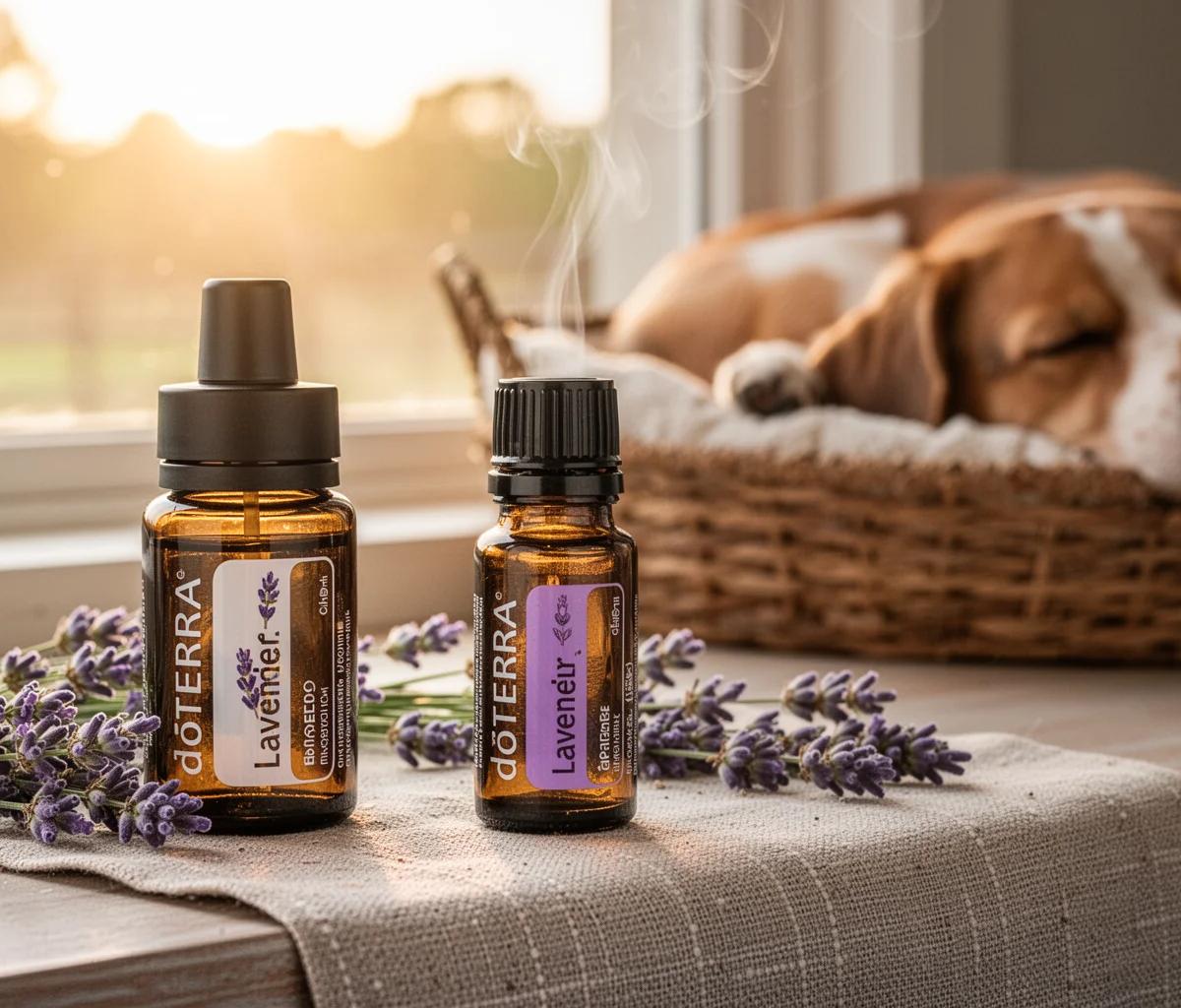
By the EssentialTail Team — pet owners, Wellness Advocates & doTERRA enthusiasts
You come home, turn on the diffuser, and your dog walks straight into the room and settles down. It feels fine, but is it?
The honest answer: while some essential oils are generally better tolerated by dogs than others, NO oil is automatically "safe" for every dog to breathe. Dogs have far more sensitive respiratory systems than we do, and individual tolerance varies enormously by size, age, breed, and health. Lavender, Frankincense, and Cedarwood are among the oils most commonly diffused around dogs under veterinary guidance, but even these require caution: a well-ventilated space, short sessions, the dog free to leave the room, and your veterinarian's approval first. The real key is purity, doTERRA's CPTG (Certified Pure Tested Grade) testing standard helps ensure you're diffusing a pure oil, not one adulterated with synthetic fillers that pose additional risk, but purity alone doesn't make an oil safe for your individual dog. Always ask your vet before diffusing anything around your pet, watch for signs of discomfort (drooling, pawing at the face, coughing, lethargy), and stop immediately if your dog reacts.
If you're wondering which oils work best in a dog-safe diffuser setup, let's walk through what we've learned.
Why Purity Matters When You Diffuse Around Dogs
Your dog breathes whatever is in the air. Adulterated oils, cut with synthetics, extenders, or undisclosed additives, introduce compounds your dog's liver and lungs were never meant to process.
doTERRA's CPTG standard means every batch is tested by the company and third-party labs for purity and composition. You're diffusing the plant compounds the label claims, not mystery fillers. That testing is the single biggest reason we choose doTERRA when we diffuse in a home with dogs: we know what we're breathing, and so does our dog.
Purity doesn't make an oil safe, your vet and your dog's individual response do that, but it removes one major variable. Start with a pure oil, then ask your vet.
Oils Dog Owners Most Often Diffuse (Always Under Veterinary Guidance)
The following oils are commonly diffused around dogs when a veterinarian approves and the dog can leave the room. This is not a guarantee of safety, it's a starting point for a conversation with your vet.
| Oil | Why Owners Use It | Caution |
|---|---|---|
| Lavender | Calm, gentle aroma in shared evening spaces | Watch for any sign of distress; stop if the dog avoids the room |
| Frankincense | Grounding scent, often used in quiet moments | Never apply topically without vet approval; diffuse only |
| Cedarwood | Woodsy, familiar to many dogs | Keep sessions short and the space well ventilated |
Never diffuse these around dogs: Tea Tree (toxic even in small amounts), Peppermint and other mints, Eucalyptus, Wintergreen, citrus oils (especially concentrated), or any "hot" phenolic oil (Oregano, Thyme, Cinnamon, Clove). If your dog is in the house, these stay in the bottle.
How to Diffuse Responsibly Around Your Dog (Step by Step)
- Ask your veterinarian first. Show them the oil, the label, and your diffuser. Get explicit approval for your individual dog.
- Choose a large, well-ventilated room with open doors so your dog can walk out anytime.
- Start with short sessions, 5 to 10 minutes, not hours. Watch your dog the entire time.
- Use far less oil than you would in a dog-free home. Qualitatively: a very light amount. Your vet can help you judge what "light" means for your space and dog.
- Stop immediately if your dog drools, paws at his face, coughs, sneezes repeatedly, becomes lethargic, or leaves the room and won't come back. Turn off the diffuser, ventilate the space, and call your vet if symptoms persist.
- Never diffuse in a crate, car, or any enclosed space your dog cannot leave.
Can you diffuse doTERRA oils around dogs safely? The answer always starts with your vet, not the internet.
Why We Never Give Drop Counts for Dogs
You'll notice we haven't told you "use X drops." That's intentional. Room size, ceiling height, ventilation, your dog's weight, age, breed, and health all matter, and a number that works in one home can overwhelm or harm a dog in another. Dosing, even for diffusion, is your veterinarian's job, never ours. Describe your setup to your vet and follow their guidance.
Related reading
- Safe Essential Oils for Dogs Diffuser
- Can You Diffuse doTERRA Oils Around Dogs Safely
- Is Peppermint Oil Safe for Dogs
Frequently Asked Questions
What essential oils are completely safe for dogs to breathe?
None are "completely" safe for all dogs. Lavender, Frankincense, and Cedarwood are most commonly tolerated under veterinary supervision, but individual dogs vary. Always ask your vet and ensure your dog can leave the room.
Can I diffuse Lavender around my dog every day?
Only if your veterinarian approves daily use for your specific dog. Even gentle oils require caution, keep sessions short, the space ventilated, and watch for any sign your dog is uncomfortable.
Which oils should I never diffuse around dogs?
Tea Tree, Peppermint, Eucalyptus, Wintergreen, citrus oils, and "hot" oils like Oregano, Thyme, Cinnamon, and Clove. These can be toxic or cause severe respiratory distress in dogs.
How do I know if my dog is reacting badly to an essential oil?
Watch for drooling, pawing at the face or nose, coughing, sneezing, lethargy, vomiting, or refusing to enter the room. Stop diffusing immediately and call your vet if symptoms continue.
Is doTERRA safe for dogs because it's pure?
Purity (CPTG testing) means you're diffusing a clean oil without synthetic fillers, which matters, but purity doesn't make an oil safe for your dog. Safety depends on the oil, the amount, your dog's health, and your veterinarian's approval. Choose doTERRA for quality, then ask your vet.
Conclusion
The oils you diffuse share the air your dog breathes, so caution and your veterinarian come first, every time. Purity, doTERRA's CPTG standard, gives you confidence in what's in the bottle, but your vet and your dog's response determine what's safe in your home.
This content is for general information only and is not veterinary advice. Always consult a qualified veterinarian before using essential oils in a home with animals.