Safe Essential Oils for Dogs Diffuser
Which essential oils can you safely diffuse around your dog? A warm, vet-first guide to responsible diffusing at home with your canine companion.
By the EssentialTail Team — pet owners, Wellness Advocates & doTERRA enthusiasts
If you're reading this, you're probably wondering which essential oils are safe to diffuse around your dog. The short answer is: some oils are generally better tolerated by dogs than others, but no oil is automatically safe for every dog. Before you diffuse anything, consult your veterinarian first, check the doTERRA label, and always ensure your dog can leave the room if the scent bothers them. Dogs have far more sensitive respiratory systems than we do, and what smells gentle to us can overwhelm them. Start with well-ventilated spaces, short sessions, and close observation. What I've come to understand over the years is that responsible diffusing around dogs is about caution, respect for their individual needs, and always asking the vet before you start.
Which Oils Are Generally Better Tolerated by Dogs?
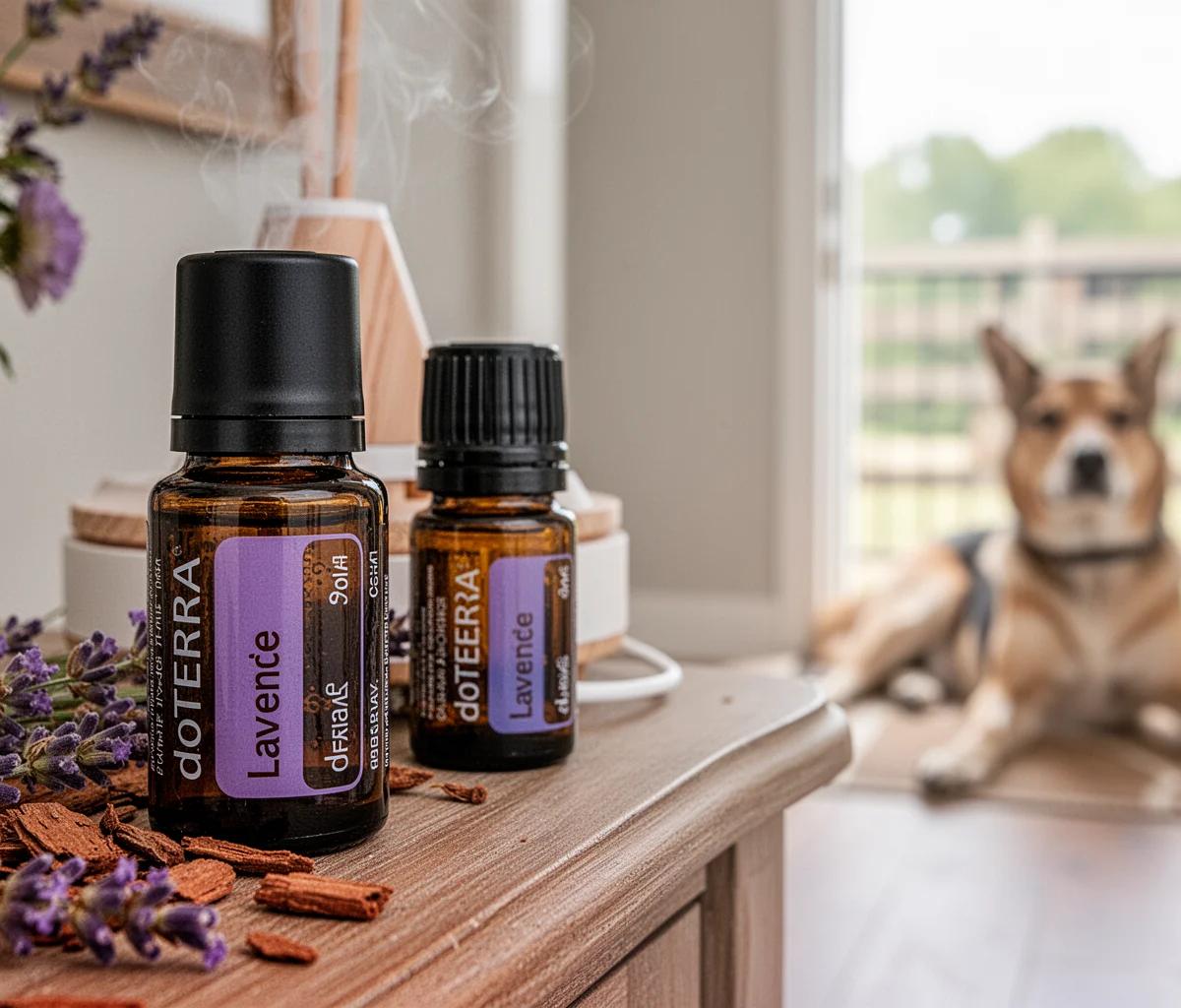
While I can't give you a universal "safe" list, every dog is different, certain oils tend to come up more often in conversations with dog owners who diffuse responsibly. These include Lavender, Frankincense, and Cedarwood. Many owners know Lavender for its calming aroma, and I've used it in our home, always with the door open, when settling in after a long day. Frankincense has a grounding, resinous scent, and Cedarwood brings a warm, woodsy tone that feels natural in shared spaces.
That said, I never assume an oil is "fine" just because it's on a general list. I always check with our vet first, watch our dog closely, and stop immediately if she seems uncomfortable (panting, drooling, backing away, or acting restless).
Oils to Avoid Around Dogs
Some oils are widely recognized as risky for dogs and should never be diffused around them. These include:
- Tea Tree (Melaleuca), even in diffused form, it can cause toxicity
- Peppermint and other mints
- Eucalyptus
- Wintergreen
- Phenolic or "hot" oils: Oregano, Thyme, Cinnamon, Clove
- Most citrus oils (Lemon, Wild Orange, Grapefruit)
If you have multiple pets, especially cats or birds, the rules change entirely. Cats lack the liver enzyme to metabolise many oils, making them extremely vulnerable, and birds have such delicate respiratory systems that diffusing can be rapidly fatal. When in doubt, don't diffuse. For more context on managing oils in a multi-pet home, see Choosing doTERRA Oils for a Home with Pets.
How to Diffuse Responsibly Around Dogs
Here's what I recommend, based on what has worked for us and what I've learned from other cautious dog owners:
- Ask your veterinarian first. This is not optional. Your vet knows your dog's health, breed sensitivities, and any conditions that might make diffusing unsafe.
- Choose a well-ventilated room where your dog can walk away freely. Never diffuse in a crate, car, or closed room.
- Start with a very small amount. I can't give you a drop count, it depends on your room size, ventilation, and your individual dog, but keep it light and sparse.
- Run the diffuser for short sessions. Fifteen to thirty minutes is plenty. Turn it off and air out the room before running it again.
- Watch your dog closely. If they leave the room, pant, drool, seem anxious, or act unlike themselves, stop immediately and ventilate the space.
- Never apply oils topically or add them to your dog's water or food without explicit veterinary instruction. Ingestion can be toxic.
| Action | Why It Matters |
|---|---|
| Vet consult first | Your dog's health and breed may have specific vulnerabilities |
| Open door / ventilation | Lets your dog escape if the scent is too strong |
| Short sessions | Reduces cumulative exposure |
| Close observation | Catches discomfort or reaction early |
Why doTERRA for a Home with Dogs
When I first started diffusing at home with our dog, I wanted to know the oils were pure and tested. That's where doTERRA's CPTG standard (Certified Pure Tested Grade) gave me confidence. Every batch is third-party tested, and the sourcing is traceable. It doesn't mean the oils are automatically safe for animals, nothing does, but it does mean you're starting with quality, not contaminants or fillers. In our experience, that consistency matters when you're responsible for a living being who can't tell you in words if something is wrong.
If you're new to essential oils and want to explore gently, the Home Essentials Kit includes Lavender, Frankincense, and several other oils dog owners commonly ask about, along with a diffuser. It's a sensible starting point, always under veterinary guidance.
Related reading
- Can You Diffuse doTERRA Oils Around Dogs Safely
- Essential Oils Toxic to Dogs, The Complete List
- Diffusing Essential Oils Around Dogs Safely
Frequently Asked Questions
Can I diffuse Lavender around my dog every day?
Only if your veterinarian approves it and your dog shows no signs of discomfort. Even gentle oils should be used sparingly, with breaks and observation. Never assume daily use is safe without a vet check.
What should I do if my dog seems bothered by the diffuser?
Stop immediately, open windows, and move your dog to fresh air. If symptoms persist, panting, drooling, vomiting, lethargy, contact your veterinarian or an animal poison control centre right away.
Are doTERRA oils safe for all dogs?
No oil is universally safe for all dogs. Breed, size, age, health, and individual sensitivity all matter. Always consult your vet before diffusing anything around your dog.
Can I use the same oils I diffuse for myself around my dog?
Not necessarily. What's pleasant and safe for you may overwhelm or harm your dog. Their respiratory system is far more sensitive. Always check with your vet first.
How do I know if a diffuser session is too long?
If your dog leaves the room, seems restless, pants excessively, or acts unlike themselves, it's too much. Shorter is safer. When in doubt, stop and ask your vet.
Conclusion
Diffusing essential oils around your dog can be done responsibly, but it requires caution, veterinary guidance, and close attention to your individual dog. When in doubt, ask your vet, keep the door open, and always put your dog's comfort first.
This content is for general information only and is not veterinary advice. Always consult a qualified veterinarian before using essential oils in a home with animals.