Essential Oils to Avoid With Dogs at Home
Learn which essential oils are risky for dogs and how to keep your home aromatic and safe. Vet-first guidance for responsible pet owners. A practical guide with.
By the EssentialTail Team — pet owners, Wellness Advocates & doTERRA enthusiasts
The first time I reached for a diffuser with my dog asleep on the rug beside me, I paused. I loved the idea of a fresh-smelling home, but I also knew dogs experience scent far more intensely than I do. It made me wonder exactly which oils I should set aside.
The short answer is that several essential oils are genuinely risky for dogs, especially the “hot” phenolic oils like oregano, thyme, cinnamon, and clove, along with tea tree, wintergreen, pine, eucalyptus, and most citrus and mint oils. Dogs are far more sensitive than humans, and their noses, skin, and bodies handle concentrated plant compounds differently. This article walks you through the main oils to avoid, why they matter, and how to enjoy aromas in a dog-friendly way, always with your veterinarian’s guidance first.
Oils That Deserve Extra Caution Around Dogs
Many dog owners are surprised to learn that “natural” does not automatically mean appropriate for pets. Essential oils are highly concentrated plant extracts, and what works beautifully in human aromatherapy can overwhelm a dog’s system.
The oils I keep furthest from my own dog include:
| Oil to Avoid | Main Reason It Raises Concern |
|---|---|
| Tea Tree | Strong compounds that can overwhelm dogs, especially if ingested |
| Oregano, Thyme, Cinnamon, Clove | Potent “hot” oils known for intense aromatic and skin effects |
| Wintergreen | Contains compounds that are particularly problematic for dogs |
| Pine and Eucalyptus | Heavy, sharp aromas that many dogs find difficult to tolerate |
| Citrus and Mints | Lemon, wild orange, peppermint, and similar oils can be intense for canine noses |
This is not a complete list, and individual dogs vary widely. The ASPCA Animal Poison Control Center and the Pet Poison Helpline consistently advise pet owners to treat essential oils as potentially hazardous products, not casual household fragrances. What smells mild to us can be overwhelming to a dog.
In our experience, the safest approach is to assume any concentrated oil deserves caution until your own veterinarian says otherwise.
How to Diffuse Responsibly in a Dog-Friendly Home
If you choose to diffuse with a dog in the house, the setup matters more than the specific aroma. Even oils that are less concerning can feel intense in a small, closed room.
Here is the step-by-step rhythm we follow:
- Ask your veterinarian first. Share the specific oil or blend you are considering and describe your dog’s age, size, and health background.
- Diffuse only in a large, well-ventilated room. Open a window or run air circulation so the scent never becomes concentrated.
- Keep the diffuser physically out of reach. Curious noses and wagging tails knock things over, and spilled oil on fur or paws can be licked.
- Give your dog a clear exit. The door stays open, and the dog is always free to walk away to another part of the home.
- Watch body language. Sniffing, moving away, drooling, pawing at the face, or restless behaviour means it is time to stop.
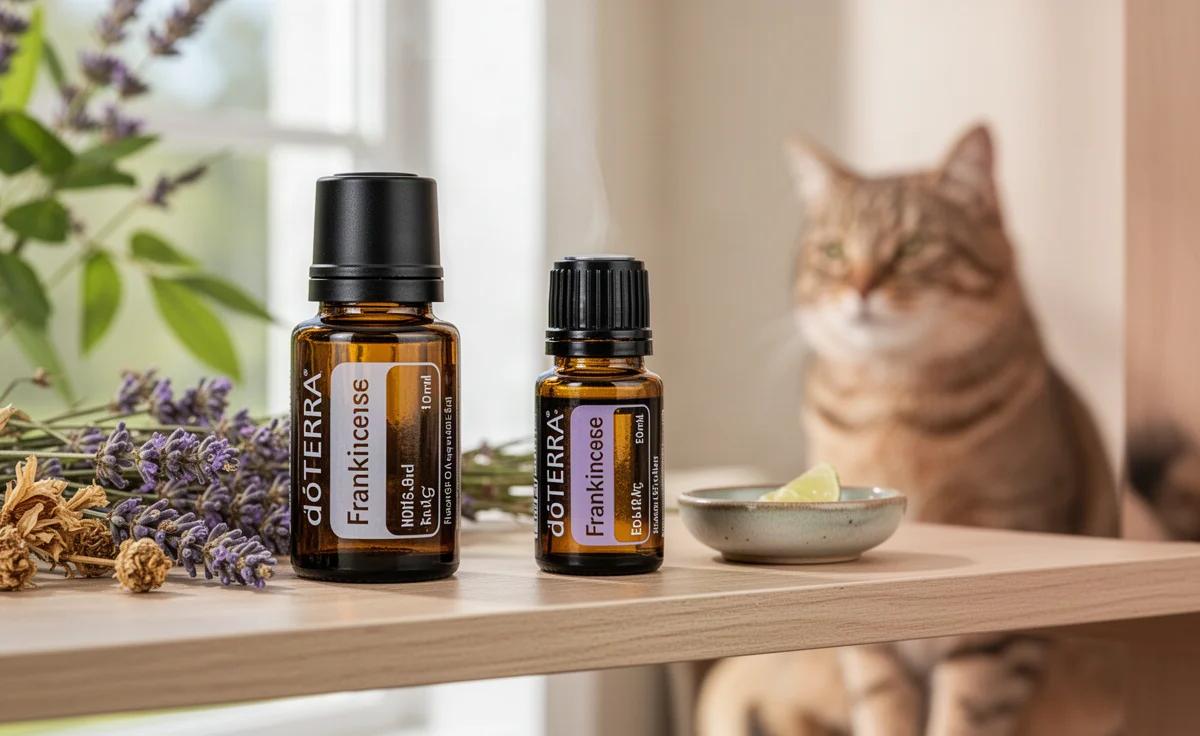
If you want a gentler aromatic starting point, some owners prefer the soft, woodsy character of Frankincense or the clean, grounding notes of Cedarwood. Even these are not a guarantee of suitability for every dog, and I only mention them because they are frequently discussed among pet owners as milder aromatic options.
For broader context on which oils carry the most concern, this guide to essential oils toxic to dogs is a helpful reference. There is also a complete list of essential oils toxic to dogs worth reviewing before you introduce anything new.
The Hidden Danger of Passive Diffusion: Licked, Walked-On, and Groomed Oils
Many people picture essential oil exposure as a dog directly sniffing a bottle or licking a spill. In practice, the more common route is passive and much harder to spot. When you diffuse hot oils like clove or cinnamon, microscopic droplets settle onto your floors, furniture, and your dog’s coat. Later, during normal grooming or a nap on the rug, the dog ingests those particles.
This is exactly how a nightly oregano-and-thyme diffuser session becomes a slow, cumulative irritant. The dog never touched the bottle. The oil never spilled. Yet the dog’s liver and digestive system absorb the compounds over days and weeks.
What to do instead: place a washable barrier, such as a cotton cloth or a dedicated pet blanket, under and around the diffuser area. Swap or wash it after each use. If your dog sleeps in the same room where you diffuse, either move the dog’s bed out of the drift zone or diffuse only while the dog is elsewhere. The goal is not perfect sterility; it is breaking the cycle of constant low-level re-exposure through fur and paws.
Scented Laundry, Litter, and Other Overlooked Exposures
Diffusers are not the only way hazardous oils enter a dog’s world. Calming sprays, scented shampoos, anti-chew formulas, and even dryer sheets sometimes contain tea tree, eucalyptus, peppermint, or citrus concentrates marketed as “natural.” A dog who licks a paw after walking across a freshly mopped pine-scented floor can absorb enough to show lethargy or stomach upset.
One classic mistake: using a peppermint spray to deter chewing, then blaming the chewing on bad behaviour when the dog starts drooling or pacing. The dog is not stubborn; it is reacting to the deterrent.
Keep a simple habit: before buying any scented product for a dog-friendly room, read the full ingredient list, not just the front label. If you see the oils on your avoid list, especially tea tree, wintergreen, pine, or eucalyptus, skip it or ask your veterinarian for a specific pet-safe alternative. For mopping and litter boxes, choose fragrance-free options or products explicitly labelled safe for cats and dogs by a veterinary body. A label that says “natural essential oil blend” tells you nothing about concentration, purity, or species safety.
Frequently Asked Questions
What should I do if my dog accidentally licks essential oil?
Contact your veterinarian or an animal poison control centre immediately. Do not wait for symptoms, do not induce vomiting, and do not try a home remedy. Quick professional advice is the only safe response.
Can I diffuse oils around my dog if the door is open?
An open door helps, but it does not make diffusion automatically safe. The room should also be large and well-ventilated, the diffuser out of reach, and your veterinarian should have approved both the oil and the overall setup first.
Are all essential oils bad for dogs?
No, not all, but the risk varies by oil, concentration, and the individual dog. Some owners explore softer options like Lavender or Roman Chamomile, yet even these require veterinary approval and careful, sparing use in a shared space.
Living Well With Dogs and Good Scents
A calm, pleasant home does not require risky aromas. For many of us, the answer is fewer oils, better ventilation, and a deeper respect for how differently our dogs experience scent. When in doubt, the kindest choice is always to leave the diffuser off and simply open a window. Your dog will thank you with a relaxed sigh from the cool patch of floor.
This content is for general information only and is not veterinary advice. Always consult a qualified veterinarian before using essential oils in a home with animals.