Essential Oils Toxic to Cats You Must Avoid
Discover which essential oils are toxic to cats and why some common oils can be dangerous. A practical, vet-first list every cat owner should know for peace of mind at home.
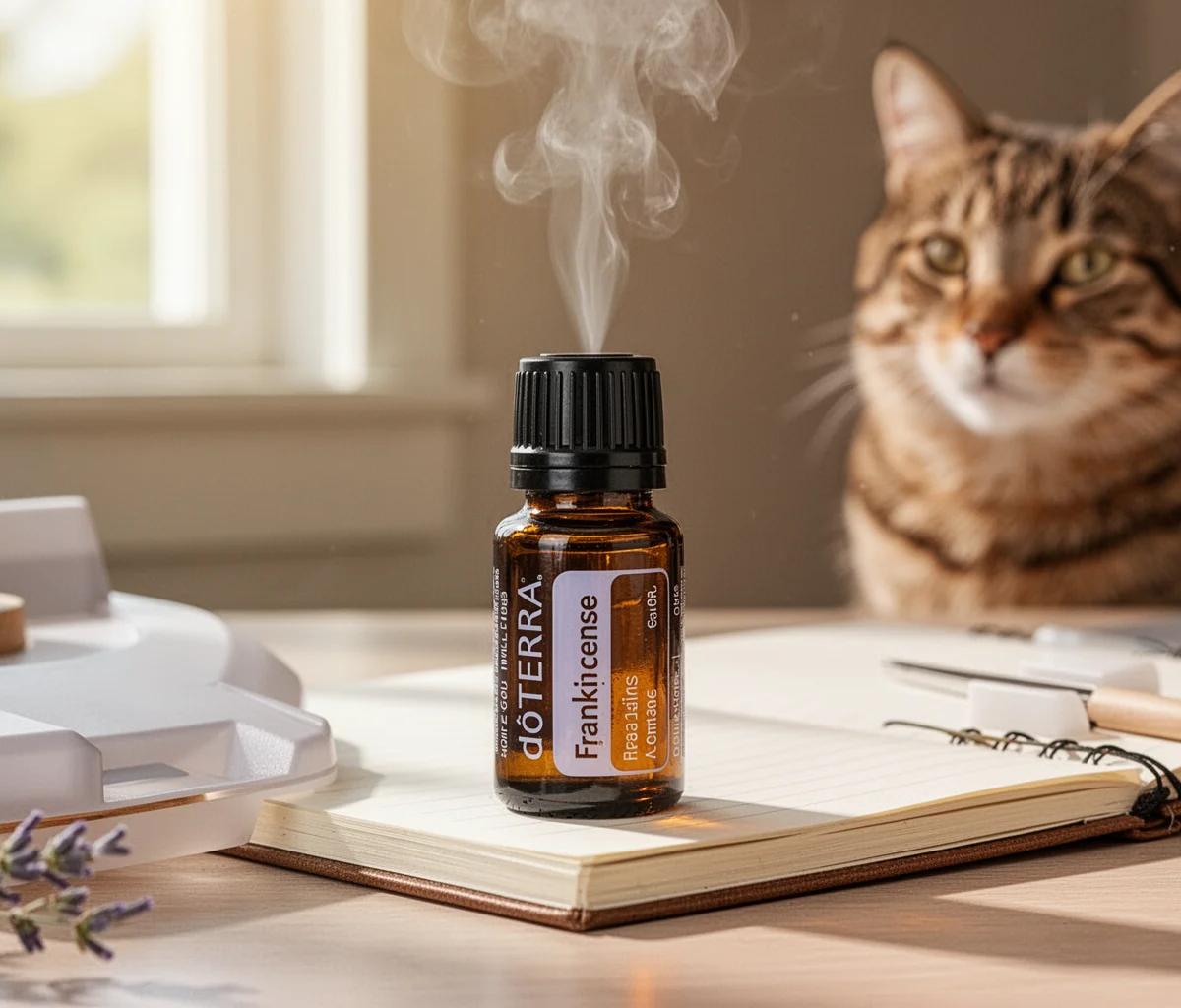
By the EssentialTail Team — pet owners, Wellness Advocates & doTERRA enthusiasts
I remember the quiet panic when I first brought a diffuser home and caught my cat staring at it from across the room. She seemed curious, and I suddenly realised I had no idea whether what I was about to put in it could hurt her. If you are reading this, you have probably felt that same knot. Here is the direct answer: cats lack a key liver enzyme, so many essential oils that are pleasant and helpful for humans can be toxic or even fatal to them. The biggest names to avoid completely are Tea Tree, all citrus oils, Peppermint and other mints, Eucalyptus, Wintergreen, Pine, and the hot phenolic oils like Oregano, Thyme, Cinnamon, and Clove. This is not a matter of “natural equals safe.” It is about feline biology, and the risk is real. Before any oil enters a home with a cat, the first call goes to your veterinarian. No article replaces that conversation.
Oils That Earn a Permanent Spot on the “No” List
Cats process compounds differently than dogs or humans. Phenols, terpenes, and other natural constituents that are well-tolerated by us can accumulate in a cat’s system because the metabolic pathway simply is not there. That means even a small amount diffused in a closed room, or a trace of oil on a surface a cat walks across and then grooms off, can become a problem. The rule in our house is simple: if it is on the list below, it does not come through the front door.
| Oil | Why It Is Risky for Cats |
|---|---|
| Tea Tree (Melaleuca) | Extremely potent; cats cannot break it down; even small accidental exposure can cause severe reactions. |
| Citrus oils (Lemon, Wild Orange, Bergamot, Grapefruit, Lime) | High in limonene and other compounds that are toxic to cats; ingestion or skin contact often leads to distress. |
| Peppermint & other mints | Contains menthol and ketones; cats lack the enzyme to process them safely. |
| Eucalyptus | Rich in cineole; gastrointestinal and neurological signs are well-documented in feline cases. |
| Wintergreen | Contains methyl salicylate; cats are extremely sensitive to salicylates. |
| Pine oils | High in monoterpene hydrocarbons; dermal and respiratory risks for cats. |
| Oregano & Thyme | Phenolic oils; highly concentrated; a tiny amount can overwhelm a cat’s system. |
| Cinnamon & Clove | Also phenolic; skin contact or ingestion often triggers immediate irritation and worse. |
Many cat owners are surprised to see familiar oils like Lemon on this list, it brightens so many human recipes and diffuser blends. But for a cat, it belongs firmly behind a closed cabinet door. The same goes for Peppermint, which is a human favourite but not something a cat’s body knows what to do with.
How to Keep a Curious Cat Safe When Oils Are in the Home
Safety around cats is less about memorising a list and more about building simple, consistent habits. Over time, these steps become second nature.
- Talk to your veterinarian first. Before you open a single bottle, let your vet know you use essential oils and which ones you are considering. They understand your cat’s individual health and can give you specifics no blog can offer.
- Store every bottle like a medicine cabinet. Cats explore counters, shelves, and bags. All oils, even blends you consider gentle, live in a latched cupboard or a box stored up high. Licked residue from a bottle cap is enough to worry about.
- Make diffusion an open-door activity. If you diffuse an oil that is not on the red-flag list, do it in a well-ventilated room with a door the cat can walk through any time. Entrapment is the real danger. A cat stuck in a scented room without an exit breathes in far more than it should.
- Wash your hands after handling oils. It is easy to forget, but if you touch an oil and then pet your cat, the oil transfers to their fur. Later, they groom it off. Soap and water after handling is a quiet, powerful habit.
- Skip topical application entirely unless your vet instructs it. Cats groom constantly. Anything placed on their skin will likely end up in their mouth. This isn’t a grey area; let the professional make the call.
- Know the emergency number. If your cat accidentally ingests or walks through an oil, contact your veterinarian or an animal poison control centre immediately. Do not wait, do not home-remedy, and do not hope it passes. Speed matters.
For a deeper look at which oils rarely cause concern when used with extraordinary care, many of our readers found Essential Oils Toxic to Cats What to Avoid pairs usefully with the practical precautions here.
Related reading
- Which Essential Oils Are Dangerous for Cats
- Essential Oils Toxic to Cats What to Avoid
- Essential Oils Toxic to Cats
Frequently Asked Questions
What should I do if my cat licked an essential oil? Call your veterinarian or an animal poison control hotline right away. Do not offer food, water, or anything else unless a professional tells you to. The clock matters, and guessing is dangerous.
Can I diffuse essential oils in another room if my cat isn’t in it? It depends on the oil, the ventilation, and whether your cat can wander into that space. Even oils dispersed into the air settle on fur and surfaces. Check with your veterinarian about the specific oil and your home layout before assuming separation is enough.
Are there any essential oils that are safe for cats? “Safe for cats” is a phrase no responsible source should use casually. Every cat is an individual, and what passes without incident in one may cause a reaction in another. Some oils, such as Frankincense or Cedarwood, are occasionally discussed in experienced circles, but only a veterinarian who knows your cat can make that call. No oil earns a blanket safety pass.
Why are citrus oils so risky for cats? Citrus oils contain compounds like limonene and linalool that cats cannot metabolise efficiently due to a missing liver enzyme. The result is that even small exposures can accumulate and cause neurological or digestive distress.
Do kittens face greater risk than adult cats? Yes. Kittens have smaller bodies and less developed metabolic pathways, so the margin for error is even narrower. If you have a kitten, the default should be no oils in the home until you’ve had a specific conversation with your vet.
A calm home and a healthy cat are not at odds. They just take a little knowledge and a lot of respect for how differently a feline body works. I have learned to enjoy essential oils while keeping my cat completely separated from them, and that peace of mind is worth more than any “just this once” compromise. When in doubt, call your vet. They have seen it all and they want the same thing you do, a contented cat with all nine lives intact. Adaptiv · Arborvitae · Balance · Console
This content is for general information only and is not veterinary advice. Always consult a qualified veterinarian before using essential oils in a home with animals.