Essential Oils Toxic to Cats What to Avoid
Many essential oils are toxic or even fatal to cats. Learn which oils are most dangerous for felines and how to keep your cat safe around home aromas.
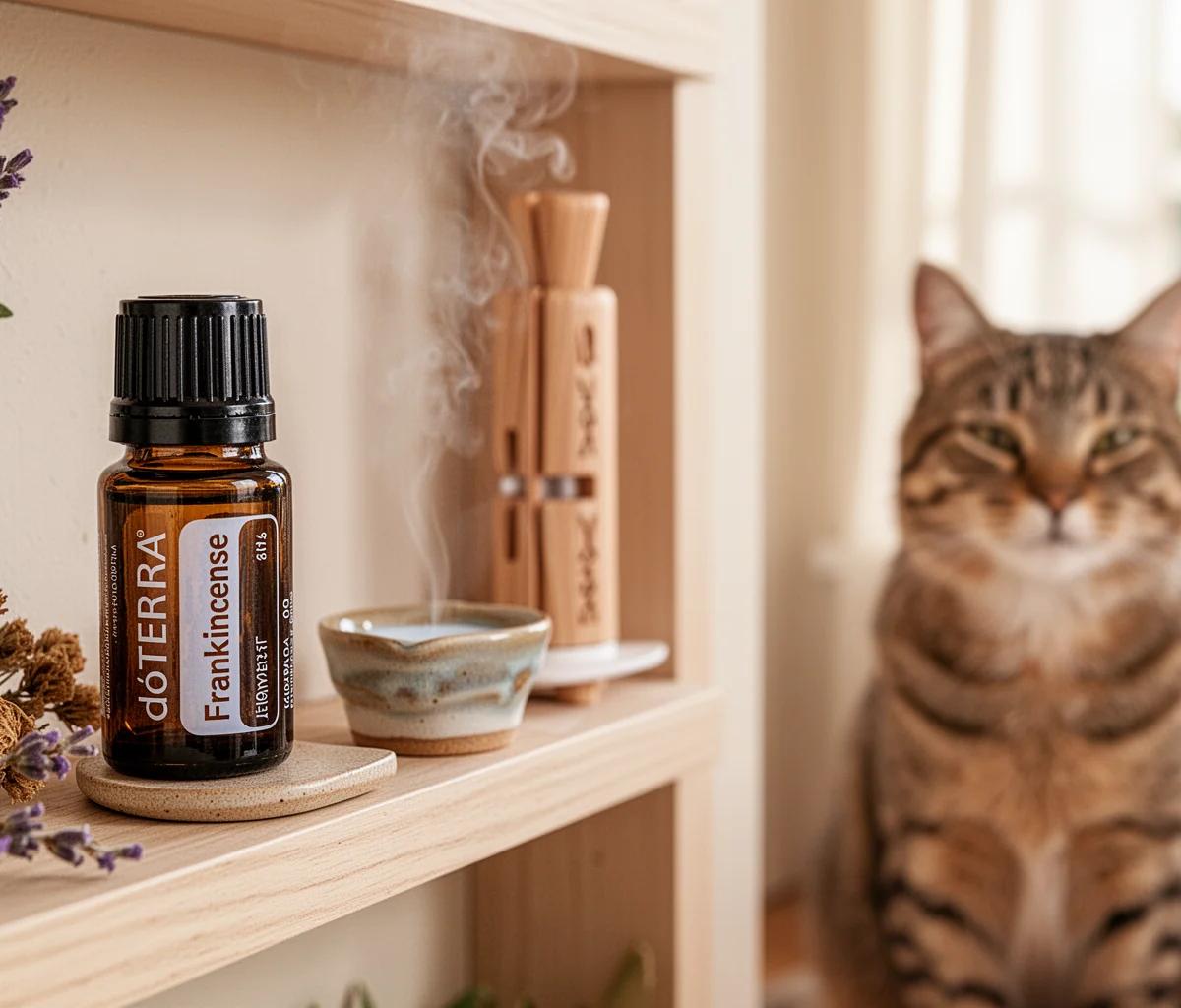
By the EssentialTail Team — pet owners, Wellness Advocates & doTERRA enthusiasts
You set your diffuser on the shelf, pick an oil that smells like a spa, and glance down to see your cat curled up on the rug nearby. That moment of calm can shift to worry fast: is what I am breathing safe for her?
The short answer is that many essential oils are toxic, even fatal, to cats because felines lack a crucial liver enzyme (glucuronyl transferase) needed to break down certain compounds. This means oils that are perfectly fine for us can build up in a cat’s system and cause serious harm. The highest-risk oils include phenols (Oregano, Thyme, Clove, Cinnamon), Tea Tree (Melaleuca), most citrus oils (Lemon, Wild Orange, Bergamot, Grapefruit, Lime), and minty or sharp oils like Peppermint, Eucalyptus, Wintergreen, and Pine. Even diffusing them in a room your cat cannot leave is dangerous. The safest approach, always, is to ask your veterinarian before using any essential oil in a home that shares air with a cat. Below, we walk through exactly what to avoid, why cats react differently than dogs or humans, and how to keep your home smelling pleasant without putting your feline at risk.
The Most Dangerous Oils for Cats, at a Glance
Not all oils carry the same risk, but a handful are widely recognised as hazardous for cats. The table below groups them by risk category so you can spot them quickly.
| Risk Level | Oil Types | Specific Oils to Avoid |
|---|---|---|
| Highest, Phenolic compounds | Oregano, Thyme, Clove, Cinnamon | Tea Tree (Melaleuca) is especially dangerous |
| High, Citrus | Lemon, Wild Orange, Bergamot, Grapefruit, Lime | Even diffused in another room, particles can travel |
| High, Minty & Sharp | Peppermint, Wintergreen, Eucalyptus | Often found in respiratory or muscle blends |
| Moderate, Woody/Evergreen | Pine, Spruce, Fir | Still risky; keep away from shared air |
What surprises many cat owners is that Tea Tree Oil and Cats, A Serious Danger is one of the most toxic combinations. Even a small amount applied to the skin or ingested during grooming can overwhelm a cat’s system. This is not a “more is toxic, less is fine” situation, any exposure can be harmful.
How to Protect Your Cat Without Giving Up Aromas
You do not have to throw away every bottle. What matters is how and where you use them. In our experience, a few practical habits make all the difference.
- Diffuse in a room your cat cannot enter. Keep the door closed and the window cracked. Wait an hour after the diffuser stops before letting your cat back in.
- Store every bottle and diffuser out of reach. Cats climb. A high shelf near a curtain or bookshelf is an invitation. Use a latched cabinet instead.
- Wash your hands after touching any oil. Cats groom constantly. If you pet them with traces of Wintergreen or Tea Tree on your fingers, they ingest it.
- Never apply an oil to your cat. Even diluted, even on the collar, even the “gentle” ones. A cat’s skin absorbs differently, and grooming turns topical into oral.
- Watch for signs of distress. Drooling, wobbliness, vomiting, or sudden lethargy means vet or animal poison control immediately, never wait.
For homes determined to keep a light, pleasant scent around a cat, the question usually shifts to what might be less concerning. If you have already spoken with your veterinarian and received the green light to explore, some owners gravitate toward oils like Frankincense, Roman Chamomile, or Cedarwood, diffused sparingly in a large, ventilated space the cat can leave at any time. Still, no oil is inherently “safe for cats,” which is why we keep coming back to the same advice: ask your vet first. For more context on which aromas are often discussed in feline-friendly circles, read Essential Oils Safe for Cats to Smell.
The reason many pet owners stick with doTERRA, even while being extremely selective, is the CPTG testing. Knowing exactly what is in the bottle, no unexpected fillers or adulterants, makes it easier to have an honest conversation with your veterinarian. When we want a calming home scent without any worry, we reach for a diffuser blend like doTERRA Serenity in a room our cat never enters. A diffuser like the Aroma Essentials Collection can also help keep the output gentle and controlled. For topical routines of our own (never the cat’s), we lean on pre-diluted options like Copaiba Touch or Vetiver Touch, applied well away from our feline family members. On days when someone in the house craves an earthy, woody base note, a single drop of Sandalwood goes into a personal inhaler, not the air a cat shares.
Related reading
- Which Essential Oils Are Dangerous for Cats
- Essential Oils Toxic to Dogs and Cats
- Essential Oils Toxic to Cats
Frequently Asked Questions
Can I diffuse essential oils at all if I have a cat?
Only if your veterinarian approves and you follow strict precautions: diffuse in a room the cat cannot enter, ventilate well afterward, and never let the cat linger near a running diffuser. Many vets recommend not diffusing at all in a home with cats, especially those with respiratory sensitivity.
What should I do if my cat licks spilt essential oil?
Act immediately. Wipe any excess from the fur with a dry cloth, do not use water or soap unless your vet instructs it, and call your veterinarian or an animal poison control centre straight away. Do not wait for symptoms to appear.
Are hydrosols safer than essential oils for cats?
Hydrosols contain far lower concentrations of volatile compounds, but they are not automatically safe. Some hydrosols still carry traces that can upset a cat’s system. Always ask your veterinarian before introducing any aromatic product around a cat.
Conclusion
Cats are not small dogs, and they are certainly not small humans. Their bodies handle aromatic compounds in a way that puts them at special risk. The list of oils to keep well away from your feline is worth memorising, and a quick phone call to your veterinarian before diffusing anything new is always the right move. A lovely home scent is never worth harming the animal curled up beside you.
This content is for general information only and is not veterinary advice. Always consult a qualified veterinarian before using essential oils in a home with animals.