Safe Essential Oil Spray for Cat Bedding
Wondering about a safe essential oil spray for cat bedding? Learn what matters most, which oils are risky for cats, and vet-first ways to keep bedding fresh.
By the EssentialTail Team — pet owners, Wellness Advocates & doTERRA enthusiasts
You have probably stood in your living room, looking at your cat's favorite blanket, wondering if there is a way to freshen it without causing harm. It is a fair question, and one we hear often. The direct answer is that cats are uniquely sensitive to essential oils, and there is no single spray we can call universally safe for cat bedding, so the most responsible step is to ask your veterinarian before using any oil near where your cat sleeps, and to keep diffusion and sprays out of spaces your cat cannot leave. The ASPCA Animal Poison Control Center and the Pet Poison Helpline both stress that many essential oils can be problematic for cats, even in small amounts or when only inhaled over time. That caution is the backbone of everything that follows.
Why Cat Bedding Is Different from a Room Spray
Cats groom themselves constantly, which changes the whole conversation. If you spray a blanket, your cat may lie on it, lick their fur, and ingest whatever was in the air or on the fabric. The Pet Poison Helpline notes that cats lack certain liver enzymes that help other animals process compounds found in many essential oils, which means substances that are mild for humans or dogs can accumulate in a cat's body. Even if the oil never touches the skin directly, a cat curled up on treated bedding can inhale it for hours.
Because of that, we never recommend a do-it-yourself spray for cat bedding. The American Veterinary Medical Association encourages owners to view essential oils around pets the way they would any concentrated household product. If you want a pleasant home aroma, diffusing in a large, well-ventilated room where the cat can come and go is far less risky than treating the surfaces where the cat sleeps.
A Thoughtful Alternative for a Fresher Home
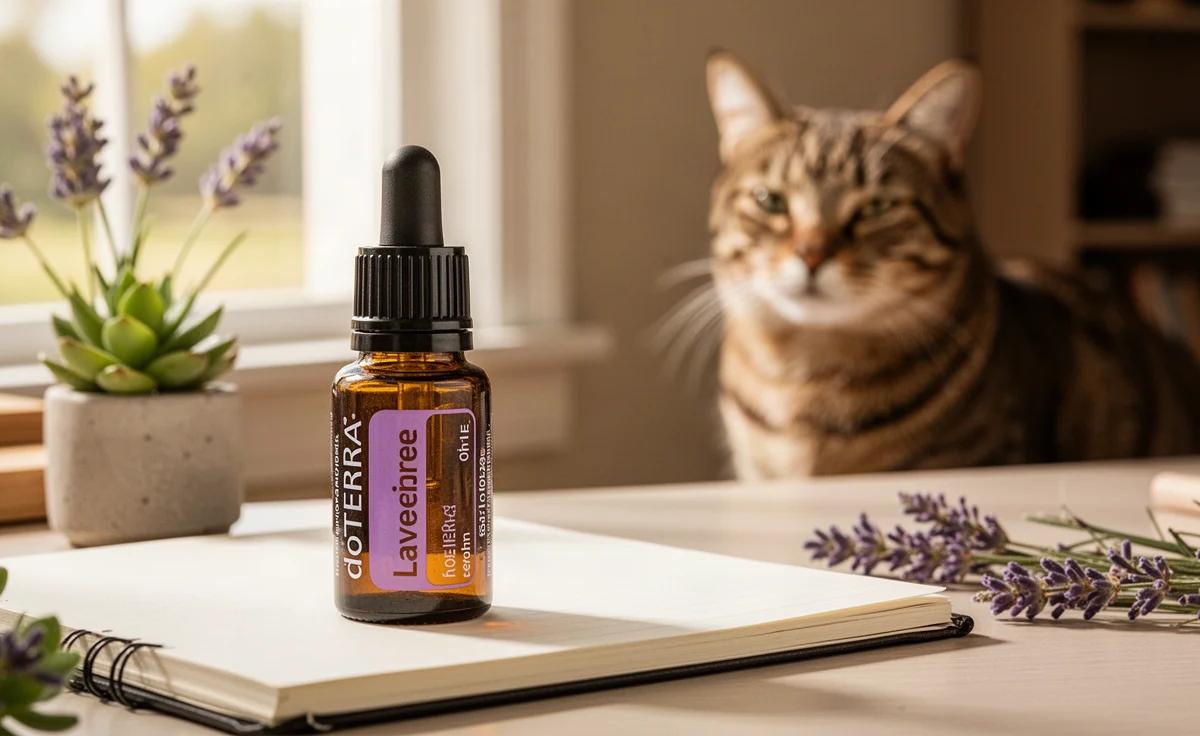
What we have found most useful is keeping the routine human, not feline. If the goal is a calm, fresh-smelling home, great options exist that never touch your cat's bedding. Lavender is a favorite among many pet owners for its soft, floral aroma, but we use it in rooms the cat is not confined to, and never on fabric the cat sleeps on. Frankincense has a grounding, resinous scent and is a doTERRA classic, though again, the rule is the same: open space, cat free to leave, and veterinary guidance first.
Oils like Cedarwood and Roman Chamomile are often discussed among pet owners for their gentle, earthy aromas. doTERRA's CPTG testing standard means these are pure and rigorously tested, which is exactly what we want in a home with animals, but purity does not make an oil automatically suitable for feline bedding. It simply means you know what is in the bottle.
For a truly light touch, Balance is a grounding blend with a woody, sweet profile, and Serenity has a calming, floral-herbal scent. Both are lovely in a shared living area, diffused sparingly, as long as your cat can walk away. Before trying any of them, read our full look at essential oils safe for cats around the house, and if you want the complete risk picture, we also cover the essential oils dangerous for cats.
Here is how we would approach it step by step:
- Talk to your veterinarian about your cat, your home, and your routine.
- Keep your cat's bedding free of all essential oil sprays, including those you make yourself.
- Choose one gentle, CPTG-tested oil and diffuse it in a large room.
- Always leave the door open and give your cat a clear path to another room.
- Store bottles and diffusers where paws cannot reach them, and call a veterinarian or the Pet Poison Helpline immediately after any accidental exposure.
Common Mistakes Pet Owners Make With “Safe” Sprays
The biggest mistake we see is dilution overconfidence. A pet owner reads that a 0.25% dilution is generally safe for dogs, then assumes doubling the water makes it fine for a cat. Cats are not small dogs, and their liver metabolism changes the math entirely. Another frequent error is spraying only one corner of the bed, thinking the cat will avoid it. Cats do not reliably avoid a corner of their own bed; they curl, knead, and roll. You cannot control where the oil ends up on their fur.
A third mistake is re-spraying before the fabric fully airs out. Even if a spray dried hours ago, the residue remains on the fibers. Your cat may groom that residue off their paws or coat days later. If you ever do use any aromatic product in a room, do not then place the cat’s bed in that same room to “air out.” Fabric absorbs, holds, and slowly releases volatile compounds. That is precisely what you want to avoid on bedding.
How to Freshen Cat Bedding Without Any Essential Oils
If the goal is simply a fresher bed, you can get excellent results with zero aromatic risk. Wash the bedding weekly in hot water with a fragrance-free, enzyme-based detergent, then dry it thoroughly in direct sunlight, which naturally reduces stale odors. Between washes, sprinkle a thin layer of plain baking soda over the bed, let it sit for twenty minutes, and vacuum it off completely. Baking soda is not an essential oil and does not pose the same liver-related concern.
For a calm environment, focus on the room instead of the fabric. An air purifier with a HEPA filter reduces dust and stale air that often make bedding smell musty. You can also rotate two or three machine-washable blankets so each one rests fully dry before reuse. This keeps the sleeping area clean without ever asking the question of whether a spray is “safe enough” for a creature that will lick its own fur minutes later.
Frequently Asked Questions
Can I spray diluted essential oil on my cat's bed?
We would not, because cats groom themselves and may ingest whatever is on the fabric. Even diluted oils can pose risks, so ask your veterinarian before spraying anything on bedding your cat uses.
Which oils should I avoid around cats entirely?
Oils like Tea Tree, Oregano, Thyme, Cinnamon, Clove, most citrus oils, Peppermint, Eucalyptus, and Wintergreen are widely flagged as especially dangerous for cats. Our guide to essential oils dangerous for cats walks through the details.
Is diffusing safer than spraying cat bedding?
Yes, because the cat can leave the room and is not lying on treated fabric for hours. Diffuse only in a well-ventilated, open space, and never in a room where the cat cannot escape.
A fresh-smelling home and a safe cat can absolutely go together, but the safest version puts the spray on your linens, not theirs, and keeps the cat's bedding untouched. When in doubt, the veterinarian is always the best first call.
This content is for general information only and is not veterinary advice. Always consult a qualified veterinarian before using essential oils in a home with animals.