Essential Oils Dangerous for Cats
Not all scents are safe for cats. Learn which essential oils are risky, why cats are vulnerable, and how to keep your feline safe at home. A practical guide.
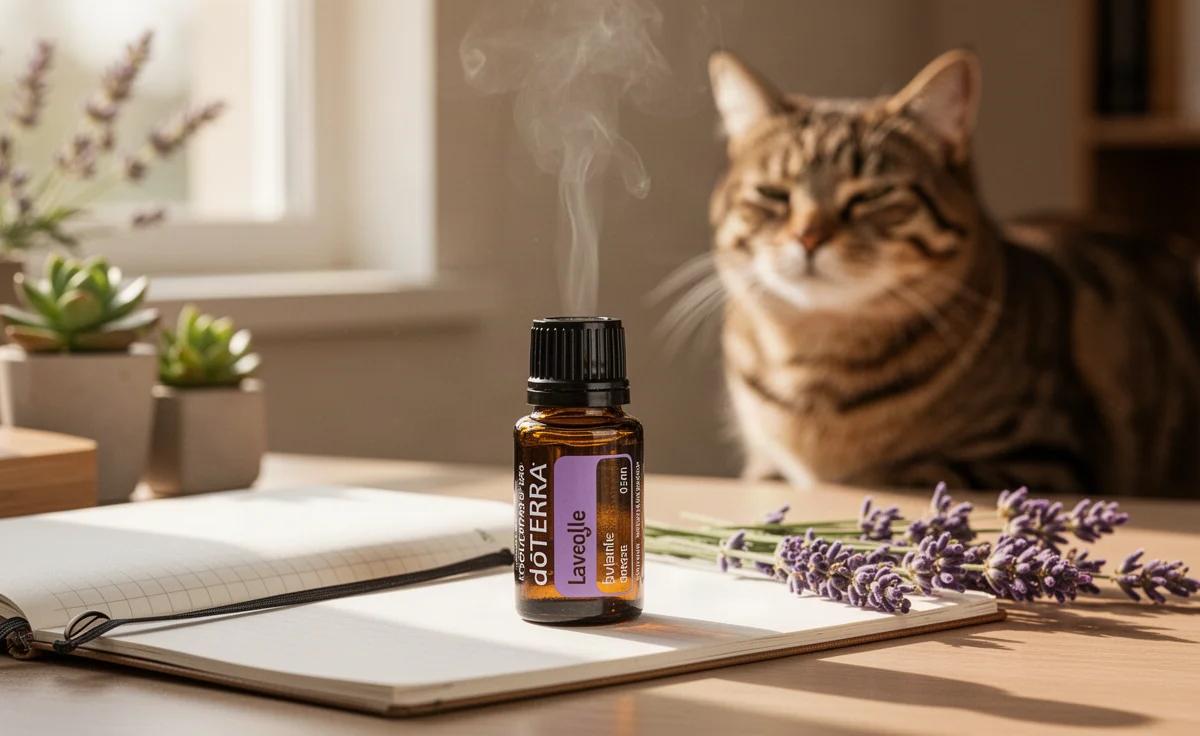
By the EssentialTail Team — pet owners, Wellness Advocates & doTERRA enthusiasts
If you have ever watched your cat sniff the air after you turned on a diffuser, you have probably asked yourself whether that is okay. Here is the short answer, and it matters more than most people realise: yes, many essential oils are dangerous for cats, and some can be toxic or even fatal. Cats lack certain liver enzymes that help other animals process aromatic compounds, so what smells lovely to us can build up in their bodies. The safest approach is to keep cats away from high-risk oils, never apply them topically, and ask your veterinarian before using any essential oil in a home with a cat.
Why Cats Are Different
Cats are not small dogs. Their bodies process many plant compounds differently, which is why a scent that feels mild to us can be a serious problem for them. This is the main reason essential oils dangerous for cats should never be dismissed as internet fear-mongering. The issue is not just the oil itself but how a cat's body handles it.
The most concerning oils for cats include tea tree, oregano, thyme, cinnamon, clove, most citrus oils, peppermint and other mints, eucalyptus, wintergreen, and pine. None of these should be diffused in a space a cat cannot leave, and none should ever be applied to a cat. If you want to understand the full list, our guide on Which Essential Oils Are Dangerous for Cats walks through it in plain language.
What we recommend most often is treating cats as the highest-risk pet in the house. If a diffuser is running, the cat must always have a clear exit to another room, and the room should be well ventilated. That is not veterinary advice; it is the practical habit that keeps everybody safer.
Oils to Avoid and What to Do Instead
The table below shows common oils and why cat owners approach them with extra caution. The aromas are well known to people who enjoy doTERRA products, but for cats the risk profile is very different.
| Oil | Common human use | Why cat owners are cautious |
|---|---|---|
| Tea Tree | Cleaning and skincare | Especially dangerous for cats, never apply or diffuse around them |
| Peppermint | Cooling, refreshing aroma | Mint oils can be too intense for feline systems |
| Lemon | Bright, uplifting scent | Citrus oils are not metabolised well by cats |
| Eucalyptus | Fresh, spa-like rooms | High-risk in shared spaces with cats |
| Wintergreen | Deep, cooling scent | Very strong and best avoided around cats |
This does not mean you have to give up every aromatic ritual. Many cat owners keep the door to their personal diffuser space closed and cuddle with their cat elsewhere. Others prefer pet-appropriate products designed with animal sensitivity in mind. For general home use, some owners choose oils like Lavender, Frankincense, or Cedarwood, but always with the veterinarian's sign-off and the cat free to leave the room.
A calm, pleasant home does not require filling every room with scent. If you do use oils, follow these steps.
- Ask your veterinarian before using any oil in a home with a cat.
- Choose a room the cat can freely leave, with good airflow.
- Keep the diffuser out of reach and never on a surface the cat climbs.
- Never apply oils to a cat's fur, paws, or skin.
- Store bottles in a closed cabinet, never on a nightstand or coffee table.
If your cat is accidentally exposed, licks a spill, or seems unwell after a diffuser session, contact a veterinarian or an animal poison control centre such as the ASPCA Animal Poison Control Center immediately. Do not wait, and do not try a home remedy. That is the only responsible move in an emergency.
For a deeper look at specific oils and how exposure happens, read our companion piece on Essential Oils Toxic to Cats What to Avoid.
Related reading
Frequently Asked Questions
Can I use a diffuser if I have a cat?
Some homes do, but only with the veterinarian's approval and the cat always able to leave the room. The space should be well ventilated, and high-risk oils should not be used at all.
Which oil is most dangerous for cats?
Tea tree is one of the most concerning, along with oregano, thyme, cinnamon, clove, citrus oils, peppermint, eucalyptus, wintergreen, and pine. Any of these should be treated as off-limits around cats unless a veterinarian says otherwise.
How do I know if my cat has been exposed to a harmful oil?
Cats may show changes in behaviour, drooling, wobbliness, or breathing changes. If you suspect exposure, contact a veterinarian or poison control centre right away rather than waiting to see if symptoms pass.
Adaptiv · Arborvitae · Balance
Many cat owners want a cozy, scented home without putting their feline at risk. That balance is possible when caution leads and the veterinarian has the final word. When in doubt, keep oils out of reach and out of the cat's air.
This content is for general information only and is not veterinary advice. Always consult a qualified veterinarian before using essential oils in a home with animals.