Are Essential Oils Safe Around Horses
Wondering if essential oils are safe around horses? Learn what equine veterinarians advise, which oils to avoid, and how to diffuse responsibly at the barn.
By the EssentialTail Team — pet owners, Wellness Advocates & doTERRA enthusiasts
The first time you consider putting a diffuser in the barn office, you wonder if your horse's sensitive nose will even tolerate it. The short answer: essential oils are not automatically safe around horses, and any use near them should start with a conversation with your equine veterinarian. Horses have remarkably sensitive respiratory systems, and they cannot simply leave a closed tack room the way a dog might walk out of a living room. Diffusion should only happen in well-ventilated spaces with the horse free to move away, and never in a stall, trailer, or any enclosed area where the animal is confined.
What Makes Horses Different
Unlike cats, whose liver enzyme deficiency makes many oils outright toxic, horses are not the most fragile species in the barn. But they are large, obligate nasal breathers with lungs that process a lot of air, and their sense of smell is far more acute than ours. What we perceive as a pleasant, light aroma can be overwhelming to a horse standing in the same space for hours.
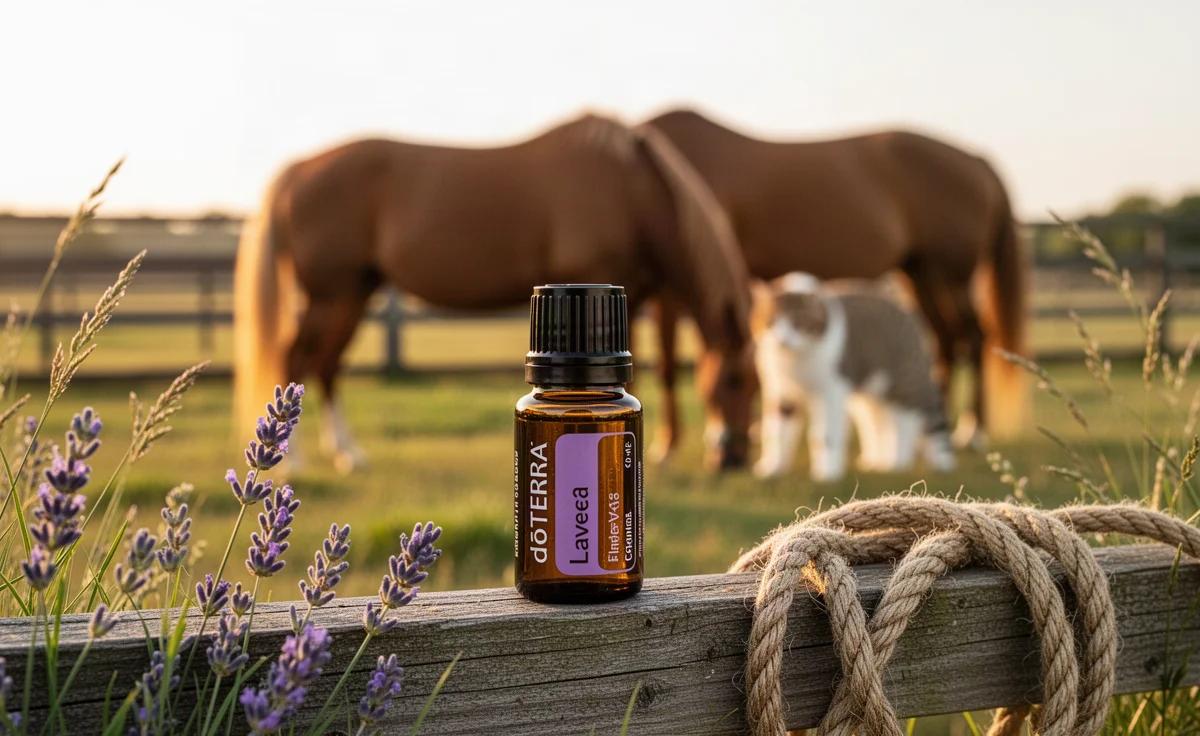
The equestrian world does talk about certain oils for their calming or grounding aromas. Lavender is the one most often mentioned around horses, and many owners simply enjoy having it in shared barn spaces. Frankincense and Cedarwood are two of the oils we hear about most from horse owners who already use aromatics in their own homes. doTERRA's Roman Chamomile is another one we tend to reach for ourselves, though we keep it in human spaces.
That said, a horse's individual sensitivity varies enormously. What one horse ignores can make another visibly restless, snort repeatedly, or refuse to settle. This is exactly why the veterinarian-first rule matters so much here.
How to Think About Diffusion Around Horses
The main question is not "which oil is safe" but "how is the space set up." Diffusion near horses should follow a conservative, step-by-step approach:
- Talk to your equine veterinarian before introducing any aromatic into a barn, stable, or arena where horses spend time.
- Never diffuse inside a stall, trailer, or any enclosed area where the horse cannot leave.
- If you do diffuse in a shared barn space, keep windows and doors open so air moves constantly.
- Place the diffuser in a human area, like a tack room or office, rather than directly in the aisle.
- Watch the horse's body language. Ears pinning, nostril flaring, head tossing, or refusing to approach the area are all signs to stop.
- If there is ever an accidental spill, skin contact, or a reaction, contact a veterinarian or an animal poison control center like the ASPCA Animal Poison Control Center immediately.
Here is a quick comparison of how we approach oils around different animals:
| Animal | General Risk Level | Our Default Approach |
|---|---|---|
| Cats | Highest | Avoid most oils, never diffuse in a room a cat cannot leave |
| Dogs | Moderate | Vet approval first, dog always free to leave the room |
| Horses | Moderate, context-dependent | Vet approval first, never in stalls or trailers, strong ventilation only |
| Birds and small rodents | Extreme | Do not diffuse in their space at all without an avian or exotic vet |
The Competition Angle
If your horse competes under FEI or national federation rules, there is another layer to consider. Many substances, including some botanical compounds found in essential oils, can appear on prohibited-substances lists. There is no such thing as a "competition-safe" essential oil without checking the current rules and consulting your veterinarian. This is not a casual concern in the equestrian world, and it is one we mention every time this topic comes up around a show barn.
For a deeper look at how this fits into a broader home safety picture, see our guide to Essential Oils and Pets: The Complete Safety Guide and our closer look at Equine Aromatherapy for Horse Owners Explained.
Frequently Asked Questions
Can I diffuse essential oils in a barn with horses?
Only if your equine veterinarian has approved your specific setup, the space is extremely well ventilated, and no horse is confined in the area. A diffuser in a closed tack room with a horse stalled nearby is a risk, not a comfort.
Which essential oils should I avoid around horses?
We suggest avoiding Eucalyptus, Peppermint, and other strongly camphoraceous or menthol-heavy oils in equine spaces. These have intense aromatic profiles that can be overwhelming, and they are simply not worth the risk in a shared barn.
What should I do if my horse reacts badly to an essential oil?
Move the horse to fresh air immediately and contact your veterinarian or an animal poison control center right away. Do not wait to see if symptoms pass, and do not attempt any home remedy.
Are doTERRA oils tested for purity?
Yes. doTERRA oils carry the CPTG label, which is doTERRA's own purity and testing standard. That testing matters because you want to know exactly what is in the bottle, especially when animals share your environment.
Conclusion
Horses are not the most sensitive animals in the house, but they are not a place to experiment. We treat any aromatic use around them with the same caution we would around a toddler: veterinarian first, ventilation always, and a close eye on the animal's response. When in doubt, leave the diffuser in your own living room and let the barn smell like hay.
This content is for general information only and is not veterinary advice. Always consult a qualified veterinarian before using essential oils in a home with animals.