Best Calming Essential Oil for Senior Dogs
A gentle, vet-first look at calming aromas for older dogs. Learn which doTERRA oils owners reach for, how to diffuse responsibly, and what to avoid.
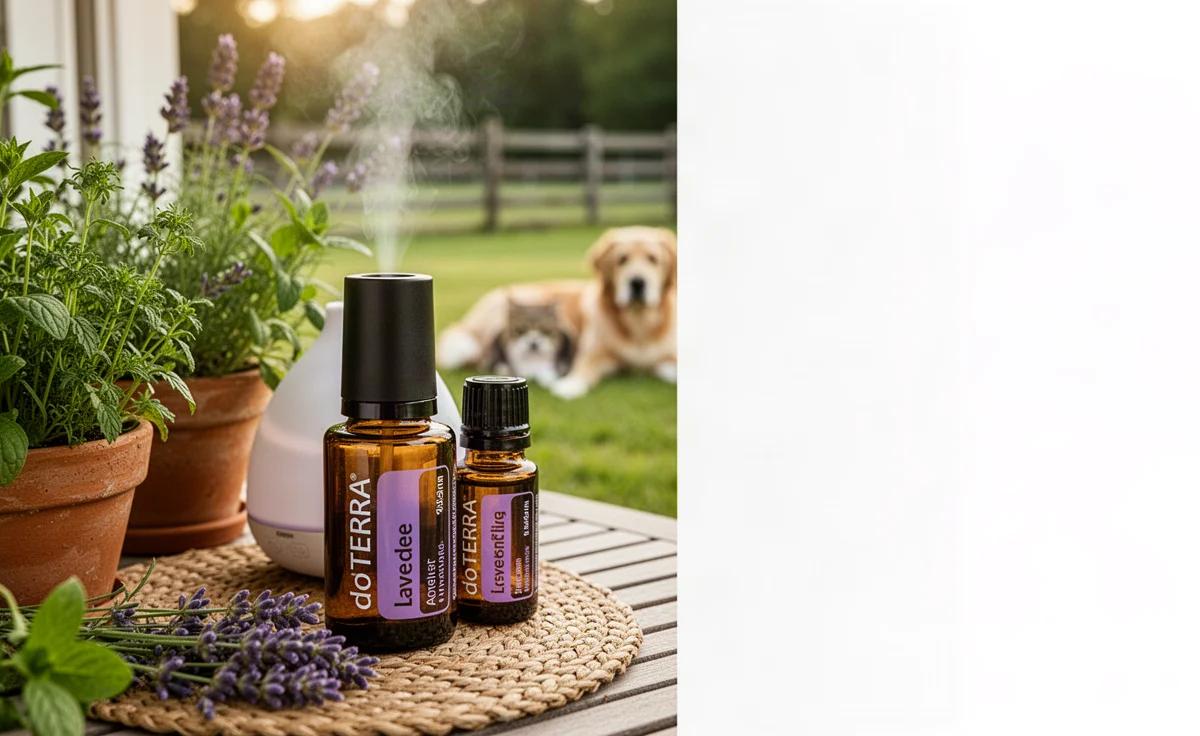
By the EssentialTail Team — pet owners, Wellness Advocates & doTERRA enthusiasts
If your senior dog now startles at noises that never used to bother them, you are not alone. Many of us watch our older companions become more sensitive to storms, visitors, or simply the changing rhythm of the evening. The short answer is that there is no single best calming oil for every senior dog, because each animal is an individual and only your veterinarian can guide what is appropriate. What we can say from experience in pet-owning homes is that gentle floral and woody aromas, like Lavender (Lavandula angustifolia), Frankincense, and Cedarwood, are the ones owners most often describe as settling in shared spaces. The priority is never a strong scent. With senior dogs, less is more, the room must stay open, the dog must be free to walk away, and the veterinarian always comes first.
What We Mean by Calming for an Older Dog
A calm home is an atmosphere, not a treatment. We are describing the gentle ritual of evening wind-down: warm lighting, a quiet room, and a familiar, soft aroma. Several owners we know keep a diffuser running in a shared living area with a small amount of a mild single oil. Roman Chamomile is a frequent choice because its aroma is delicate and less likely to overwhelm a sensitive older nose. Copaiba is another one people mention for its soft, almost honeyed scent.
What matters more than the specific oil is the routine. A senior dog notices consistency. The same scent at the same quiet hour can become part of a predictable evening sequence. For a deeper look at this idea, our article on doTERRA Serenity for a Senior Dogs Calm Home walks through how a known blend can fit into that ritual.
Choosing and Diffusing Around a Senior Dog
Before any aroma enters your home, confirm with your veterinarian that your individual dog has no respiratory sensitivities or other concerns. The ASPCA Animal Poison Control Center and the Pet Poison Helpline both remind us that animals respond differently to essential oils, and that any sign of distress after exposure warrants an immediate call to a vet or poison control centre. doTERRA's own guidance follows the label and a veterinarian's advice first.
Here is the careful sequence we follow in households with older dogs:
- Ask the veterinarian before introducing any new aroma into the home.
- Pick one mild single oil with a soft profile rather than a strong or bracing one.
- Diffuse in an open, well-ventilated room the dog can leave at any time.
- Keep sessions short, with breaks, and watch how the dog behaves.
- Store every bottle out of reach, because an older dog that never countersurfed may surprise you.
Calming Aroma Comparison
| Aroma Character | Softer Options | Oils to Avoid Around Dogs |
|---|---|---|
| Floral, gentle | Roman Chamomile, Lavender | Strong or pungent florals |
| Woody, grounding | Cedarwood, Vetiver | Wintergreen, Pine |
| Warm, resinous | Frankincense | Cinnamon, Clove |
| Fruity, bright | None recommended for senior pets | Citrus oils, Peppermint, Eucalyptus |
Note: Table lists are not an endorsement of safety. Every choice must be confirmed with your veterinarian.
Cats add a completely different layer of caution. Since cats lack the liver enzyme needed to metabolise many compounds, oils like Tea Tree, citrus, eucalyptus, and peppermint are especially dangerous around them. If a cat shares your home, diffusing any essential oil requires even stricter care. We avoid those oils entirely where our cats roam. For more on the broader topic, see our guide to Essential Oils Safe for Dogs with Anxiety.
Common Mistakes We See in Homes with Senior Dogs
The most frequent error is the belief that more oil equals more calm. With an older dog, the opposite is true. A strong, lingering aroma can trigger avoidance behavior, panting, or hiding in a younger dog; in a senior dog, it may produce a slower, more troubling withdrawal that is easy to miss. Another common mistake is diffusing near the dog's bed or crate, the one place they cannot easily leave. Place the diffuser in the main living area instead, never in a small confined space.
Many owners also forget to check the oil's age. Older oils, especially citrus and pine types that have oxidized, become more pungent and can irritate sensitive respiratory tissues. If a bottle smells harsher than it did when new, retire it. Finally, avoid layering multiple scents—scented candles, plug-in air fresheners, and a diffuser in the same room create an unpredictable aromatic environment that undermines the calm you are trying to build.
Building a Predictable Wind-Down Sequence
Rather than reaching for a new oil every evening, anchor the aroma to a consistent three-step routine. Start with a predictable cue, like dimming the lights and settling into the same chair. Next, turn on the diffuser with the same single mild oil—for example, two drops of Roman Chamomile in a 150 ml water reservoir, placed at the far end of the room. Finally, offer the dog a familiar quiet activity, such as a stuffed kong or a soft mat, so the scent becomes associated with rest rather than waiting or watchfulness.
Keep a simple log for the first two weeks. Note the time, the room, the amount and type of oil, and the dog's resting posture or breathing. Older dogs can have delayed reactions, so reviewing notes often reveals patterns that a single evening would not. If the dog chooses to leave the room, honor that decision. Repeatedly leaving is feedback, not failure—adjust the distance, the duration, or the oil itself. Over time, the goal is not a stronger scent but a stronger association: this quiet hour, this soft aroma, this comfortable spot.
Frequently Asked Questions
Can I put calming essential oil on my senior dog's collar? We do not recommend applying any essential oil directly to a dog's fur, skin, or collar without veterinary guidance. Dogs groom themselves, and what sits on the coat can end up in the mouth.
How do I know if the aroma is too strong for my older dog? Watch for signs like moving away, pawing at the nose, sneezing, drooling, or restlessness. If you see any of these, turn the diffuser off, air out the room, and contact your veterinarian if symptoms persist.
Is Lavender automatically safe because it is gentle? No oil is automatically safe for every animal. Lavender is often described as softer than many others, but species, age, health, and even the individual dog change the picture. Always confirm with your veterinarian first.
Choosing an aroma for a senior dog is really about choosing calm for the whole household. A soft scent, a quiet routine, and a veterinarian's guidance together create the most reassuring kind of care, one that respects how far our old friends have come with us.
This content is for general information only and is not veterinary advice. Always consult a qualified veterinarian before using essential oils in a home with animals.