Choosing doTERRA Oils for a Home with Pets
Learn how to choose doTERRA oils for a home with pets, which oils to avoid around cats, and how to diffuse safely for dogs and horses. A practical guide with.
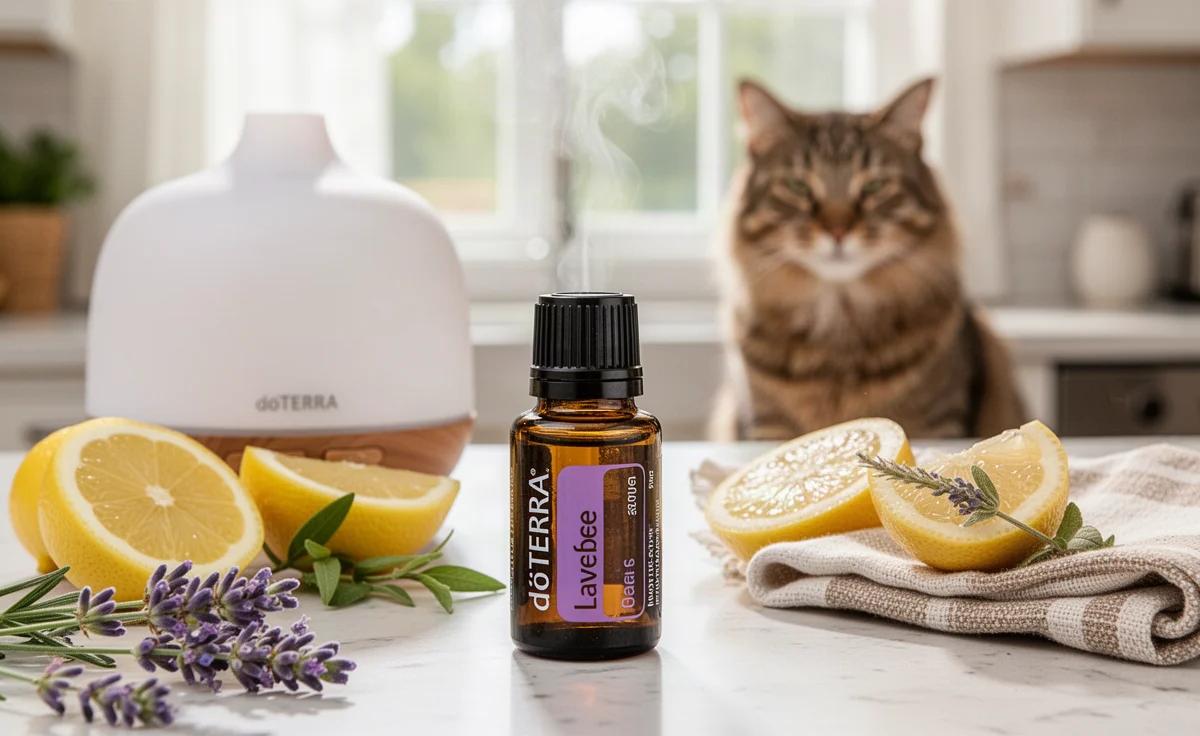
By the EssentialTail Team — pet owners, Wellness Advocates & doTERRA enthusiasts
You leave the diffuser running in the living room, then notice your cat watching it from the hallway, and suddenly you wonder if that was a good idea. If you have asked yourself that question, you are not alone, and it is exactly the right question to ask.
The short answer is that choosing doTERRA oils for a home with pets is less about finding the one perfect oil and more about knowing which oils must stay out of your home entirely, which practices keep shared spaces comfortable, and why the first conversation should always be with your veterinarian. Cats are the highest-risk animals in this conversation because their livers process many plant compounds differently than dogs or humans do. That means oils like Tea Tree, oregano, thyme, cinnamon, clove, most citrus oils, peppermint, eucalyptus, and wintergreen should not be used in a home where a cat lives, even in a diffuser. For dogs and horses, the rules are different but the principle is the same: less is more, the animal must always be able to leave the room, and your veterinarian decides what is appropriate for your individual animal.
Which Oils Most Pet Owners Reach For
When we talk with other pet owners about what they actually keep in their homes, a few doTERRA products come up again and again, always with the same caveat attached: pleasant aroma in shared human spaces, never a treatment for the animal.
Lavender is the most frequently mentioned oil in this community, largely because its aroma is soft and familiar. Many owners use it in their own routines and simply keep the diffuser in a ventilated room the pet can leave. Frankincense has a grounding, resinous scent that many people find calming, and it is one of the oils we hear about most from owners who prefer subtle aromas over bright or sharp ones. Cedarwood has a warm, woody character that feels especially natural in homes with active dogs, and it is often used in well-ventilated shared spaces. Roman Chamomile is another gentle-smelling oil that appears in many pet-owner collections, usually for the human side of the household. Copaiba is softer still, and some owners find it one of the least obtrusive options when they want a diffuser running in a multi-pet home.
What matters more than any single oil is the quality of what you are diffusing. doTERRA describes its sourcing and testing standard as CPTG, Certified Pure Tested Grade, which is doTERRA's own purity and testing protocol, not an official certification. For pet owners, that specificity is reassuring because you can review exactly what doTERRA says about a given bottle, and you can cross-check anything with your veterinarian before it goes anywhere near a shared room.
This is also where the doTERRA Pet Care essential oils explained guide can help, because it walks through the dedicated animal range and what the labels actually say. If you want a broader look at how to think about oils in a multi-animal household, see choosing doTERRA oils for a home with pets.
A Practical Safety Comparison
The table below reflects what we most often explain to fellow pet owners. It is not veterinary guidance, and it is not a green light for any oil. It is a way to compare the categories so the highest-risk items are immediately obvious.
| Oil or Category | We see it most often in | Our caution level in pet homes |
|---|---|---|
| Lavender, Frankincense, Cedarwood | Diffusers in shared rooms | Moderate: ventilate, allow exit, ask vet |
| Copaiba, Roman Chamomile | Personal human routines | Moderate: same rules apply |
| Tea Tree, Oregano, Thyme, Clove, Cinnamon | Human home use only | High: avoid in homes with cats |
| Lemon, Wild Orange, Bergamot, Grapefruit, Lime | Cleaning and fresh scents | High for cats: citrus oils are not safe around felines |
| Peppermint, Eucalyptus, Wintergreen | Respiratory and cooling scents | High for cats and small pets: avoid in shared air |
How We Approach a New Oil in a Pet Home
- We check the doTERRA label first and read what doTERRA actually says about the oil and its intended use.
- We call our veterinarian before diffusing anything new, every single time, and we keep that conversation specific to our animals.
- We diffuse only in a room with an open door or good airflow, never in a closed bedroom or any space the animal cannot leave.
- We avoid diffusing in the room where the pet sleeps, and we never place a diffuser near food, water, bedding, or a litter tray.
- If a cat, dog, or horse shows any change in behaviour near a diffuser, we turn it off and move the animal to fresh air, then call the vet.
Birds, rabbits, and small rodents deserve a special note: their respiratory systems are extremely sensitive, and we do not diffuse around them without explicit approval from an avian or exotic veterinarian. For horses, competition owners must also check the FEI prohibited-substances list before using anything, because what is allowed at home is not necessarily allowed at a show.
Accidental exposure is a different situation entirely. If a pet licks a spill, gets oil on its fur, or shows any worrying sign, the only correct response is to contact a veterinarian or an animal poison control centre such as the ASPCA Animal Poison Control Center or the Pet Poison Helpline immediately. In our experience, acting quickly and calling a professional is always the right move.
Frequently Asked Questions
Which doTERRA oils are safe for cats?
No essential oil can be described as broadly safe for cats, because cats process many plant compounds differently than humans and dogs. Oils like Tea Tree, oregano, thyme, cinnamon, clove, citrus oils, peppermint, and eucalyptus are particularly dangerous for cats even when diffused. The safest approach is to keep cats away from all oils and diffusers and to ask your veterinarian before using anything in a feline household.
Can I diffuse doTERRA oils around my dog?
Dogs tolerate more oils than cats do, but that does not make diffusion automatically safe. Use a well-ventilated room, keep the diffuser away from the dog's food and bedding, and make sure the dog can always walk away. Your veterinarian should approve any oil before you use it in a shared space.
What should I do if my pet licks an essential oil?
Contact a veterinarian or an animal poison control centre like the ASPCA Animal Poison Control Center or the Pet Poison Helpline immediately. Do not wait to see if symptoms develop, and do not try any home remedy or antidote. Professional advice right away is the only safe response.
Are doTERRA oils toxic to birds?
Birds have extremely delicate respiratory systems, and essential oils in a diffuser can be rapidly fatal to them. We do not recommend diffusing oils in any home or room where birds are present without explicit approval from an avian veterinarian first.
The Bottom Line
Choosing doTERRA oils for a home with pets comes down to caution, ventilation, and veterinary guidance, not to finding a single magic oil. The pleasure of a pleasant-smelling home is real, but it is only worth it when your animals are genuinely safe in the space they share with you.
This content is for general information only and is not veterinary advice. Always consult a qualified veterinarian before using essential oils in a home with animals.