Diffusing Essential Oils Around Cats Safely
Wondering if diffusing oils near your cat is safe? Learn which oils to avoid, vet-first rules, and how to create a calm home without the risk.
By the EssentialTail Team — pet owners, Wellness Advocates & doTERRA enthusiasts
You light your diffuser, the room fills with that familiar calming scent, and then your cat wanders in. If you have ever paused mid-breath wondering whether that little ritual is okay for her, you are not alone. The short answer is that diffusing essential oils around cats safely requires far more caution than most people realize, and the safest approach always starts with your veterinarian. Cats lack a key liver enzyme that processes many compounds found in essential oils, which means oils we barely notice can build up in their bodies.
The safest rule we can give you is this: never diffuse in a room your cat cannot leave, and always check with your vet before introducing any new oil into your home.
Oils to Avoid Around Cats
This is not a “maybe” list. These are the oils we keep out of any shared space with a cat, even in a diffuser. The concern is both inhalation and grooming: particles settle on fur, and cats lick themselves constantly.
| Oil Type | Why It Is a Problem for Cats |
|---|---|
| Tea Tree | Especially dangerous for cats; never diffuse or apply |
| Citrus oils (Lemon, Wild Orange, Bergamot, Grapefruit, Lime) | Contains compounds cats metabolize poorly |
| Peppermint and other mints | High in menthol and related compounds |
| Eucalyptus | Rich in 1,8-cineole, a known concern for cats |
| Wintergreen and Pine | Strong compounds that cats struggle to process |
| Cinnamon, Clove, Oregano, Thyme | Phenolic, “hot” oils that are risky for cats |
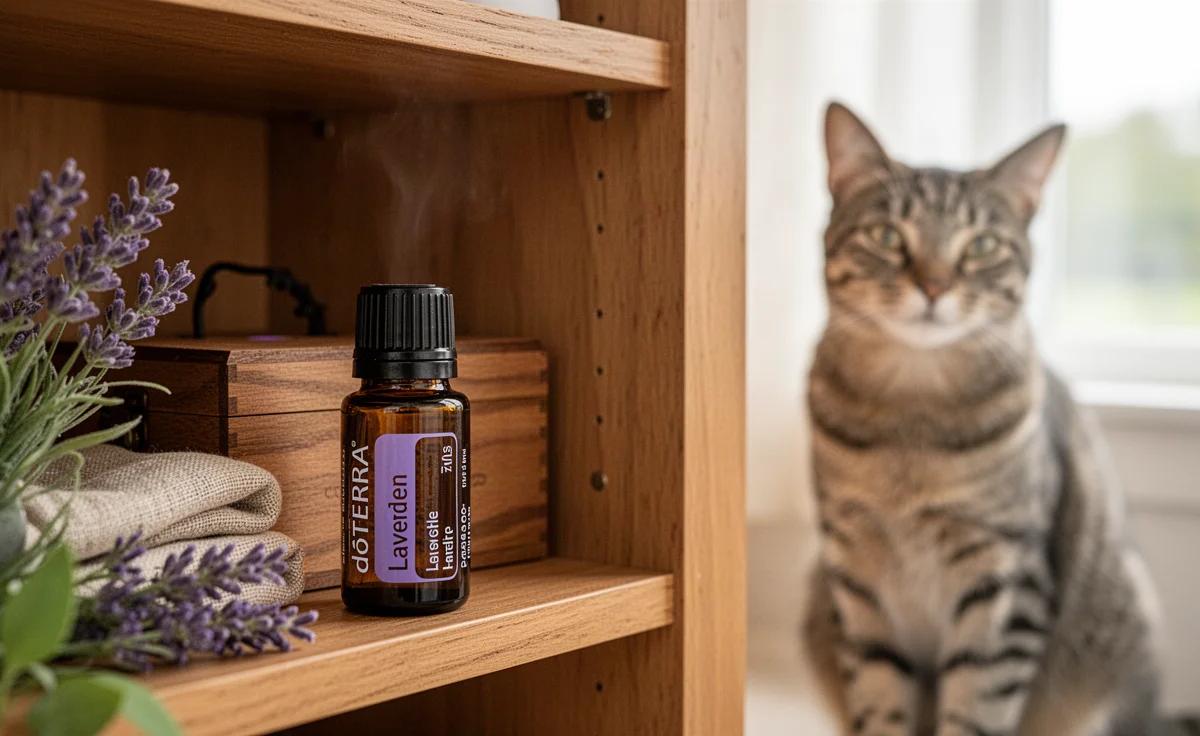
Even oils that are popular for human relaxation, like Lavender, should only be used with extreme care around cats. We never call any oil “safe for cats” because that is a veterinary judgment, not an aromatherapy one.
How to Diffuse More Responsibly at Home
If you already own a diffuser and share your home with a cat, here is the step-by-step approach we follow and recommend to friends.
- Ask your veterinarian first. Describe the exact oil, the room, and how often you diffuse. Their answer matters more than any blog post.
- Choose the room carefully. Diffuse only in a room the cat can leave freely, with an open door or clear exit path.
- Keep sessions short and airy. Use the lowest amount your diffuser allows, keep windows cracked when possible, and never run it continuously.
- Observe your cat. Watch for drooling, squinting, hiding, wobbliness, or rubbing at the face. These are cues to stop and call your vet immediately.
- Store oils securely. Bottles go in a closed cabinet after use, never on a counter where a curious paw can knock them over.
Some pet owners we know keep a dedicated “cat-free” room for diffusing. That is the cleanest solution if you want richer aromas without the worry. For a gentler home scent overall, we lean on soft, woody oils like Frankincense or Cedarwood in highly ventilated spaces, always after a vet conversation. Copaiba is another one people reach for when they want something subtle, though it follows the same caution rules. We also appreciate Vetiver for its earthy, grounding presence in a large, aired room, and Roman Chamomile for moments when the whole house needs to feel softer. None of this replaces a veterinarian’s guidance, but it reflects how we think about shared spaces.
For a deeper look at whether diffusing around cats is ever a good idea, our guide Can I Diffuse Essential Oils Around My Cat walks through the risks in plainer detail. And if you want the practical steps most owners ask about, Diffusing Essential Oils Safely Around Cats covers the same ground with even more lived-in perspective.
Related reading
Frequently Asked Questions
Can I diffuse lavender around my cat if I keep the door open?
An open door helps, but lavender is not automatically safe for cats. Many veterinarians advise avoiding it or limiting exposure, so check with yours before you try.
What are the signs my cat is having a bad reaction to a diffuser?
Drooling, squinting, hiding, shaking, wobbliness, or rubbing at the face can all be warning signs. If you see any of these, move your cat to fresh air and contact your veterinarian or an animal poison control center right away.
Is there any essential oil that is completely safe to diffuse around cats?
No oil should be described as completely safe for cats. The only person who can make that call for your individual cat is a veterinarian who knows her health history.
What should I do if my cat licked spilled essential oil?
Do not wait or try home remedies. Call your veterinarian or the ASPCA Animal Poison Control Center or Pet Poison Helpline immediately, and have the bottle with you so you can tell them exactly what was ingested.
Conclusion
Living with cats and loving essential oils does not have to be an either-or choice, but it does require humility. The moment we start treating any oil as automatically harmless around a cat is the moment we take an unnecessary risk. Talk to your vet, keep the air moving, and let your cat’s comfort lead every decision.
This content is for general information only and is not veterinary advice. Always consult a qualified veterinarian before using essential oils in a home with animals.