Dog and Cat Friendly Oil Diffuser Guide
Learn how to choose and use a dog and cat friendly essential oil diffuser with vet-first safety tips for a calm, pleasant home.
By the EssentialTail Team — pet owners, Wellness Advocates & doTERRA enthusiasts
I still remember the first time I unboxed a diffuser at home with my Labrador asleep on the rug and my tabby watching from the hallway. I had read enough conflicting advice online to feel unsure about whether I was creating a cozy atmosphere or a problem. If you are reading this, you are probably wondering the same thing. So here is the direct answer: a dog and cat friendly essential oil diffuser is less about one magic device and more about how you use it. The safest approach is to choose a high-quality diffuser you control well, keep the room well ventilated, run it briefly, only use oils your veterinarian has approved for your specific household, and always make sure your cat or dog can walk away. In our experience, the real safety feature is not the machine. It is the routine you build around it. That means understanding which oils need extra caution, picking gentle aromas, and knowing when to leave the diffuser off.
What Actually Makes a Diffuser Pet Friendly
No diffuser on the market is labeled safe for every animal, and any brand promising that is worth questioning. What matters is your control over output and timing. Look for a diffuser with adjustable mist settings, a timer or automatic shutoff, and a design that is hard for curious paws to knock over.
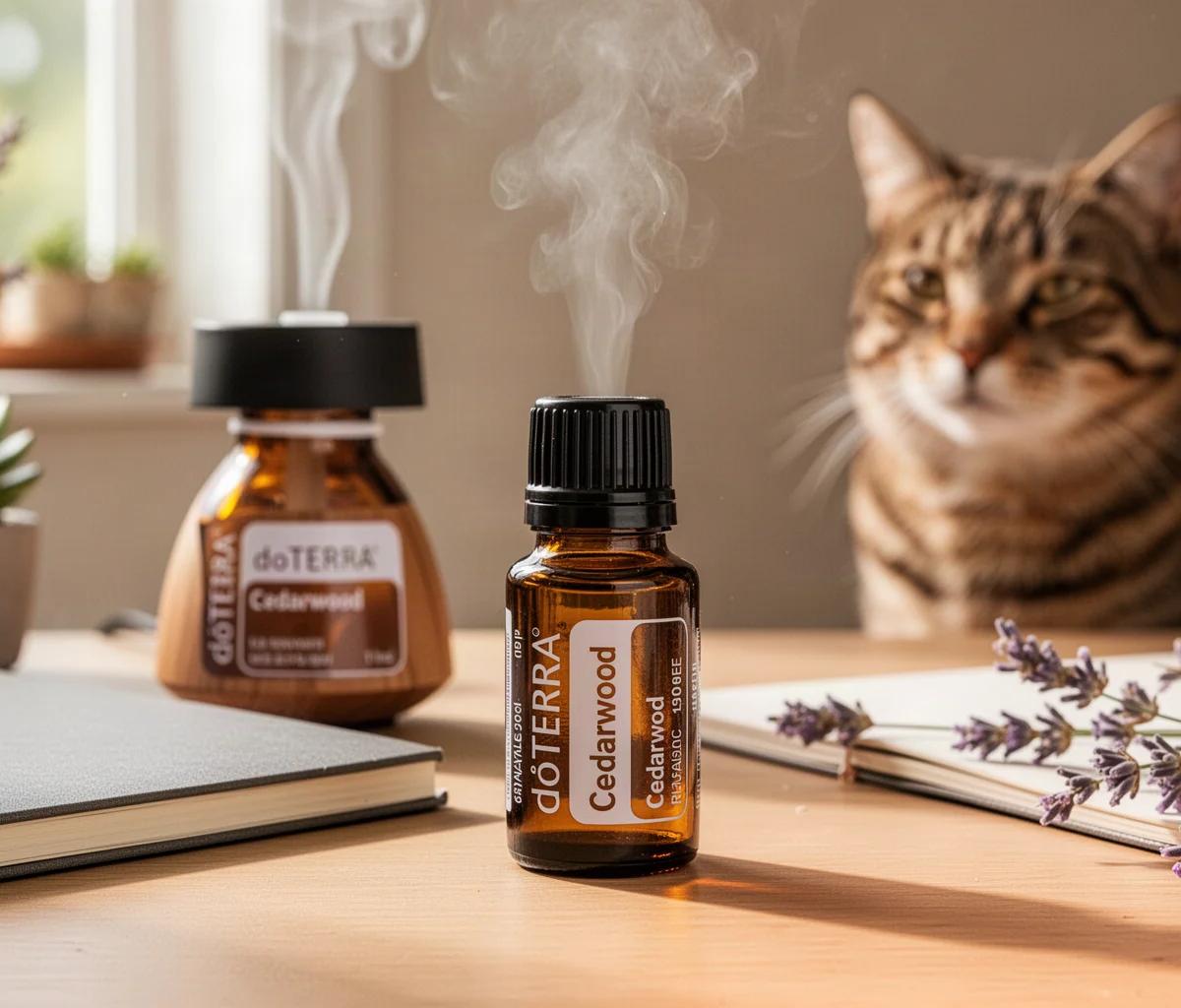
Your choice of oil matters just as much as the device. Many pet owners prefer softer, earthier aromas in shared spaces. Options like Cedarwood and Roman Chamomile are often discussed among dog owners for their gentle, grounding character. Frankincense is another favorite in calm home routines because of its smooth, resinous profile. None of these statements are health claims, only descriptions of what many households reach for when the goal is a mellow atmosphere.
Cats change the conversation completely. Felines lack certain liver enzymes needed to process many compounds found in essential oils. Because of that, oils such as Tea Tree, peppermint, citrus oils, eucalyptus, clove, cinnamon, thyme, and oregano are generally considered especially risky around cats. The default rule we follow is simple: if you have a cat, ask your veterinarian before diffusing anything, and never trap a cat in a room with an active diffuser. This is not fearmongering. It is the same caution the ASPCA Animal Poison Control Center and Pet Poison Helpline consistently recommend when owners ask about accidental exposure. When unsure, defer to your vet.
| Habit | Dog Household | Cat Household |
|---|---|---|
| Diffusing in open areas | Ask vet first, keep light | Ask vet first, keep very light or avoid |
| Closing doors to contain scent | Avoid | Never |
| Free exit route for the pet | Essential | Essential |
| Checking with a vet before introducing a new oil | Yes | Absolutely required |
| Gentle aromas like cedarwood or frankincense | Often discussed | Only with direct vet approval |
A Practical Routine for a Shared Home
Here is the step-by-step approach that has worked well for us and for many owners we talk to.
- Start with the room, not the oil. Diffuse in a large, airy space. Avoid bathrooms, small bedrooms, or any room where a door could trap your pet inside.
- Keep the door open or pet gate accessible. Your dog or cat must be able to leave whenever they want. If they seem to avoid the room, stop diffusing there.
- Choose the mildest aromatic profile. Many owners lean toward Copaiba, Vetiver, or Lavender, all recognized for their soft, calm scents. Again, these are aromas, not treatments.
- Run the diffuser briefly. Use the lowest mist setting and a short timer. Less is genuinely more in a home with animals.
- Watch your pet, not your phone. If your cat squints, drools, or leaves the room repeatedly, or your dog seems unsettled, switch it off and air the space out.
- If anything unusual happens, contact your veterinarian or an animal poison control center immediately. No home remedy, no waiting to see.
The oils you diffuse around animals should come from a source you trust. That is where doTERRA’s CPTG testing standard matters to us. Certified Pure Tested Grade is doTERRA’s own purity and testing protocol, focused on sourcing and rigorous testing. It does not make an oil safe for pets, but it does give you confidence that you know what is in the bottle. That purity is the main reason we prefer doTERRA oils at home.
For owners still learning the ropes, our guide on Diffusing Oils Around Pets the Safe Way covers the foundation in more detail. If you specifically share your home with a feline, read Can I Diffuse Essential Oils Around My Cat before you reach for any bottle.
Related reading
Frequently Asked Questions
Can I diffuse essential oils with a dog in the house?
Only with your veterinarian’s approval and a careful setup. Dogs are less sensitive than cats, but every dog is different, and some aromas can be overwhelming. Keep the space open, run the diffuser briefly, and let your dog leave.
What is the safest diffuser setting for a home with cats?
The safest setting is often the off switch, unless your veterinarian has advised otherwise. If you do diffuse, choose a large open room, use the lowest mist setting, and make sure your cat can exit freely. Never diffuse around a cat without direct veterinary guidance.
Which oils should pet owners avoid in a diffuser?
Special caution applies to tea tree, peppermint, eucalyptus, wintergreen, pine, clove, cinnamon, thyme, oregano, and most citrus oils, especially around cats. This is not a complete list, which is why checking with a vet before adding any new oil is so important.
What should I do if my pet reacts badly to a diffuser?
Stop the diffuser, open windows, and move your pet to fresh air. Then contact your veterinarian or an animal poison control center right away. Describe exactly what you diffused and for how long.
A dog and cat friendly diffuser routine is really a promise to pause, ask questions, and respect how differently each animal responds. When the room smells pleasant and your dog is snoozing by the sofa while your cat wanders in and out freely, you have found the balance. It is not about using more oil. It is about knowing when a little is already plenty.
This content is for general information only and is not veterinary advice. Always consult a qualified veterinarian before using essential oils in a home with animals.