doTERRA Serenity for Dogs Review and Safety Verdict
We review doTERRA Serenity around dogs, what the blend contains, what matters for canine safety, and why the vet comes first. A practical guide with clear.
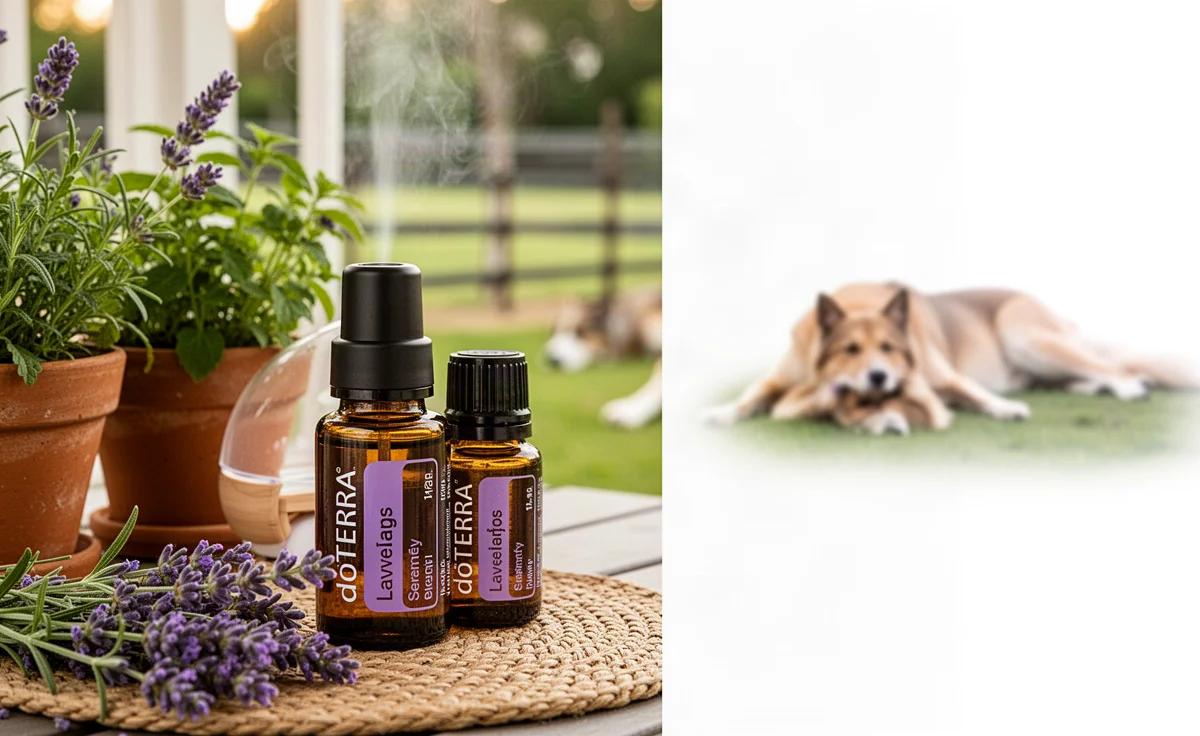
By the EssentialTail Team — pet owners, Wellness Advocates & doTERRA enthusiasts
You have probably seen Serenity in a friend's diffuser and thought, "Could that work in our home too?" It is a fair question, and one we hear constantly from dog owners. Our verdict is clear: Serenity is a beautiful human blend, but it is not a product we recommend using on or deliberately around dogs, and the decision belongs to your veterinarian, not to a blog.
What Serenity Actually Is
Serenity is doTERRA's calming blend, built around Lavender, Cedarwood, Sweet Marjoram, Roman Chamomile, Vetiver, Sandalwood, and Ylang Ylang. In human aromatherapy it is known for its soft, grounding, floral-woody aroma. The quality is real: like every doTERRA oil, it falls under the CPTG testing standard, meaning doTERRA verifies purity and composition before bottling.
That quality matters. Lavender, Roman Chamomile, and Vetiver are among the most talked-about oils in pet-owner circles, and knowing they are pure and unadulterated gives you one less variable to worry about. But purity is not the same as suitability for a dog.
Pros and Cons for a Home With Dogs
| Pros | Cons |
|---|---|
| CPTG-tested, pure blend with known composition | Ylang Ylang appears on many caution lists for dogs |
| Pleasant, subtle aroma for shared human spaces | A dog's sense of smell is far more sensitive than ours |
| Contains oils many owners know and recognise | No canine-specific dilution guidance on the label |
| Easy to use in your own routines | Diffusion around animals is not automatically safe |
The blend is consistent and transparent. We also like that Cedarwood and Sandalwood give Serenity a warm, grounded base that never feels sharp. The honest counterpoint is simple: a fragrance we find gentle can still be intense for a dog, and intensity is not the only consideration.
How We Approach This Safely
Here is the step-by-step we follow and share with other owners.
- Ask your veterinarian before any use near your dog, diffused or otherwise.
- Keep the diffuser in an open room the dog can leave at any time.
- Never apply Serenity to your dog's coat, skin, or bedding on your own.
- Store the bottle where curious noses and paws cannot reach it.
- If your dog shows any change in behaviour or breathing, stop immediately and contact your vet or the ASPCA Animal Poison Control Center.
If you are curious about the broader safety picture, our guide to whether doTERRA is safe for dogs covers the principles in more depth. And if your goal is a calm home for an older dog, read our piece on doTERRA Serenity and senior dogs before you try anything.
Common Mistakes That Seem Harmless but Are Not
The biggest mistake we see is location. Owners assume a diffuser in the kitchen is fine because the dog sleeps in the living room. But scent travels, and a closed floor plan or HVAC system can push the aroma into rooms the dog never leaves. A second mistake is timing. Diffusing Serenity for a few hours before bed feels gentle, yet that continuous exposure can build up in a small dog's system faster than in ours. A third is the "just a drop on the paws" myth. Pad application is direct skin contact on tissue that absorbs quickly, and it often leads to licking. This is where most avoidable reactions start.
Practical Ways to Use Serenity When a Dog Shares Your Home
Try a personal inhaler or a scented cotton round near your reading chair instead of a room diffuser. That keeps the aroma in your breathing zone, not the dog's. If you do diffuse, run it on an intermittent timer for 20 minutes, then let the room clear. Use the lowest meaningful output, not a big mist. And keep a window cracked in the space where you are diffusing. For your own calming routine, apply one drop of Serenity to a lava stone bracelet you can remove before cuddling the dog, rather than wearing it on skin that touches pet fur or bedding. Small shifts like this let you enjoy the blend without asking your dog to metabolise it.
Frequently Asked Questions
Is doTERRA Serenity safe to diffuse around dogs?
There is no blanket answer. The space matters: an open room the dog can leave is very different from a closed bedroom. Always ask your veterinarian first, because they know your dog.
Can I put Serenity on my dog's bed or collar?
We do not recommend it. Dogs groom themselves, and anything on bedding can end up in the mouth. This is exactly the kind of decision your vet should make.
Does Serenity calm dogs down?
We cannot claim that. It is a human blend with a pleasant aroma, not a veterinary product. Any calming effect on a dog is unproven and not something we would rely on.
What should I do if my dog reacts to the diffuser?
Stop diffusion, open windows, and move your dog to fresh air. Then contact your veterinarian or an animal poison control centre immediately. Do not wait to see if it passes.
Who Serenity Is For
It is for you, the human in the house, who wants a high-quality relaxing blend in your own routine. It is not for your dog, and no careful phrasing changes that. If you want to use it, keep it in your space, on your terms, with the dog free to leave the room, and with your vet in the loop. For a dog-specific product or routine, the veterinarian is the only safe starting point.
This content is for general information only and is not veterinary advice. Always consult a qualified veterinarian before using essential oils in a home with animals.