Essential Oils and Horses Basics Explained
Learn the basics of essential oils and horses, including vet-first guidance, diffusion tips, and which doTERRA oils horse owners often discuss.
By the EssentialTail Team — pet owners, Wellness Advocates & doTERRA enthusiasts
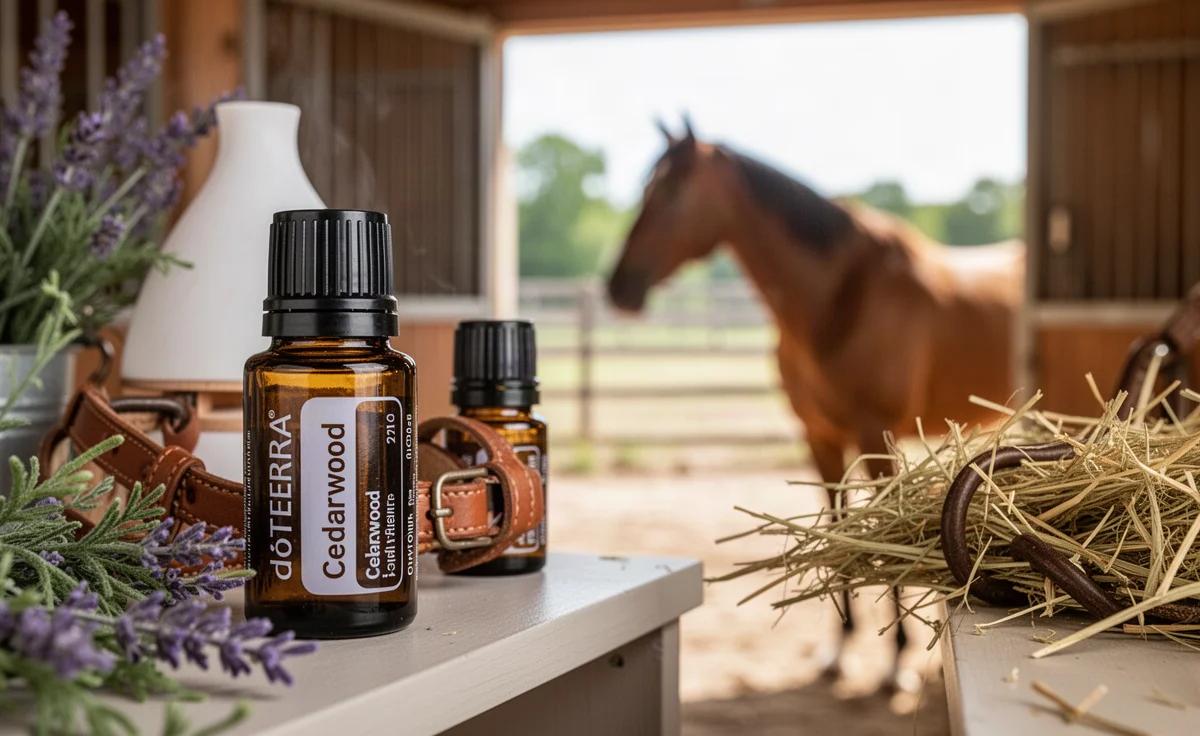
A familiar scene: you walk into the barn on a cool morning, breathe in the scent of hay, leather, and warm horse, and think that a little lavender or cedarwood in the air might make the whole place feel calmer. If you have wondered about that, you are not alone. Many horse owners ask us about the basics of essential oils and horses, and the direct answer is simple: essential oils are not automatically safe for horses just because they are natural. The absolute first step is to talk with your veterinarian, and for competition horses, checking the FEI prohibited-substances list is non-negotiable. From there, the focus stays on pleasant, well-ventilated shared spaces and products with real quality standards, like doTERRA's CPTG testing. Horses have large, sensitive respiratory systems, and what smells light to us can feel very different to them.
A Vet-First Introduction to Oils Around Horses
The most important thing we share with horse owners is that no online article can replace a veterinarian who knows your specific horse. Age, health, medications, and competition status all change the risk picture. The American Association of Equine Practitioners and the ASPCA Animal Poison Control Center both emphasize professional guidance when animals are involved, and that principle applies to every oil, every time.
When you talk with your vet, ask specifically about your barn ventilation, whether your horse spends time in an enclosed stall or an open run, and whether any oils are already used in your grooming routine. We never give numeric amounts for animals because a safe practice for one horse may be completely wrong for another. That decision belongs to the label and the veterinarian, not to a blog.
What We Recommend Most Often
What we recommend most often, after the vet conversation, is to keep things simple and quality-driven. doTERRA's CPTG standard means each batch is tested for purity, and that matters when the product will be in a shared barn environment. Owners who want a neutral, woodsy aroma in a breezy aisle often mention Cedarwood or Frankincense, while those who enjoy softer florals sometimes reach for Lavender. None of this implies a health benefit for the horse; it is simply about how people choose to scent their own shared spaces responsibly.
Practical Guidelines for a Shared Barn
Think of essential oils in a barn the way you think of arena dust or strong cleaning products: ventilation changes everything. A horse's olfactory system is far more sensitive than ours, so a diffuser that seems barely noticeable to you can be intense for them.
The non-negotiable rules we follow:
- Consult your veterinarian before using any oil near your horse, every time.
- Diffuse only in a large, open, well-ventilated area, never in a closed stall or trailer.
- Always leave the horse free to walk away from the scent; if the space has no exit, do not diffuse.
- Never apply an oil directly to a horse's skin, coat, or feed unless your vet has specifically instructed it.
- For competition horses, verify every product against the FEI prohibited-substances list with your vet or federation before use.
- Stop immediately and contact a veterinarian if you notice any change in breathing, behavior, or appetite.
That sixth step matters. Accidental exposure or an unexpected reaction is a veterinary emergency, not a DIY situation, and the Pet Poison Helpline is another resource many owners keep saved.
Scent Profiles Horse Owners Often Compare
| Characteristic | Lighter, Open-Use Oils | Higher-Caution Oils |
|---|---|---|
| Common examples | Cedarwood, Frankincense, Lavender | Peppermint, Eucalyptus, Wintergreen, Tea Tree |
| Typical aroma | Woody, soft, floral | Sharp, camphorous, medicinal |
| Shared-space use | Often discussed for open barns | Best avoided around horses without vet input |
| Main consideration | Still vet-first, ventilated spaces only | Stronger compounds, more potential for irritation |
The lighter column is not a safety guarantee; it is simply where many equestrian conversations start. Strong, sharp oils like peppermint, eucalyptus, and wintergreen are often discussed with far more caution around horses, which is why you will not see us linking them here. For a deeper look at the risk side, our guide on Are Essential Oils Safe Around Horses walks through the caution zones in detail, and our Equine Aromatherapy for Horse Owners Explained piece covers how owners approach the topic without overpromising.
Related reading
Frequently Asked Questions
Can I diffuse essential oils in a horse barn? Only in a large, open, well-ventilated space with the horse free to leave, and only after your veterinarian has approved it. Closed stalls, trailers, and any area where the horse cannot walk away are off-limits.
Are doTERRA oils safe for horses? No essential oil is automatically safe for every horse, regardless of brand. doTERRA's CPTG testing supports purity and quality, but safety around your specific horse is a veterinary decision, not a marketing claim.
Which oils should I avoid around horses? Strong, sharp oils like peppermint, eucalyptus, wintergreen, and tea tree are commonly treated with extra caution around horses. Rather than relying on a general list, ask your veterinarian about your specific horse and barn setup.
What should I do if my horse reacts badly to an oil? Contact your veterinarian or an animal poison control center immediately. Do not wait, do not apply anything else, and do not attempt a home remedy.
Final Thoughts
Essential oils and horses can share a barn, but only when caution leads and your veterinarian guides. Start with open air, a horse that can leave, and real purity standards rather than promises. When in doubt, the safest scent in the barn is still clean hay and fresh air.
This content is for general information only and is not veterinary advice. Always consult a qualified veterinarian before using essential oils in a home with animals.
Adaptiv · Arborvitae · Balance