Diffusing Essential Oils Around Dogs Safely
Wondering which essential oils are safe to diffuse around your dog? Learn which aromas to choose, which to avoid, and how to create a pet-friendly home with doTERRA's CPTG quality.
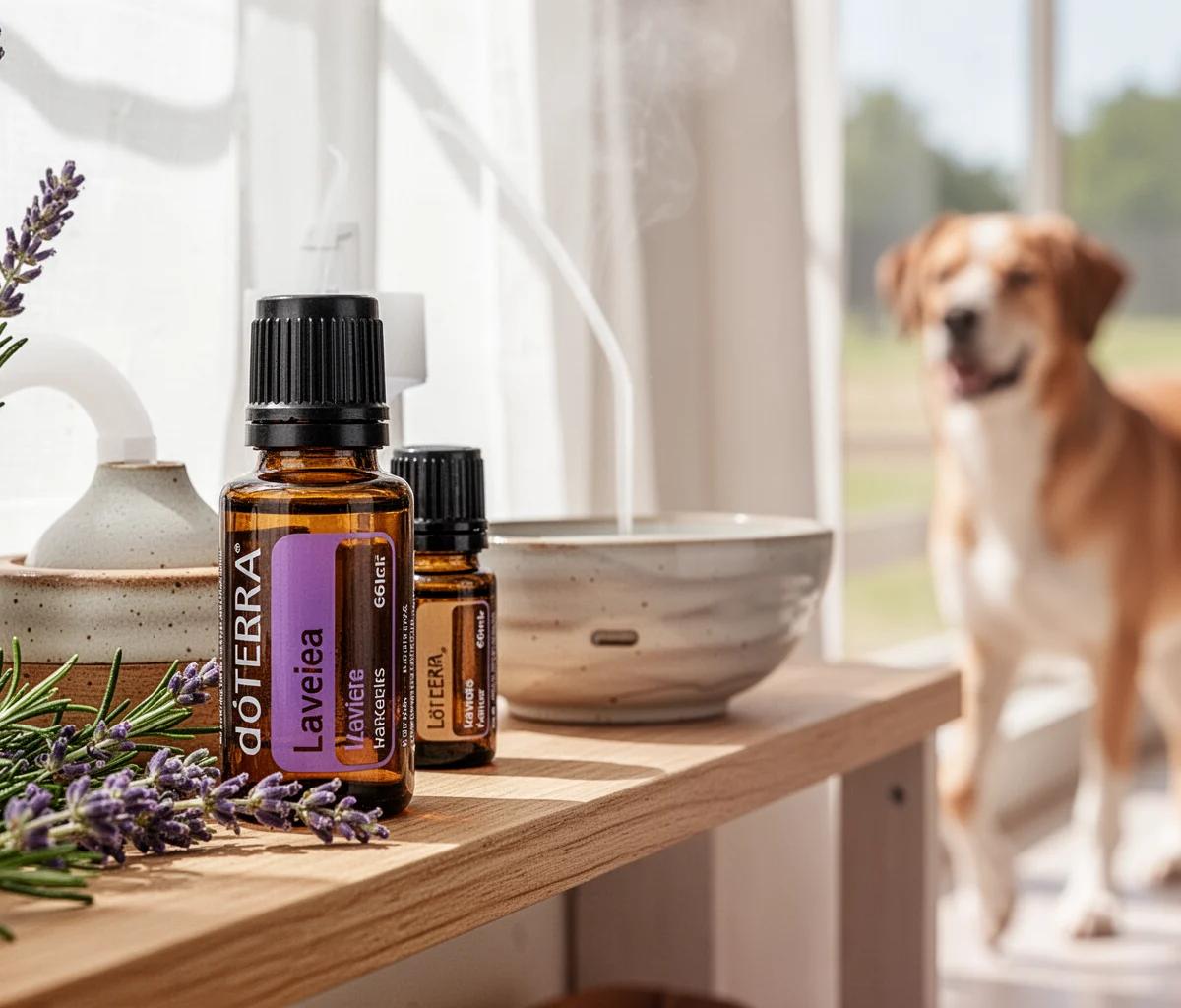
By the EssentialTail Team — pet owners, Wellness Advocates & doTERRA enthusiasts
You’re tidying up, a favorite diffuser blend is misting gently in the corner, and your dog is snoozing on the couch. It sounds like a peaceful afternoon, but if you’ve ever paused mid-drop and wondered whether the aroma filling the room is okay for your pup, you’re not alone. The direct answer is yes, certain essential oils can be diffused in a home with dogs, but it must be done with careful selection, ample ventilation, and an unwavering veterinarian-first mindset. The safest approach is to choose gentle, non-phenolic oils like Lavender, Frankincense, and Cedarwood, always ensuring your dog can leave the room freely. We rely on doTERRA’s CPTG testing standard for purity because, when a whole family, paws included, breathes the same air, quality truly matters. Let’s walk through what works, what doesn’t, and how to make your home smell wonderful without compromising your dog's comfort.
Building a Dog-Friendly Diffuser Routine
Creating a calm, pleasant atmosphere is a wonderful reason to diffuse, but dogs experience scent far more intensely than we do. Their noses hold up to 300 million olfactory receptors, compared to our roughly 6 million. This means a subtle aroma to you can be an overwhelming, inescapable cloud to a dog. The golden rule is to diffuse sparingly, in a well-ventilated space, and to watch your dog’s body language. If they sniff the air, sneeze, become restless, or simply walk away, that is a clear signal to turn the diffuser off and open a window.
When you are selecting oils, it helps to think in categories. The table below contrasts oils most experienced owners feel comfortable diffusing around dogs with those that should be avoided entirely or used with extreme, veterinarian-guided caution.
| Oils Often Diffused Around Dogs | Oils to Avoid or Diffuse with Extreme Caution |
|---|---|
| Lavender | Tea Tree (Melaleuca) |
| Frankincense | Clove, Cassia, Cinnamon Bark |
| Cedarwood | Oregano, Thyme |
| Copaiba | Peppermint, Wintergreen |
| Roman Chamomile | Eucalyptus, Pine |
| Petitgrain | Any citrus (Lemon, Wild Orange, Bergamot, Grapefruit, Lime) |
This is not an exhaustive list, but it highlights a crucial pattern. The column on the right includes phenolic and ketone-rich oils that can be particularly potent. Diffusing these without a veterinarian’s direct guidance can create an uncomfortable or even risky environment for a dog. Our choice, every time, is to stay firmly in the left column, where the aromas are gentler.
A Simple, Step-by-Step Diffusion Routine
Following a short routine each time you diffuse removes a lot of the guesswork. Here is how we do it:
- Check the airflow. Start with a room where air can circulate. Open a window or door so your dog isn't breathing in a concentrated cloud of mist.
- Provide an exit. The most important safety feature in your home is an open door. Your dog must be physically able to leave the room. Never run a diffuser in a bedroom or crate where a dog is closed in.
- Select a gentle oil. Choose a single oil from the gentler side of the table, like Copaiba or Petitgrain. Starting with one is far better than a complex blend, allowing you to see how your dog responds. doTERRA’s CPTG quality means no hidden synthetics are added to the air, which we appreciate.
- Diffuse briefly and dilute. Run the diffuser for a short period, perhaps 15-20 minutes, using far less oil than you would in a pet-free space. You can always add more time later, but you can’t take it back.
- Observe your dog. Watch for relaxed, normal behavior, dozing, chewing a toy, or simply ignoring the scent. Learn more about setting up a truly dog-safe diffuser experience here. If anything seems off, turn the diffuser off, and give them fresh air.
Understanding Water-Based vs. Nebulizing Diffusers
The tool you use matters as much as the oil. Most home diffusers fall into two camps: ultrasonic water-based units and waterless nebulizers. For a multi-dog household, the difference is significant. An ultrasonic diffuser mixes a small amount of oil with water, producing a gentle, intermittent mist. This is inherently milder and gives your dog’s nose a break between bursts. A nebulizer, however, atomizes pure oil into a continuous, highly concentrated plume. While beautiful for a human aromatherapy session, it can be incredibly intense for a dog. When our goal is simply a pleasant shared space, a water-based diffuser is usually the better fit.
A foundational kit often includes the oils we reach for most in these dog-friendly routines, alongside a diffuser that works beautifully for gentle, intermittent misting. Here’s a deeper look at the practical steps for diffusing doTERRA oils around your canine companion.
Related reading
- Safe Essential Oils for Dogs Diffuser
- Can You Diffuse doTERRA Oils Around Dogs Safely
- Is Peppermint Oil Safe for Dogs
Frequently Asked Questions
Which doTERRA oil is most commonly diffused in homes with dogs? Without a doubt, it is Lavender. Many dog owners find its light, floral aroma creates a restful backdrop in a living room. As always, you should introduce it gently, provide ventilation, and confirm your dog isn't bothered by it.
Are doTERRA’s calming blends an option for a nervous dog? Blends like doTERRA Serenity are popular among owners, but for our own dogs, we choose a single gentle oil like Roman Chamomile and diffuse it lightly in the shared space. Before even doing that, we spoke with our veterinarian. You should do the same; essential oils are never a substitute for professional behavioral or veterinary support for a nervous pet.
What if my dog doesn't leave the room when I diffuse? A dog choosing to stay is a positive sign, but it is not a safety test. They might be too loyal, too tired, or too bonded to you to leave. An outward sign of comfort, loose body, soft eyes, relaxed ears, normal breathing, is required. If your dog just endures a scent to be near you, that is not a positive experience. Always err on the side of shorter, lighter diffusion sessions.
Is a “dog-safe” oil the same thing as a “safe-for-dogs” oil? No, and we never use the phrase “safe-for-dogs” because that claims a certainty we don't have. Every dog is an individual with their own sensitivities and health history. The oils we describe as “often diffused around dogs” are merely the ones most owners start with after getting the all-clear from their veterinarian. Always consult your vet before introducing anything new into your dog's environment.
A calm, fresh-smelling home and a healthy, content dog are not competing goals. By pairing high-quality, tested oils like what doTERRA provides with a cautious, observant routine, you can create a space you both enjoy. The entire practice hinges on respect, respect for your dog’s powerful nose, and respect for the guidance of the veterinarian who knows them best.
This content is for general information only and is not veterinary advice. Always consult a qualified veterinarian before using essential oils in a home with animals.