Is Peppermint Oil Safe for Dogs
Wondering if peppermint oil is safe for dogs? A pet owner’s honest look at why this popular oil is so risky, what the science says, and safer ways to create a calm home.
By the EssentialTail Team — pet owners, Wellness Advocates & doTERRA enthusiasts
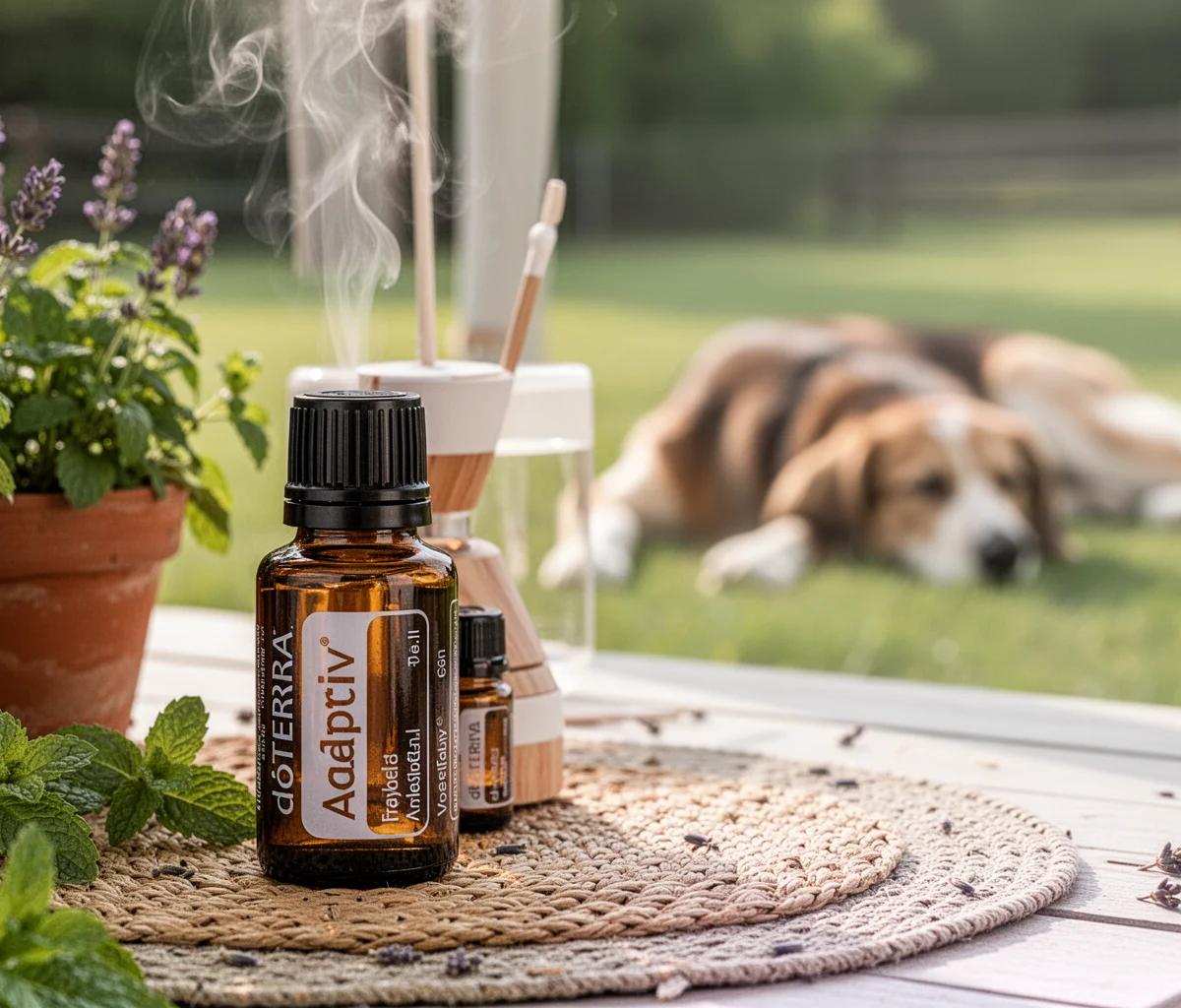
You catch a whiff of something minty and sharp while tidying the living room, and your dog is resting peacefully a few feet away from a quietly running diffuser. Your stomach drops, you just added a few drops of peppermint without even thinking. If you are reading this, you are probably in that exact moment of worry, or you are the kind of conscientious owner who researches everything before it enters your home. I have been there myself, and the short answer I wish someone had told me right away is this: no, peppermint oil is not considered safe for dogs, and diffusing it in a space they share is a risk best avoided.
Peppermint is far too potent for a canine nose and metabolism. Dogs experience the world through scent in a way we can barely grasp, and compounds that smell refreshing to us can be overwhelming, irritating, or even toxic to them. While a tiny, accidental whiff from a distant diffuser might not cause a crisis, the common practice of actively diffusing peppermint around dogs, or, far worse, applying it topically, is something veterinarians consistently warn against. The real reason to care about this is purity and quality: a pure, undiluted essential oil like doTERRA Peppermint is exceptionally concentrated, which is wonderful for human use in a well-ventilated room, but exactly what makes it a hazard for our four-legged roommates.
Why Peppermint and Dogs Don’t Mix
The core issue is not that peppermint is “bad”, it is a beautifully pure, CPTG Certified Pure Tested Grade oil that many people love for an invigorating, focused atmosphere during a workday. The problem is that a dog’s body simply isn’t built to process its key constituents, particularly menthol. Dogs do not have the same ability we do to safely break down high-menthol substances, and their respiratory tract is exquisitely sensitive. What feels cooling and stimulating to us can be a genuine respiratory irritant for them, and that is before we even consider the risk of a curious dog licking up a spill or chewing on a bottle.
Here is where quality ironically increases the risk: a pure oil like doTERRA Peppermint contains no synthetic fillers or dilution. That means every drop is packed with the full force of the Mentha piperita plant, and it only takes a very small amount to become a problem for a much smaller, differently-metabolized creature. I have learned to think of it this way: I adore a strong espresso, but I would never pour one into my dog’s water bowl. The substance and the situation have to match the species, every single time.
| Factor | Human Experience | Dog Experience |
|---|---|---|
| Menthol Concentration | Cooling, invigorating, generally well-tolerated in normal aromatic use. | Can be a respiratory irritant; overwhelming to sensitive nasal passages. |
| Metabolism | Efficiently processed by the liver and digestive system. | Lacks optimal pathways to break down high-menthol compounds, increasing toxicity risk. |
| Diffusion Risk | Creates a pleasant, focused atmosphere in a ventilated room. | Can cause eye and nose watering, pawing at the face, coughing, or lethargy. |
| Topical Application | Commonly used in diluted roll-ons for a cooling sensation. | Should never be applied; can cause intense skin irritation and systemic toxicity if licked. |
What to Do If Your Dog Is Exposed to Peppermint Oil
When I first brought my dog home, I made a small mental crisis plan for exactly this scenario, because let’s be honest, curious noses find things they should not. Knowing the steps ahead of time can turn a moment of panic into one of clear-headed action.
- Secure the Source: Immediately close the bottle, wipe up any spill, and move the diffuser to a room the dog cannot enter. Place the bottle high up and far out of reach.
- Move Your Dog to Fresh Air: If the oil was being diffused, take your dog outside or into a well-ventilated room free of the aroma. Let them breathe clean, moving air.
- Assess the Situation: For a small spill on the fur, do not reach for home remedies. Make a note of what happened, how much they were potentially exposed to, and their initial reaction.
- Rinse Only If Directed: If the oil is on the fur or skin, and only after calling your veterinarian or a pet poison control hotline for guidance, they may instruct you to gently wash the area with a mild, pet-safe shampoo. Never use soap or detergents without a professional’s say-so.
- Call the Professional Immediately: This is not a wait-and-see moment. Contact your veterinarian or an emergency animal poison control center right away. They will need to know the product (pure doTERRA Peppermint, for instance) and the rough amount of exposure. Speed matters.
Creating a Calm Home That Is Truly Dog-Friendly
My entire philosophy shifted the day I realized I could build a wonderfully fragrant, calming home without ever risking my dog’s wellbeing. The goal is a calm space you both enjoy, not a compromise that leaves you worried. I keep my own favorite minty aromas as a personal treat in a home office my dog does not enter, and I stick to a completely different palette in shared living areas.
For instance, a diffuser running with a small, gentle amount of high-quality Frankincense creates the warm, grounding feel I crave in the evening, and many dog owners I know find the soft, woody character of Cedarwood to be an agreeable alternative in a well-ventilated room where the dog is free to wander. We have a more detailed look at which oils are most often chosen for a shared environment in our guide to Safe Essential Oils for Dogs Diffuser. The key is always the same: use far less than you think, ensure the dog can easily leave the room, and talk to your veterinarian before introducing anything new. For a softer floral touch, many pet-focused homes lean toward a high-quality Lavender instead of mint, a topic we explore more thoroughly in our comparison of whether Is Lavender Oil Safe for Dogs.
Frequently Asked Questions
Can I diffuse peppermint oil in a room my dog isn't in? If your dog has zero access to the room and you air it out thoroughly before they enter, the risk is much lower. However, scent particles travel and dogs’ noses are far more sensitive than ours, so the safest practice is simply not to diffuse it in a home with a dog at all.
What are the signs of peppermint oil poisoning in a dog? Watch for excessive drooling, pawing at the mouth or face, coughing, difficulty breathing, vomiting, or sudden lethargy. These signs can appear quickly and warrant an immediate call to your veterinarian.
Are there any essential oils that are definitely safe to diffuse around dogs? No essential oil can be declared universally “safe” for all dogs, as every animal is individual. However, oils like Frankincense and Cedarwood are often discussed in pet-owner communities as being more gentle when used with extreme dilution, in a well-ventilated room, and with the dog free to leave, always under veterinary guidance.
We learned the hard way that “natural” does not mean “safe for every species,” and the trust our dogs place in us to keep their environment kind is a serious responsibility. Avoiding peppermint around them is one of the simplest, clearest boundaries we can set, and it leaves the door wide open to explore the genuinely gentle aromas that make a home feel cozy for everyone.
Adaptiv · Arborvitae · Balance · Console · Copaiba · Copaiba Touch
This content is for general information only and is not veterinary advice. Always consult a qualified veterinarian before using essential oils in a home with animals.