Is doTERRA Serenity Safe for Dogs Review
A practical review of doTERRA Serenity for dog owners. What the blend contains, the safety verdict, and what to ask your vet first. A practical guide with.
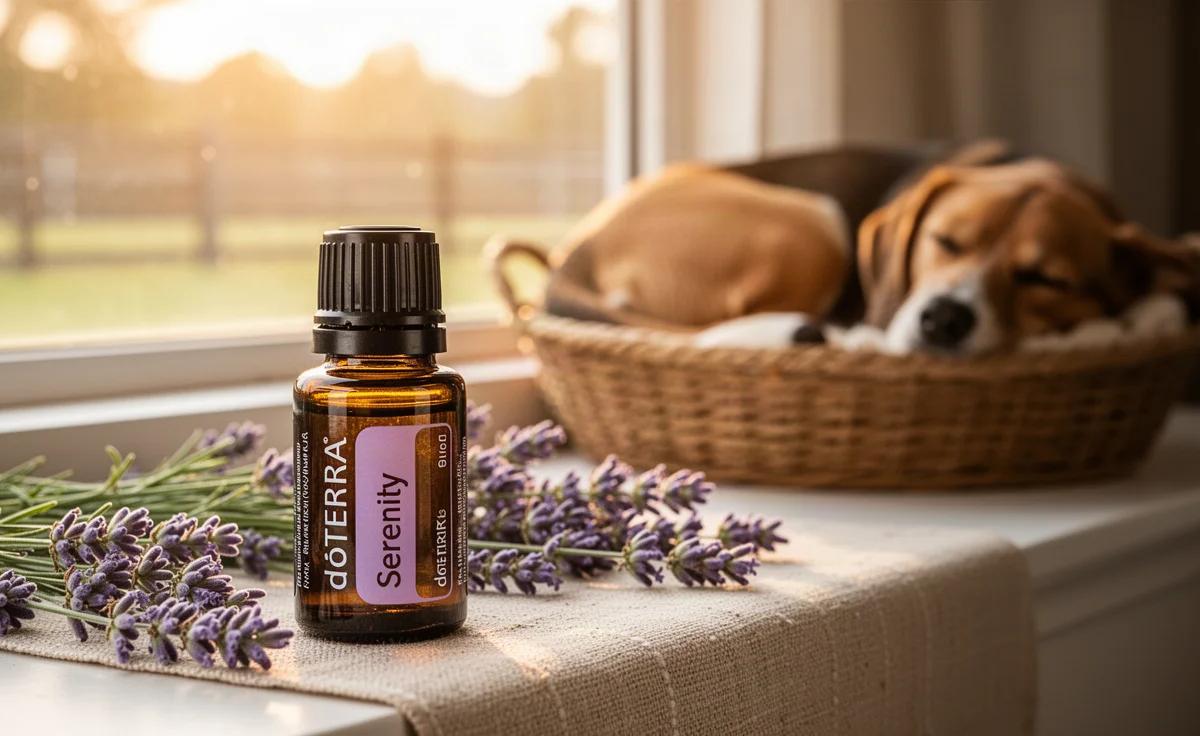
By the EssentialTail Team — pet owners, Wellness Advocates & doTERRA enthusiasts
You have probably stood in the oil aisle, bottle of Serenity in hand, wondering if the calming blend you love could also settle the dog who paces during thunderstorms. The direct answer is that doTERRA Serenity is not something we can call safe for dogs without serious caveats. The blend contains essential oils that need careful veterinary evaluation before any use around a dog. Our verdict is cautious: Serenity can live in a pet household, but it is not a product we recommend applying to dogs or diffusing in their space without a clear green light from your veterinarian.
What Serenity Actually Contains
Serenity is a proprietary doTERRA blend built around Lavender, Cedarwood, Roman Chamomile, Vetiver, and a few supporting notes. Those individual oils are familiar to many pet owners, and some appear in discussions about calm home environments. But a blend is not the sum of its parts when an animal is involved.
The concern is not just the oils themselves. It is concentration, ventilation, and the individual dog. Serenity is formulated for human aromatherapy at human intensity. A dog's sense of smell is far more acute than ours, so what feels soft and pleasant to us can be overwhelming to them.
| Factor | Human Perspective | Dog Perspective |
|---|---|---|
| Aroma strength | Gentle, grounding, spa-like | Potentially intense, even stressful |
| Diffusion in a closed room | Standard aromatherapy practice | Risky without escape route |
| Topical application | Common with dilution | Requires veterinary guidance, never routine |
| Main benefit | Moment of calm | Unproven for dogs without vet input |
The Safety Verdict for Dogs
Here is the honest review. doTERRA Serenity is a beautiful blend for humans. It is CPTG tested, pure, and consistent. That quality standard is real, and it is the reason we trust doTERRA products in our own homes. But purity does not equal safety for a different species.
For dogs, we would not apply Serenity to fur, paws, or bedding without veterinary approval. We would not diffuse it in a room where the dog is confined. If you do diffuse it in shared living space, the same rules apply that we cover in our full doTERRA Serenity for dogs review: keep the room well ventilated, keep the door open, and make sure your dog can leave whenever they want.
What about a senior dog who seems nervous at night? That is a scenario many readers ask about, and we address it separately in our article on Serenity for a senior dog's calm home. The short version is the same: age does not remove the need for a vet's input. Older dogs can have respiratory sensitivities, medication interactions, or reduced liver function that changes how they process any aromatic exposure.
A Practical, Vet-First Approach
If you want to explore whether Serenity has any place in your dog's environment, follow these steps:
- Call your veterinarian first. Describe the blend and ask if diffusion in shared space is appropriate for your specific dog.
- If approved, diffuse only with an exit route and open ventilation.
- Never apply Serenity to your dog's skin or coat unless your vet gives a specific, species-appropriate protocol.
- Watch your dog's body language. Lip licking, yawning, restlessness, or leaving the room are all signs the aroma is too much.
- Stop immediately if anything looks off, and contact a veterinarian or the Pet Poison Helpline if accidental exposure occurs.
Common Mistakes That Undermine a Safe Home
One of the most frequent missteps we see is the “nose test.” An owner takes a whiff from the bottle, thinks it smells mild, and assumes the dog is fine because they are not visibly reacting. Dogs often hide discomfort until it becomes severe. The better habit is to watch for early stress signals before they escalate: a sudden interest in licking paws, ears pinned back, a low tail carriage, or a dog that relocates to a different room without an obvious reason. A second mistake is diffusing Serenity in a main living area and then leaving for work, trapping the dog with the aroma for hours. Even a vet-approved plan should start with short diffusion windows — ten to fifteen minutes — while you are home to observe, not an all-day session. Third, avoid “soothing” your dog by petting them right after you have applied Serenity to your own wrists. Residual oil on your hands can end up on their coat, where licking becomes the exposure route. Wash your hands thoroughly after any personal use, and keep the bottle stored behind a cabinet door. Dogs investigate with their mouths, and a tipped bottle on a low shelf can mean an ingestion emergency rather than a calming moment.
Building a Serenity-Free Calm Zone Instead
If your veterinarian says no to diffusing Serenity, you do not have to abandon the goal of a calmer dog. The most reliable non-aromatic tools work by changing the environment, not the scent. Start with sound masking: a box fan or white noise machine placed near your dog’s bed softens the thunder rumble or fireworks crack that triggers panic. Pair that with a pressure wrap like a ThunderShirt, fitted snugly across the chest; many dogs show visible slowing of respiration within minutes. Create a den-like space in an interior closet or under a sturdy desk, draped with a blanket your dog already finds familiar. The scent of that blanket is something their brain already labels as safe — unlike an introduced essential oil blend. If you want an aromatherapy-adjacent ritual, your own calm, unperfumed presence is worth more than any diffuser: sitting on the floor near the den, breathing slowly, and offering a few long, slow strokes along the chest gives a dog a co-regulating anchor without any botanical input. Save Serenity for your own evening routine in a separate room, and let your dog’s sanctuary stay plain, predictable, and quiet.
Frequently Asked Questions
Can I diffuse doTERRA Serenity around my dog?
Only with veterinary approval and only in a well-ventilated room where your dog is free to leave. A closed door changes everything, so never diffuse Serenity in a space where your dog is confined.
Is Serenity toxic to dogs?
We cannot make that call for every dog. Some of the oils in Serenity are generally not recommended for direct animal use without professional guidance. Toxicity depends on dose, exposure type, ventilation, and the individual animal, which is exactly why your vet must be involved.
Can I put Serenity on my dog's collar or bed?
Not without a veterinarian's specific recommendation. What sits on bedding or a collar can be absorbed through skin or licked off, and that route of exposure is fundamentally different from smelling a faint aroma in an open room.
Our Final Take
doTERRA Serenity is a quality blend for people, but the dog question has no comfortable universal yes. Our review lands on this: keep Serenity as your own calming ritual, keep your dog's environment scent-neutral unless your vet says otherwise, and never let convenience override caution. When in doubt, the calmest home for your dog is one that smells like nothing at all.
This content is for general information only and is not veterinary advice. Always consult a qualified veterinarian before using essential oils in a home with animals.