Pet Safe Room Spray for Dog Odor
Learn how to keep your home fresh without risking your dog. We explore gentle, vet-first room sprays and responsible diffusion for pet owners.
By the EssentialTail Team — pet owners, Wellness Advocates & doTERRA enthusiasts
We all know that moment. Your dog bounds in from the yard, happy as can be, and a few minutes later the whole living room has that distinct “eau de wet dog.” You want a fresh home, but you also want your best friend safe. So, what is the real story with pet safe room spray for dog odor?
The direct answer is simple and veterinarian-first. Before you spray anything into the air your dog breathes, your first call should be to your veterinarian. There is no universally “safe” essential oil spray for every dog, because dogs are individuals. However, many owners in our community choose to manage odors not by masking them with a store-bought room spray, but by diffusing high-quality, pure oils in a well-ventilated space the dog can always leave. We lean on doTERRA because of its CPTG purity and testing standard, which gives us confidence in what we are putting into our home environment. The key is not a specific product, but a specific behavior: open the window, keep the diffuser light, and let your dog choose to walk away. That, combined with regular cleaning, is the real secret to a fresh-smelling home that still respects your dog’s sensitive nose and lungs.
How We Approach Dog Odor with Oils
The first thing to understand is that dogs have an incredibly powerful sense of smell. What smells pleasant and light to you might be overwhelming or irritating to them. This is not about finding a “safe” oil; it is about learning responsible diffusion habits. For a deeper guide, we have a full article on diffusing essential oils around dogs safely.
Comparing Spraying vs. Diffusing
| Approach | How It Works | What We Consider |
|---|---|---|
| Commercial Room Sprays | Mask odor with synthetic fragrances. | Often contain chemicals. Ingredient lists can be vague. |
| Essential Oil Room Spray | Water plus a small amount of essential oil. | Requires careful mixing. Never spray directly on a dog. |
| Ultrasonic Diffusing | Disperses fine mist of pure oil and water. | Best in a large, airy room. The dog must be able to leave. |
We prefer diffusing over direct sprays because it lets us control the intensity and keep the mist away from the dog’s face and fur. It feels less invasive.
Oils We Often Compare for a Fresh Home
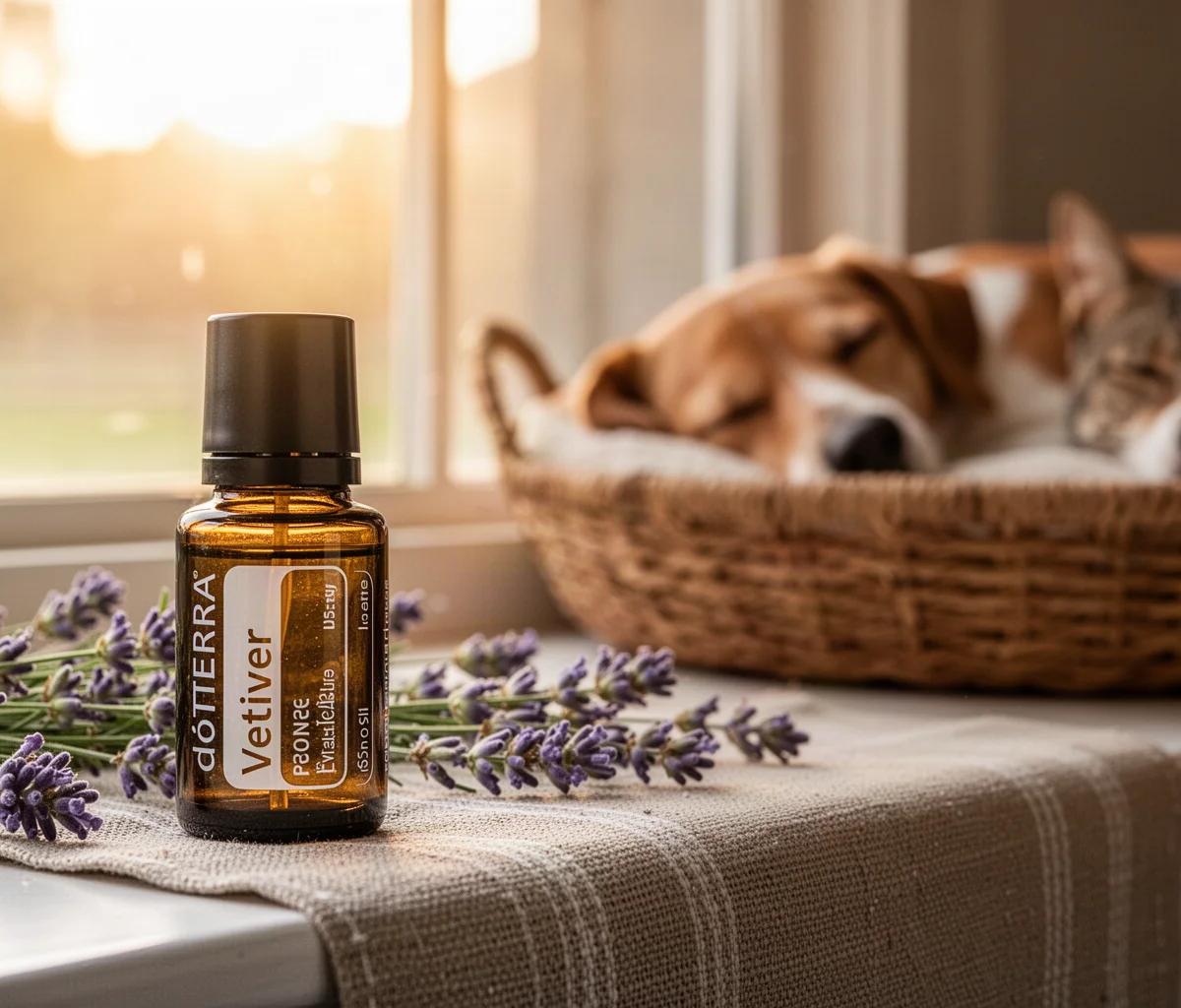
We don’t use citrus or peppermint oils around our dogs. Citrus oils can be risky for pets, and we simply avoid them in shared spaces. Instead, we look at gentler options known for their grounding, earthy aromas. Vetiver is a favorite in our house, not as an odor cover-up, but for its deep, woody scent that feels like a calm forest. Some friends also reach for Copaiba, which has a soft, warm note. We never put drops on the dog; the oil goes in the diffuser in a room the dog can leave.
A Gentle Diffusing Routine, Step by Step
Here is the exact thinking process we use when we want to freshen up the living room after a rainy walk.
- Vet first. Before using any oil around your dog, have a conversation with your veterinarian about your specific home setup, dog’s age, and health history.
- Ventilate the space. Open a window or a door. Fresh air is the best odor management tool we have, and it protects sensitive noses.
- Choose pure oils. We stick with doTERRA’s CPTG standard because the testing gives us a clear picture of purity. We reach for gentle, woody aromas like Cedarwood or Frankincense for a clean, warm atmosphere.
- Add very little to the diffuser. We use just a tiny amount of oil. Less is always more. The goal is a subtle background scent, not a perfume cloud.
- Watch your dog. If your dog sneezes, paces, tries to leave the room, or seems unsettled, turn the diffuser off and open more windows. Listen to what your dog is telling you.
- Wash the bedding. The single best way to remove dog odor is not a spray at all; it is washing beds, blankets, and toys regularly.
We also keep a bottle of Roman Chamomile in our collection. Its scent is mild and herbaceous, and we have used it in small amounts in a large, open room. But honestly, for heavy-duty dog smell, nothing replaces a vacuum with a HEPA filter and a load of laundry.
Related reading
Frequently Asked Questions
Can I use essential oils as a dog room spray? We do not recommend spraying essential oil blends directly onto surfaces where a dog sleeps or plays. Instead, we prefer diffusing a tiny amount in a well-ventilated space the dog is free to leave, always after checking with a veterinarian.
What essential oil smells good for dog odor? We lean toward earthy, woody aromas like Vetiver and Cedarwood. They offer a clean, grounding scent without the sharpness of citrus or mint, which we avoid around pets.
Are diffusers safe for dogs? Not every diffuser setup is safe for every dog. Dogs have sensitive respiratory systems, so we only diffuse in large, airy rooms, use very little oil, and make sure the dog can walk away at any time. Ventilation and veterinary guidance are essential.
Can I spray doTERRA oils on my dog? No. We never suggest applying essential oils directly to a dog. The oils stay in the diffuser or are used to freshen the human environment. Your veterinarian should be your guide for anything applied to your pet’s skin or coat.
How do I get dog smell out of the house? Our most effective routine is basic: wash dog bedding frequently, vacuum thoroughly, and keep windows open. We use a diffuser with gentle oils only as a light finishing touch, never as the primary cleaning method.
We believe the best home fragrance for a dog owner is one that shows respect for the animal’s powerful nose and sensitive lungs. For us, that means less product, more ventilation, and a veterinarian’s guidance. A truly fresh home starts with clean blankets and open windows, with pure oils used gently and never forced on our dogs.
This content is for general information only and is not veterinary advice. Always consult a qualified veterinarian before using essential oils in a home with animals.