Best Non Toxic Room Spray for Bird Owners
Discover how to keep your home fresh without harming your feathered friend. Learn what to avoid in room sprays and safer alternatives for bird owners.
By the EssentialTail Team — pet owners, Wellness Advocates & doTERRA enthusiasts
You just finished cleaning the living room, and now you are reaching for that familiar bottle of air freshener to make everything smell like a spring meadow. But then you glance at the cage. Your parrot is watching you, and suddenly that cheerful spray feels like a terrible idea. If you are reading this, you are probably wondering what exactly is safe to spray in a home with birds.
The direct answer is that most commercial room sprays, even ones labeled "natural," are not safe for birds. Birds have extraordinarily sensitive respiratory systems, and the volatile compounds, propellants, and synthetic fragrances in standard sprays can be rapidly fatal. Instead of a conventional spray, bird owners typically do better with a gentle, water-based alternative, a high-quality ultrasonic diffuser used in a separate room with the door closed, or simply a bowl of fresh herbs. Always involve your avian veterinarian before introducing any new scent into your home, and make sure your bird can never access the room where the scent is being used. For most bird owners, the safest room "spray" is actually no spray at all, just very good ventilation and a clean cage.
Understanding Why Birds Are So Vulnerable
It is not an exaggeration to say that birds breathe differently than we do. Their respiratory system is far more efficient at extracting oxygen from the air, but this efficiency comes at a terrible cost. Their lungs and air sacs pull in a much larger percentage of airborne particles than a mammal's lungs do. That means a tiny amount of fragrance, smoke, or chemical vapor that would barely register in your nose becomes concentrated and overwhelming inside a bird's body.
This is why the ASPCA Animal Poison Control Center and most avian veterinarians warn against using any aerosol sprays, plug-in air fresheners, or scented candles in a home with birds. The danger is not just in the smell. It is in the invisible chemical particles that hitch a ride on that smell. Polytetrafluoroethylene (PTFE), often found in non-stick cookware, is a well-known hazard, but less famous dangers include the terpenes in essential oils, the propellants in aerosol cans, and the phthalates used to make synthetic fragrances last longer.
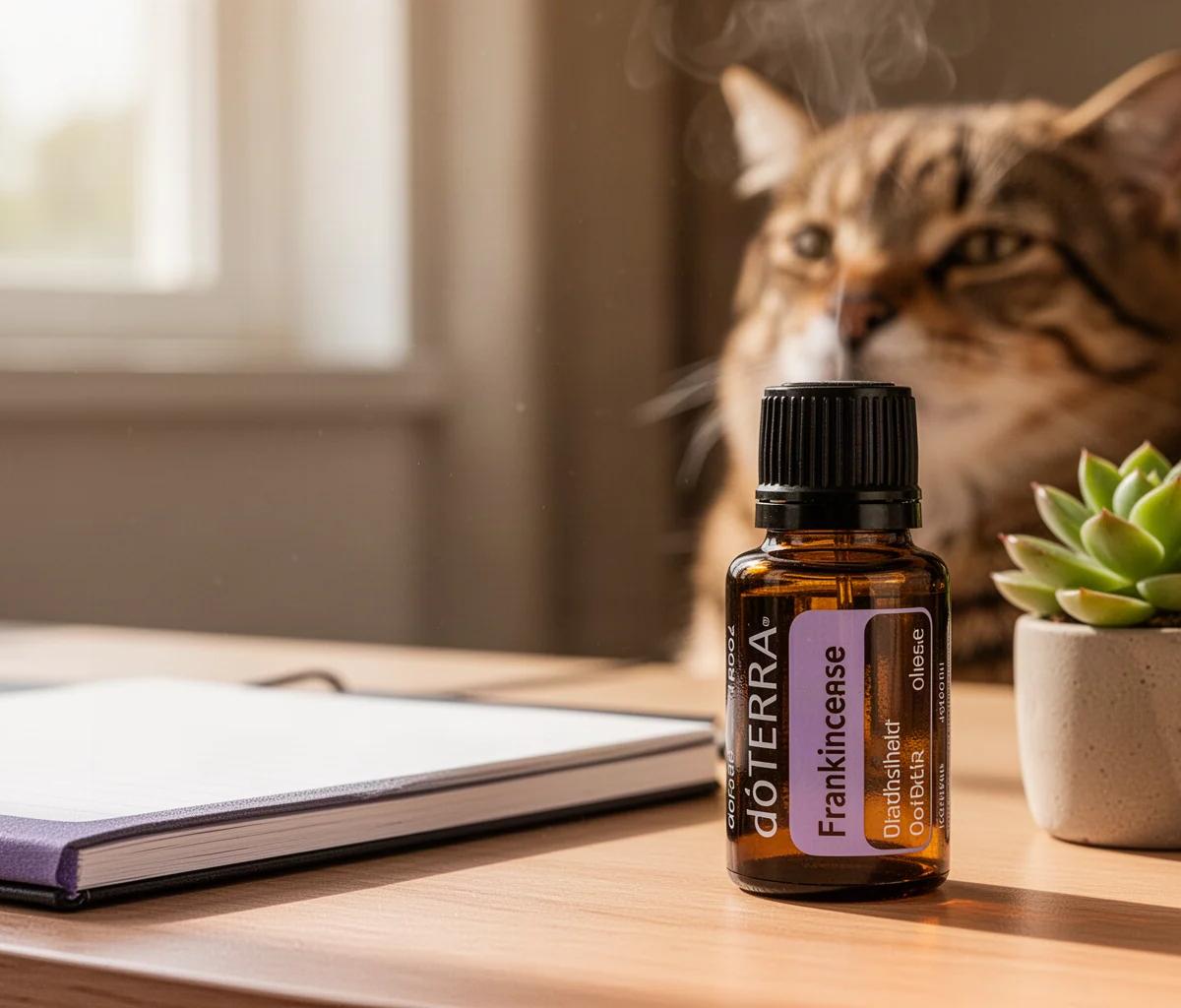
When discussing essential oils around birds, I have to be very clear. doTERRA offers oils like Frankincense and Lavender, which are loved by many people for their pure, CPTG-tested quality. But not a single one of them should be diffused in the same room as a bird. The Pet Poison Helpline has repeatedly emphasized that birds do not have the enzymes needed to break down many of the compounds found in essential oils. What is pleasant for you can be a genuine emergency for a cockatiel. Every rule about essential oils is different for birds, and the only rule that matters is extreme caution.
What to Look for in a Bird Safe Home Scent
If you want your home to smell nice without endangering your bird, you need to rethink what a room spray actually is. A truly bird-safe approach usually means eliminating the spray bottle entirely and replacing it with greener, gentler habits.
One of the best "sprays" you can make is simply an open bowl of warm water with a few fresh herbs like rosemary, mint, or basil. The scent is subtle, completely free of synthetic chemicals, and dissipates quickly. You can place that bowl in a room your bird does not occupy, or even better, focus on removing odors at the source. A clean cage, fresh paper lining, and daily spot-cleaning do more for air quality than any product ever could.
Room by room, here is the step by step method I use with my own flock:
- Close the door to the bird's room before any cooking, cleaning, or scent experimentation happens elsewhere in the house.
- Open a window in the room where you want a fresh scent. Air exchange is the safest "freshener" on earth.
- Use a plain water spray bottle to mist the air lightly. The water itself captures dust and pulls it down, and the humidity helps your bird's feathers.
- Simmer a pot of water with a cinnamon stick or a slice of fresh ginger on the stove, only when the bird is in a separate, closed room with the exhaust fan running.
- Air out the entire house before allowing your bird back into the scented room.
Some owners ask me if a diffuser is ever acceptable. The honest answer is that an ultrasonic diffuser running in a separate room, with the door closed and the window open, is a choice some bird owners make after speaking with their avian vet. But that is a conversation for your veterinarian, not a recommendation I can give. I have written more about this in the Diffusing Oils Around Pets the Safe Way guide, and the short version is that birds are not like dogs or cats. They get their own set of rules.
| Scent Method | Safe for a Bird in the Same Room? | Best Practice for Bird Owners |
|---|---|---|
| Aerosol room spray | No | Never use in a home with birds |
| Plug-in air freshener | No | Remove from the house entirely |
| Scented candle | No | Keep unlit and stored away |
| Essential oil diffuser | No | Only in a separate room, door closed, vet approved |
| Open bowl of fresh herbs | Yes | Best used in a room the bird does not enter |
| Plain water mist | Yes | Excellent for dust control and humidity |
The Dog and Cat Friendly Oil Diffuser Guide on our site covers safer diffuser habits for pet mammals, but birds need a much higher level of caution. I know it feels limiting at first. I have lost count of the times I have wanted to fill my house with a cozy winter scent and remembered, with a sigh, that my little green roommate is watching. But a bird who is breathing easily is worth far more than any fragrance.
Related reading
Frequently Asked Questions
Can I use a natural room spray with essential oils around my bird?
No. Even natural or organic room sprays containing essential oils are dangerous for birds. Their respiratory systems cannot filter out the concentrated compounds, and many are toxic. What is natural for you is not natural for them, so leave the spray out of the bird's room entirely.
What is the safest way to keep my bird's room smelling fresh?
The safest method is plain, boring maintenance. Remove waste daily, wash food and water bowls every morning, change the cage liner frequently, and keep the room ventilated with fresh air from an open window when the weather allows. A light mist of pure water can help control dust.
What should I do if my bird is accidentally exposed to a room spray?
Move the bird to fresh air immediately, then call your avian veterinarian or the Pet Poison Helpline without delay. Do not wait to see if symptoms appear. Birds hide illness until they are very sick, so speedy action is critical.
Are doTERRA oils safe for birds if I dilute them?
No doTERRA oil, regardless of dilution, should be diffused or sprayed in a room with a bird. The purity and testing that make doTERRA oils trustworthy for human use do not change the fact that a bird's body processes these compounds very differently. Keep every essential oil, even a beloved one like Cedarwood, away from your bird.
Your bird is not a tiny dog or a small cat. They are a creature with a uniquely fragile respiratory system, and the kindest thing you can do for them is to keep the air they breathe as simple and clean as possible. Skip the sprays, open a window, and let the natural smell of a well-cared-for home be enough.
This content is for general information only and is not veterinary advice. Always consult a qualified veterinarian before using essential oils in a home with animals.
Adaptiv · Arborvitae · Balance