Safe Essential Oil Diffuser for Small Pets Guide
Wondering if a diffuser is safe for small pets? Learn the risks, vet-first rules, and how to choose a cautious setup for dogs, cats, and more.
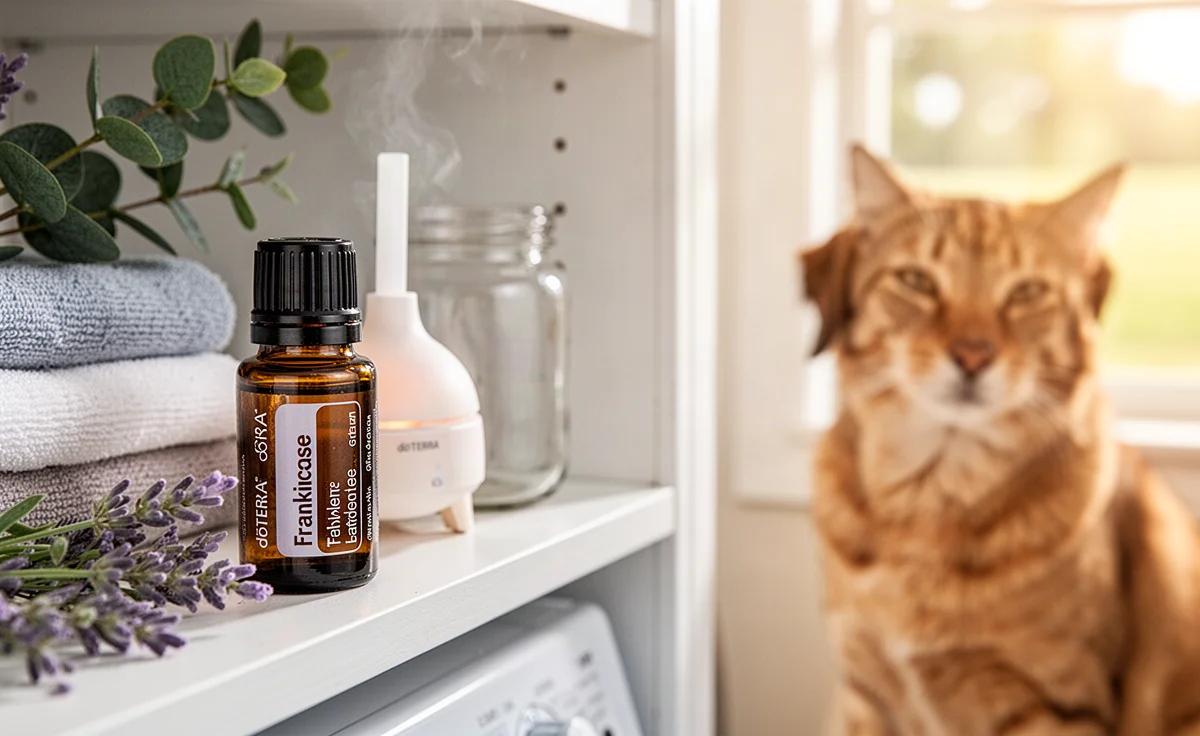
By the EssentialTail Team — pet owners, Wellness Advocates & doTERRA enthusiasts
You bring home a tiny ultrasonic diffuser, fill it with a few drops of lavender, and suddenly wonder if your rabbit or kitten can breathe easily in the next room. It is a fair question, and the short answer is this: there is no universally safe essential oil diffuser for small pets. Birds, rabbits, rodents, and even cats have respiratory systems far more sensitive than ours, and the safest default is to avoid diffusing in any space they cannot leave. If you do diffuse, the room must be open, well-ventilated, and your pet must always be free to walk, hop, or fly away. Always ask your veterinarian first, because what is pleasant for you can be overwhelming or even dangerous for them.
Understanding Small Pet Sensitivity
Small pets are not simply smaller dogs. Birds have an extremely delicate respiratory tract, and diffusing essential oils in their room can be rapidly fatal. Rabbits and rodents also react strongly to airborne particles and fragrances. Cats, while not always "small," lack the liver enzyme needed to process many compounds found in essential oils, making oils like Tea Tree, citrus, eucalyptus, and peppermint particularly risky even in a diffuser.
We have learned over time that the brand's purity does not change this biology. doTERRA oils are CPTG tested and pure, but that purity means potency, not pet safety. Even a high-quality oil like Frankincense or Roman Chamomile should only be diffused around small pets under explicit veterinary guidance. Our recommendation is always the same: treat diffusion as a human experience in a shared space, never as a pet treatment.
Here is a simple comparison to keep in mind:
| Pet Type | Diffusing Risk | What We Recommend |
|---|---|---|
| Birds | Extremely high, avoid entirely | No diffusion in their room, ever |
| Rabbits, rodents | Very high, respiratory sensitivity | Keep diffuser in a separate, closed room |
| Cats | High, enzyme deficiency | Avoid phenolic and citrus oils, open windows |
| Dogs | Moderate, still individual | Vet approval first, pet can always leave |
How to Diffuse Cautiously Around Small Pets
If your veterinarian approves diffusion in a home with small pets, follow these steps every single time:
- Choose a separate room. Diffuse only in a room your small pet does not enter, or one with a wide-open door they can leave freely.
- Keep sessions brief and light. Use the smallest amount that creates a subtle scent, never a strong cloud. Avoid continuous diffusion.
- Select gentle, pet-appropriate oils only after vet approval. Oils like Copaiba, Vetiver, and Cedarwood are often discussed among owners for their soft aromas, but they still require a veterinarian's green light.
- Watch your pet closely. If they sneeze, drool, become lethargic, or leave the room quickly, stop diffusing and call your vet.
- Store oils and the diffuser out of reach. Curious paws and beaks find bottles fast, and spilled oil on fur or feathers is an emergency.
For more detail on general diffuser precautions, see our guide on Essential Oil Diffuser Safety With Pets. We also cover cat-specific concerns in our Dog and Cat Friendly Oil Diffuser Guide.
Remember that diffusion is never an automatic safe choice for animals. The ASPCA Animal Poison Control Center and the Pet Poison Helpline both advise contacting a veterinarian or poison control immediately after any accidental exposure, and we echo that guidance without exception.
Common Mistakes That Put Small Pets at Risk
The most dangerous diffuser mistakes often happen in the first few days of ownership. Many owners assume that placing the diffuser on a high shelf or in the corner of the room creates a safe distance, yet essential oil droplets travel on air currents and settle on fur, bedding, and water bowls below. Another frequent error is diffusion triggered by household stress, such as a visitor or a storm, without realizing the pet is already in a heightened state and may be more reactive to an unfamiliar scent. Some owners also forget that small pets groom themselves constantly. Whatever lands on their coat can be ingested, even if the smell seems too faint to matter. Finally, the "natural equals safe" assumption leads to longer or stronger diffusion sessions than a pet can tolerate, especially in closed spaces where particles concentrate over time.
A Practical Setup for Multi-Pet Homes
In a home with a cat, a rabbit, and a bird, physical distance alone is not enough. A practical approach is to diffuse in a room with a closed door and an exhaust fan drawing air toward an open window. Wait at least thirty minutes after the diffuser stops before reopening the door, and never re-enter with the pet until the scent has faded to barely detectable. For owners who still want a subtle aroma in shared areas, a passive option such as a cotton ball with one drop of a vet-approved oil placed inside a sealed jar, opened and removed before the pet enters, creates less airborne exposure than an active mist. If you must diffuse in a shared space, place the unit in the farthest room with a door cracked no more than a few inches, run it on intermittent setting, and observe whether your pet moves toward or away from the airflow. That choice, repeated over days, tells you more than any general list of "safe" oils ever will.
Frequently Asked Questions
Are any essential oil diffusers safe for birds?
No. Birds have extremely sensitive respiratory systems, and diffusing essential oils in a room with a bird can be rapidly fatal. The only safe approach is to keep all diffusion out of the bird's space and ask an avian vet first.
Can I diffuse lavender around my rabbit?
We cannot say yes. Rabbits have delicate respiratory tracts, and even gentle-seeming oils like lavender can irritate them. The safest default is a separate, closed room, and any use should follow a veterinarian's specific approval.
What should I do if my small pet reacts to a diffuser?
Stop the diffuser immediately, move your pet to fresh air, and contact your veterinarian or an animal poison control center right away. Do not wait, and do not try any home remedy.
Is a water-based diffuser safer than a reed diffuser for pets?
Not necessarily. Both release fragrance into the air, and small pets breathe those particles. Water-based ultrasonic diffusers may be quieter, but they still disperse essential oils into shared air, so the same caution applies.
Conclusion
A safe diffuser for small pets starts with the honest answer that diffusion is rarely completely safe for them. Keep your pet's lungs and instincts first, and let your veterinarian make the final call.
This content is for general information only and is not veterinary advice. Always consult a qualified veterinarian before using essential oils in a home with animals.