Safe Essential Oils for Diffusing Around Dogs
Wondering which essential oils are safe to diffuse around dogs? Learn vet-first guidance, cautious options, and how to keep every sniff session worry-free.
By the EssentialTail Team — pet owners, Wellness Advocates & doTERRA enthusiasts
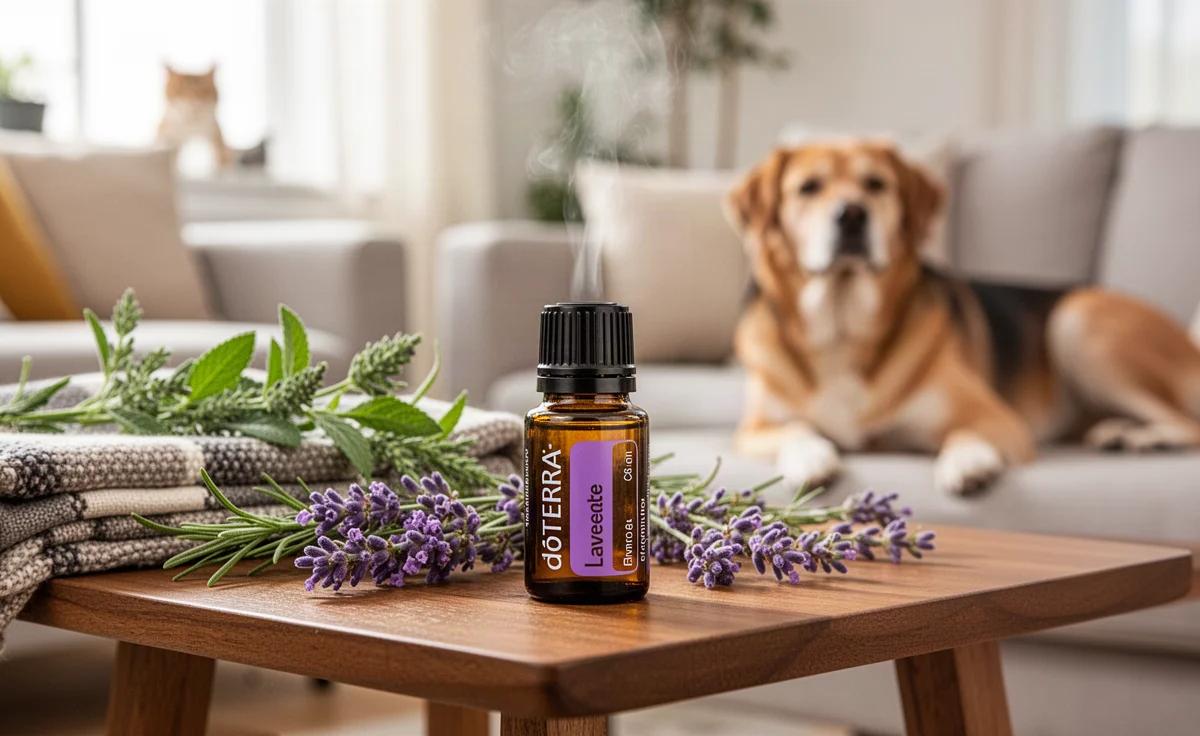
You just set up a new diffuser, picked a scent you love, and then your dog trots into the room. Suddenly you wonder if that lovely aroma is okay for him. That pause is exactly right. The short answer is that no essential oil should be considered automatically safe to diffuse around dogs, and your veterinarian should always guide the decision. What we can say is that many owners choose gentle, widely recognized options like Lavender, Frankincense, and Cedarwood for their calm, grounded aromas, but only in a well-ventilated space the dog can leave freely. Every animal is different, and what works in one home is not a universal rule for another.
Oils Owners Tend to Choose and Why Caution Still Leads
In our experience, the conversation usually starts with a few familiar bottles. Lavender is the one most people mention first because its soft, floral scent feels gentle to us. Frankincense has a warm, resinous, almost meditative aroma that many owners personally enjoy. Cedarwood offers a woody, outdoorsy note that feels very natural in a home with dogs. We also hear people talk about Roman Chamomile for its soft, apple-like scent, and Copaiba for its smooth, balsamic character. These are not safety claims. They are simply the oils that come up again and again in pet-owner conversations, always paired with a call to the vet.
The uncomfortable truth is that dogs smell the world far more intensely than we do. A scent that feels subtle to us can be overwhelming to them, and a dog cannot tell you when it is too much. That is why we always lean on the same rule: only diffuse in a large, airy room, never in a closed space, and always let your dog walk away. If the door is shut, the session should not happen. This is where our guide to safe essential oils for dogs diffuser goes deeper, but the core idea is simple: the dog controls his own exit.
Here is a comparison snapshot of oils we hear about most often, with the caution that none of them bypass a veterinary conversation:
| Oil | Aroma Character | Common Owner Impression | Key Diffusion Note |
|---|---|---|---|
| Lavender | Soft, floral, sweet | Calm, familiar, gentle | Keep the room open and the session short |
| Frankincense | Warm, resinous, earthy | Grounding, meditative | Ventilate well, let the dog leave |
| Cedarwood | Woody, dry, outdoorsy | Natural, rustic | Never in a confined space |
| Roman Chamomile | Fruity, light, apple-like | Soft, mellow | Watch for any sign of discomfort |
| Copaiba | Smooth, balsamic, subtle | Neutral, low-key | Start with a minimal scent level |
How to Diffuse Around a Dog, Step by Step
We are not veterinarians, and this is not a protocol. What follows is the cautious, common-sense rhythm we share when an owner wants a pleasant home aroma without making their dog a test subject.
Call your veterinarian first. Describe your dog, any health history, the specific oil you are considering, and the room you will use. Their word overrides everything else here.
Choose one oil at a time. Resist the urge to blend six scents. A single, gentle aroma makes it easier to notice if your dog seems bothered.
Prepare a room the dog can leave. A wide-open living area beats a bedroom with a closed door. The dog must be able to walk into another room whenever he wants.
Diffuse for a short, mindful session. Rather than running the diffuser for hours, keep it brief and then air the room. Fresh air is your friend.
Watch your dog, not your phone. Look for restlessness, squinting, pawing at the face, drooling, or the dog choosing to leave the room repeatedly. Those are all signals to stop and call your vet.
Store oils far out of reach. A curious nose and a tipped bottle are a bad combination. Keep everything closed and in a cabinet the dog cannot access.
For a closer look at the risks and how to structure a scent session responsibly, our full discussion on diffusing essential oils around dogs safely walks through the same common-sense logic in more detail.
Frequently Asked Questions
Is diffusing any essential oil completely safe for dogs?
No. Every dog is an individual, and factors like health status, age, breed, and the ventilation of your space all matter. What is tolerable for one dog may not be for another, so we always recommend a veterinarian’s guidance before the first session.
Can I use a diffuser in a room where my dog sleeps?
We would not. A sleeping dog cannot choose to leave, and that removes the most important safety layer we have. Diffuse only in a shared space where your dog is awake and free to walk into another room.
What should I do if my dog seems bothered by a diffused oil?
Stop the diffuser immediately, open windows, and let the dog move to a fresh-air room. If you see any concerning sign such as drooling, trembling, or unusual behavior, contact your veterinarian or the Pet Poison Helpline right away rather than waiting it out.
Are citrus or mint oils on the cautious list around dogs?
Yes. Many owners avoid peppermint, wintergreen, and citrus oils like lemon or wild orange around pets because they can be intense. We treat those as plain-text cautions, never as linked recommendations, and we always defer to the vet.
A diffuser can still be part of a dog-friendly home, but only when caution leads and the dog stays in control of his own space. When we keep the room open, the scent light, and the veterinarian in the loop, the experience tends to become what it should be: pleasant for us and unremarkable for our dogs.
This content is for general information only and is not veterinary advice. Always consult a qualified veterinarian before using essential oils in a home with animals.