Safe Essential Oils for Elderly Dogs Daily Routine
Discover gentle ways to create a calm home for your senior dog. Learn which oils some owners use, what to avoid, and why your vet comes first.
By the EssentialTail Team — pet owners, Wellness Advocates & doTERRA enthusiasts
If you are reading this, you are probably watching your old friend slow down a little and wondering how to keep home feeling calm and familiar. The short answer is that no essential oil should become part of your elderly dog's daily routine without your veterinarian's approval, and diffusion in a shared room is the most common way owners incorporate pleasant aromas gently. What matters more than any single oil is ventilation, the freedom to leave the room, and starting with your vet's guidance.
Creating a Calm Home Without the Guesswork
Aging brings changes, and we have noticed that owners often become more intentional about the energy at home. Soft lighting, predictable routines, and a quiet corner for rest matter as much as anything you diffuse. When we bring oils into shared spaces, we focus on ones known for gentle, grounding aromas rather than intense or sharp profiles.
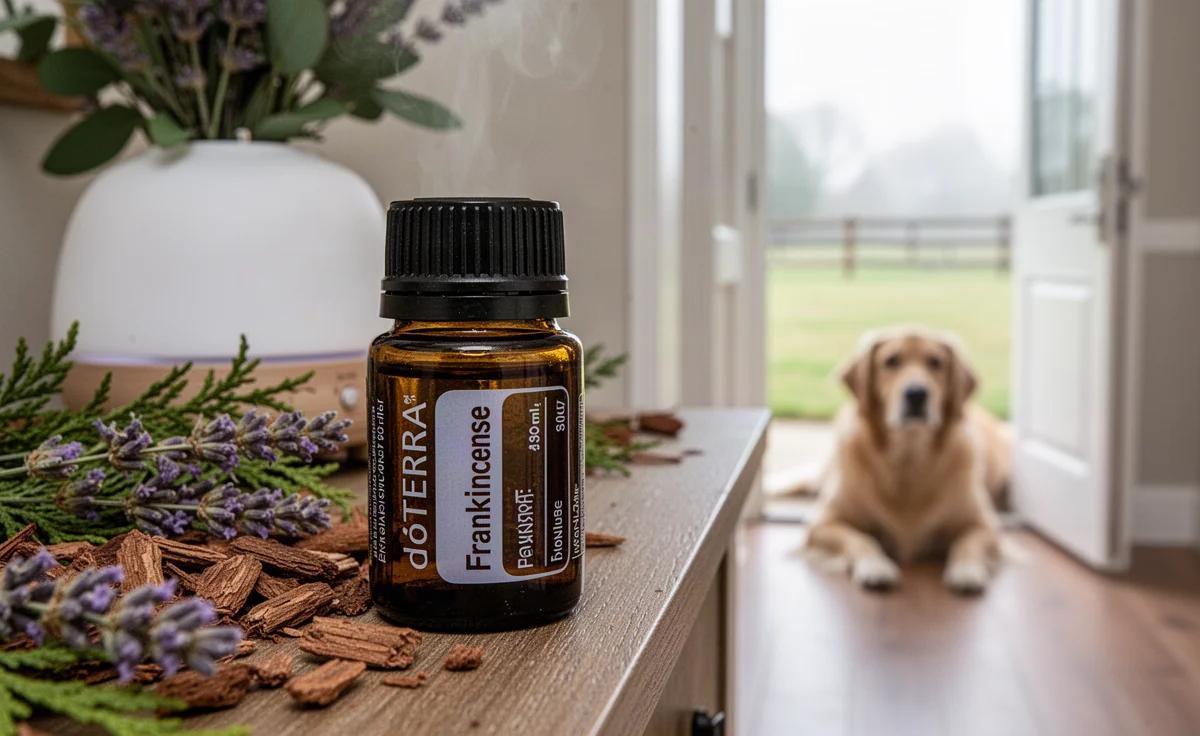
Some owners favor Frankincense for its soft, resinous warmth. Cedarwood and Roman Chamomile also come up in conversations about calm, mellow rooms. We find it helpful to think of these as background notes rather than remedies. Your dog's comfort depends on environment, health, and habit far more than on any bottle.
Before diffusing around an older dog, read our piece on best calming essential oil for senior dogs. It covers the experiential side without medical claims.
What Many Owners Do Step by Step
- Ask the veterinarian first. Senior dogs often have kidney, liver, or respiratory considerations that change everything. No article can know your dog.
- Choose one gentle, grounding aroma. We like Frakincense or Cedarwood as starting points in conversation, never as recommendations.
- Diffuse in an open, well-ventilated room. Keep the door open and the dog free to walk away. Never diffuse in a crate, bedroom, or closed space.
- Keep sessions short and occasional. Less is more. A light, brief session a few times a week feels more sensible than daily saturation.
- Watch your dog, not the clock. If he leaves, sneezes, or seems restless, stop and reassess with your vet.
| Consideration | Safer Approach | Riskier Approach |
|---|---|---|
| Ventilation | Open room, door ajar | Closed room, crate, car |
| Dog's choice | Free to leave | Confined nearby |
| Frequency | Occasional, brief | Constant diffusion |
| Oil selection | Gentle, vet-approved aroma | Strong, hot, or citrus oils |
| Decision-making | Veterinarian first | Online advice first |
Cats, birds, and small pets complicate things further, and many oils we use comfortably ourselves are simply not appropriate around them. Our guide to essential oils safe for dogs explains species differences in plain language.
Common Mistakes Owners Make With Older Dogs
Owners often assume a gentle-smelling oil is automatically gentle for the dog. Fragrance perception differs between species, and a scent that seems mild to you may be overwhelming to an aging nose or a dog with reduced respiratory capacity. Another frequent mistake is diffusing near the dog's bed simply because that is where he rests. Even with vet approval, the resting area should remain scent-free so the dog has a true retreat. Some owners also rotate through several oils in a week, searching for the "right" one. With seniors, consistency and familiarity usually beat variety — if your veterinarian approves a particular oil, stick with it rather than cycling through new aromas that require repeated adaptation.
Practical Tips for Reading Your Dog's Response
Look for subtle signals that your dog is not enjoying the experience, and act early. Lip licking, yawning, turning away, or suddenly getting up to leave are often signs of discomfort, not just restlessness. Position the diffuser several feet away from your dog's regular path, and consider diffusing at a height above the dog's nose level, since oils linger closer to the ground. If you decide to try diffusing, do it during a low-stress part of the day — perhaps while your dog is already relaxed in another part of the room — rather than during meals, medication time, or when visitors arrive. Finally, write down each session: oil, duration, your dog's behavior before and after. That record will help your veterinarian give more specific guidance than a general yes or no.
Frequently Asked Questions
Can I put essential oils on my elderly dog's skin?
Not unless your veterinarian specifically directs it. Senior skin is more delicate, licking transfers oils to the mouth, and dosing for animals is a veterinary decision. We stick to diffusion in open rooms, always with prior vet approval.
How often can I diffuse around my old dog?
There is no universal number. Some owners choose a few short sessions weekly in an airy space, others avoid diffusion entirely. Frequency should follow your veterinarian's guidance for your individual dog, never a template.
Are there oils I should keep away from an aging dog?
Yes. Phenolic oils like oregano, thyme, cinnamon, and clove, plus tea tree, citrus, mint, eucalyptus, and wintergreen are among those many veterinarians flag as concerning, especially for cats but also for dogs. Ask your vet before bringing any oil into your home.
Does my dog's age change the safety picture?
It can. Older dogs may have reduced liver or kidney function, respiratory changes, or medications that interact. This is precisely why a veterinarian's input matters more for seniors than for young, healthy adults.
What if my dog accidentally licks spilled oil?
Contact your veterinarian or an animal poison control center such as the ASPCA Animal Poison Control Center or Pet Poison Helpline immediately. Do not wait, do not offer home remedies, and do not induce anything on your own.
A Quieter Approach
The kindest routine for an elderly dog often involves less, not more. A calm voice, a predictable walk, a soft place to rest, and perhaps a brief, vet-approved diffusion session now and then. When in doubt, we choose caution and let the veterinarian set the pace.
This content is for general information only and is not veterinary advice. Always consult a qualified veterinarian before using essential oils in a home with animals.
Adaptiv · Arborvitae · Balance