Essential Oils Safe for Dogs
Discover which essential oils are commonly discussed for dogs, how to diffuse responsibly, and why your veterinarian should always guide the final decision.
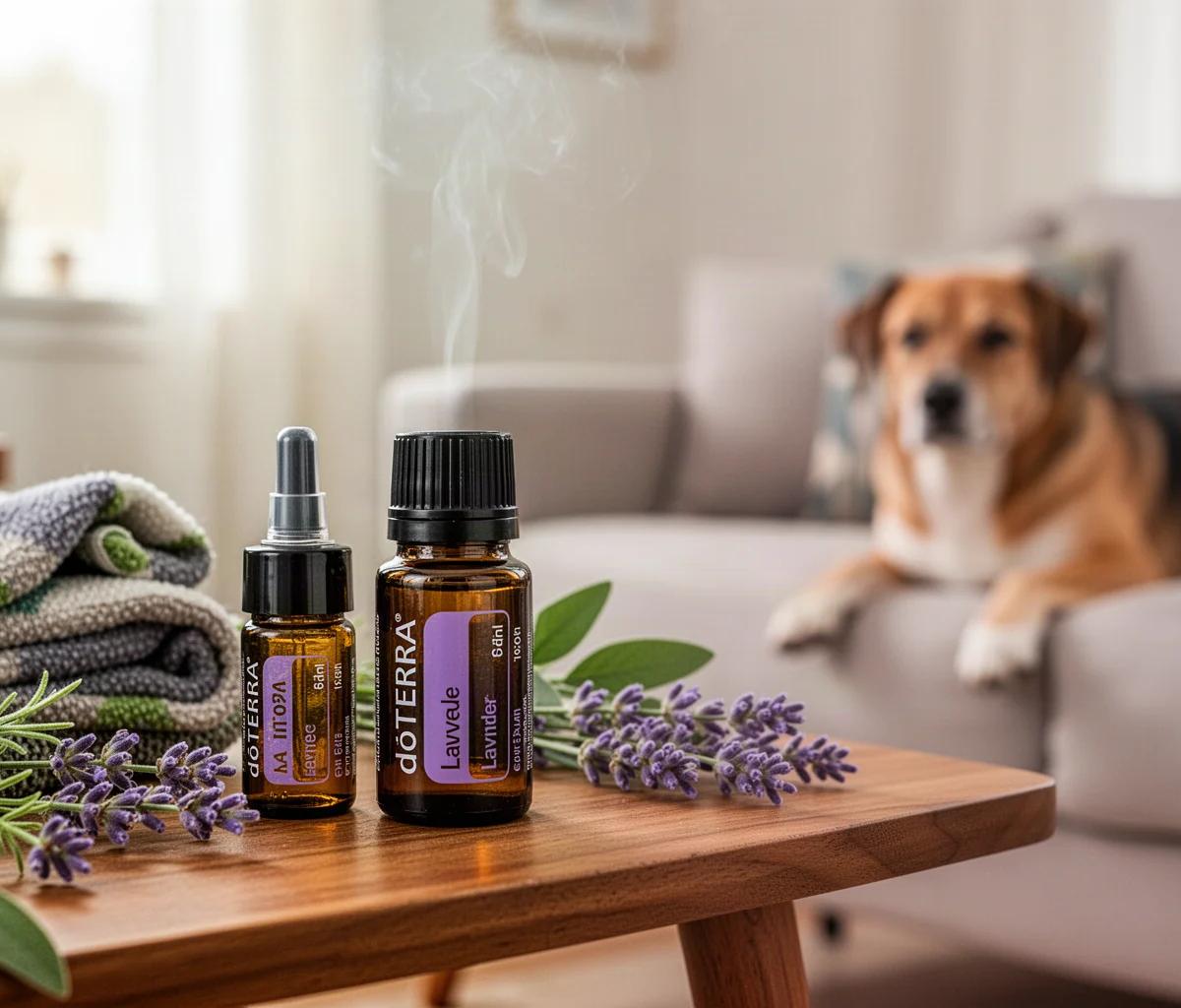
By the EssentialTail Team — pet owners, Wellness Advocates & doTERRA enthusiasts
If you have ever stood in front of a wall of tiny amber bottles and wondered which ones might be okay around your dog, you are not alone. I remember hesitating in our own living room, diffuser in hand, watching our dog nap on the rug and thinking, this is a shared space. The short answer is that no essential oil should ever be considered broadly safe for every dog, and the only person who can tell you what is truly appropriate for your individual animal is your veterinarian. That said, there are a few oils that experienced pet owners talk about most often for calm, everyday aromas in shared spaces, and they tend to be the gentler, softer-scented options rather than the hot, sharp, or minty ones. The golden rule is this, veterinarian first, doTERRA label second, and always give your dog the freedom to leave the room.
Which Oils Do Experienced Dog Owners Reach For
When dog owners swap stories about pleasant home aromas, the same names come up repeatedly because their scent tends to be softer and less overpowering. One I reach for often myself is Lavender, known for its gentle, floral aroma that many people keep in bedrooms and living rooms. Another we often hear about is Roman Chamomile, a warm, sweet scent that feels naturally mellow. Cedarwood is popular for its rich, woodsy depth, and Vetiver has an earthy, grounding aroma that many owners pair with evening downtime. doTERRA also offers Copaiba, which is frequently used in diffuser blends for its smooth, warm foundation, and Frankincense, a classic, softly resinous scent that feels calm without being heavy. What makes doTERRA the brand we personally trust is the CPTG purity and testing standard, each batch is tested for purity and potency, and that matters when you share your home with animals. It does not make any oil automatically safe for your dog, but it does give you confidence that what is in the bottle is exactly what the label says.
Comparison at a Glance
| Oil | Aroma Style | Why Owners Mention It |
|---|---|---|
| Lavender | Soft, floral | Gentle everyday diffusing in shared spaces |
| Roman Chamomile | Sweet, apple-like | Mellow evening aroma |
| Cedarwood | Warm, woodsy | Grounding, comforting scent |
| Vetiver | Deep, earthy | Common in calm wind-down routines |
| Copaiba | Smooth, subtle | Blends well as a soft base note |
| Frankincense | Resinous, calm | A classic, never sharp or minty |
How to Diffuse Around a Dog, Step by Step
The mistake I made early on was thinking that because an oil came from a plant, it was automatically gentle enough. It is not. Dogs have a far more sensitive sense of smell than we do, and a room that smells lightly pleasant to us can be completely overwhelming to them. What a veterinarian taught me was to think about the dogs experience first, not the fragrance. Here is the responsible routine many owners follow.
- Ask your vet first. Before any new oil goes into a diffuser in a home with a dog, we always recommend a quick conversation with your veterinarian, especially for puppies, seniors, or dogs with any ongoing health concern.
- Keep the room ventilated. Open a window or run a fan so the space never becomes saturated, and keep the diffuser well away from your dogs bed, food bowls, and water dish.
- Diffuse for short periods only. A little while is plenty, you do not need to run the diffuser all day or all night.
- Always give a clear exit. The door should stay open so your dog can walk away the moment the scent is too much. A dog that cannot leave is a dog that cannot tell you it is uncomfortable.
- Watch body language closely. If your dog sneezes, pants, drools, paces, or heads for another room, stop diffusing and give the space time to clear.
- Never apply oils directly to your dog. Topical use is a veterinary decision, never a do-it-yourself one, and ingestion of essential oils is never appropriate for dogs.
For a closer look at which oils are most frequently used in diffusers around dogs, our guide on Safe Essential Oils for Dogs Diffuser walks through the everyday routine. If you are curious about how dogs experience scents in the air specifically, we also cover that in Essential Oils Safe for Dogs to Breathe.
Related reading
- Is doTERRA Safe for Dogs
- Essential Oils for Your Dogs Skin What I Learned
- DoTERRA Oils Gentle Enough for Dogs
Frequently Asked Questions
Is lavender oil safe for dogs?
Lavender is one of the most frequently discussed oils among dog owners because its scent is soft and floral, but that does not mean it is automatically safe for your individual dog. We always recommend confirming with your veterinarian before diffusing it in a shared space.
Can I put essential oils on my dogs skin?
No, topical application of any essential oil should only ever happen under direct veterinary guidance. Dogs absorb and react to substances differently than humans, and a well-meaning home blend can do more harm than good.
What happens if my dog accidentally licks essential oil?
Contact your veterinarian or the ASPCA Animal Poison Control Center, or your local equivalent, immediately. Do not wait, do not offer a home remedy, and do not try to make the dog vomit, emergency guidance belongs to a professional.
Are citrus oils okay around dogs?
Citrus oils, along with peppermint, eucalyptus, wintergreen, tea tree, oregano, thyme, cinnamon, and clove, are generally the ones experienced owners are most cautious about because their sharp, intense aromas can be overwhelming. We keep those for our own personal use in rooms the dog does not share.
Keeping It Simple and Vet-First
What I have learned after years of sharing a home with dogs is that restraint is the kindest approach. The safest routine is fewer oils, shorter diffusing sessions, open doors, and a veterinarian who knows your dog by name. The joy of a pleasant home never has to come at your dogs comfort.
This content is for general information only and is not veterinary advice. Always consult a qualified veterinarian before using essential oils in a home with animals.