Tea Tree Oil and Cats, a Serious Danger
Tea tree oil can harm cats even from diffused air or a small spill. Learn why it is so risky, what to watch for, and when to call your vet.
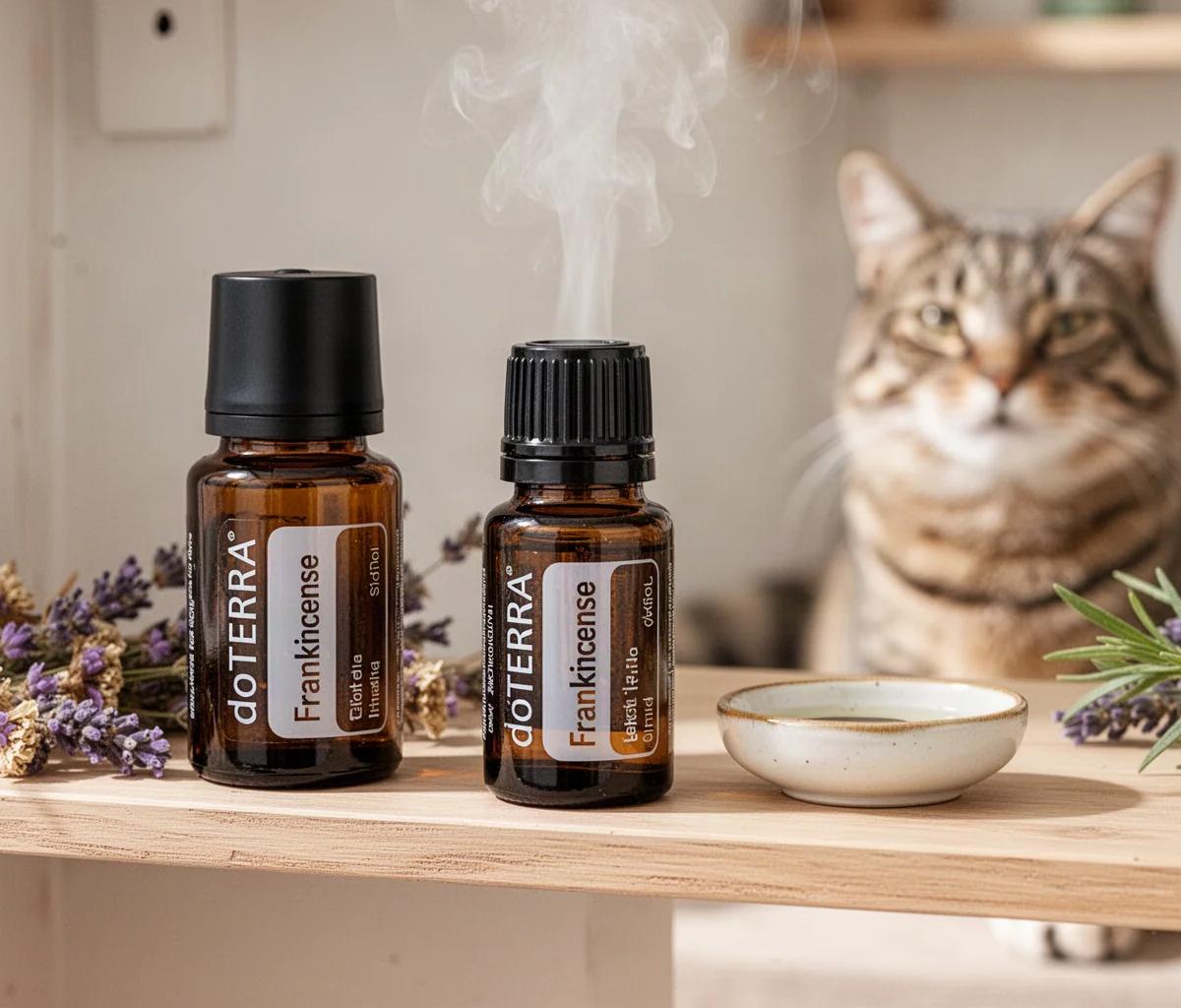
By the EssentialTail Team — pet owners, Wellness Advocates & doTERRA enthusiasts
You come home to a fresh, clean smell in the living room, and your cat is curled up on the couch right under the diffuser. It looks peaceful, but if that diffuser held tea tree oil, that peaceful scene could hide a real emergency.
The direct answer is this: Tea Tree is one of the most dangerous essential oils for cats, and it should never be applied to them, added to their water or food, or diffused in a room they cannot leave. Cats lack the liver enzymes needed to process many of the compounds in tea tree oil, so what smells harmless to us can build up in their bodies. The ASPCA Animal Poison Control Center and the Pet Poison Helpline both list tea tree oil as toxic to cats, and accidental exposure is a reason to call a veterinarian or poison control right away. This is not a question of brand quality or dilution, it is simply the wrong oil for a feline body.
Why Tea Tree Oil Is So Risky for Cats
Most of us know Tea Tree for its sharp, clean, medicinal aroma. It is a staple in many human first-aid kits and cleaning blends. But a cat's system works differently from ours.
Cats are missing a key liver enzyme, glucuronyl transferase, that helps other species break down certain plant compounds, including the terpenes and phenols found in tea tree oil. Without that enzyme, those compounds linger in the body. Because cats also groom themselves by licking their fur, a tiny amount that lands on the coat often ends up in the mouth, which makes exposure worse.
What makes this even harder is that trouble can come from places you would not expect:
| Exposure route | Why it matters to a cat |
|---|---|
| Diffused in a closed room | Cats breathe far more air per body weight than people, and droplets can settle on fur, then get licked off |
| A small spill or splash | Even a dab on a paw becomes an ingestion problem during grooming |
| Human skincare or shampoo | A cat that rubs against your hands or hair can pick up residue that was never meant for them |
| "Natural" flea or cleaning recipes | Many online blends pair tea tree with other risky oils, which makes the exposure worse |
None of this depends on the brand. Even a pure, expertly distilled oil is still tea tree oil, and tea tree oil is the problem for cats.
What to Do If You Suspect Exposure
The symptoms can look vague at first: drooling, wobbliness, low energy, trembling, or sudden aversion to food. Because things can move quickly, the response should too.
- Move the cat to fresh, naturally ventilated air right away.
- Do not wait to see if symptoms pass, and do not try any home remedy.
- Call your veterinarian or an animal poison control centre immediately.
- Tell them exactly what the cat may have touched, inhaled, or licked, including the product name if you have it.
- Keep the bottle or diffuser contents handy so you can describe the concentration.
This is exactly why we keep a careful eye on the diffuser. When our cats are home, the door stays open, the room stays airy, and tea tree oil simply does not come out. For shared spaces, the doTERRA animal line and gentler options exist, but even those deserve a vet conversation before first use.
For more on which oils are concerning for cats, start with our guide on which essential oils are dangerous for cats, and if this specific oil worries you, read the full breakdown on tea tree oil and cats danger.
What Many Cat Owners Choose Instead
If you love a pure, tested oil for your own routines, doTERRA's focus on CPTG purity and third-party testing is part of what draws people in. That testing standard is the main reason we trust what is in the bottle, it is not, however, a reason to assume every bottle suits every species.
For households with cats, we lean toward the gentlest possible approach. Some owners we know prefer to keep oils like frankincense or Roman chamomile for their own quiet moments in a separate room, with the door closed and the cat free to roam elsewhere. Others reach for vetiver or cedarwood as part of a calm environment for humans, used sparingly and never on the animal.
Copaiba oil often comes up in conversations about applying anything on or around a cat, thanks to its mild, soft aroma. Lavender oil is the one most people think of first for a relaxed home. Even so, no oil touches our cats' skin or food, ever. And every new aroma starts with one simple rule: ask the vet before the diffuser turns on.
Frequently Asked Questions
Can tea tree oil kill a cat?
Yes. In severe cases, especially when a concentrated amount is applied to the skin or ingested, tea tree oil poisoning can be fatal. That is why any suspected exposure is an urgent reason to contact a veterinarian or animal poison control centre.
Is diffusing tea tree oil around cats safe if the room is large?
No. Diffusing does not make the oil safe for cats, because droplets can still land on their fur and be licked off, and cats have very sensitive respiratory systems. The safest approach is to avoid diffusing tea tree oil in any space a cat shares or can enter.
What should I do if my cat licked tea tree oil?
Do not wait for symptoms and do not attempt any home remedy. Remove the cat from the area and call your veterinarian or an animal poison control centre immediately, with the product name and approximate amount handy.
Conclusion
Tea tree oil and cats do not mix, and no amount of careful dilution changes that basic fact. When we want a fresh, calm home, the best decision is the simplest one: keep risky oils out of reach, out of the diffuser, and out of any room our cats call their own.
This content is for general information only and is not veterinary advice. Always consult a qualified veterinarian before using essential oils in a home with animals.