Diffusing Essential Oils Safely Around Pets
A pet owner's honest guide to diffusing essential oils at home, which aromas need extra caution around cats and dogs, and when to ask your vet first.
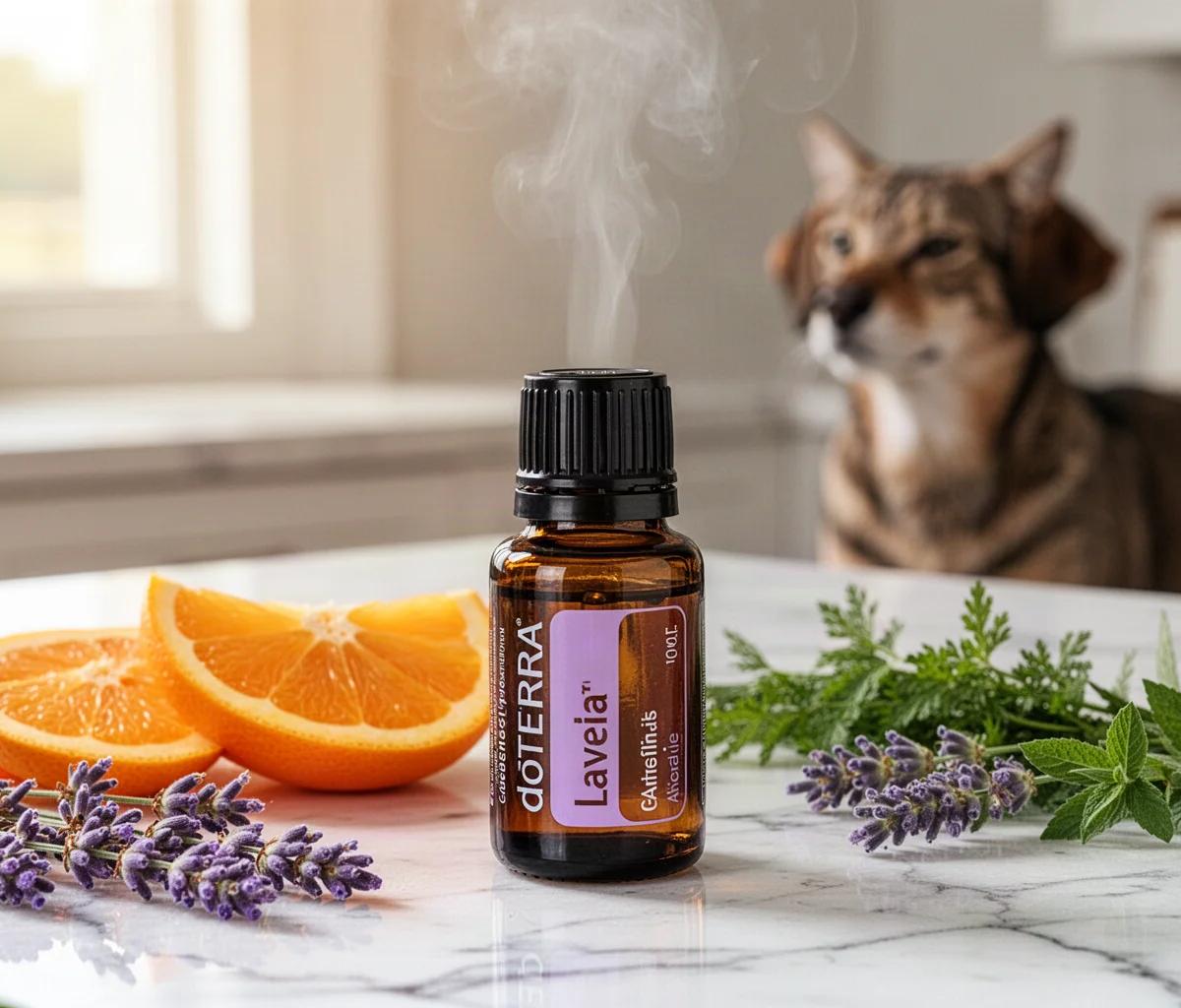
By the EssentialTail Team — pet owners, Wellness Advocates & doTERRA enthusiasts
You come home after a long day, fill the diffuser with something calming, and ten minutes later your cat is staring at it from the doorway like it owes her money. I have been there. The direct answer is this: diffusing essential oils around pets is never automatically safe, and it always starts with a conversation with your veterinarian. Cats are the highest-risk animals in the home because their livers process many aromatic compounds differently, and several oils that are lovely for humans are genuinely dangerous for them. Dogs are more tolerant but still sensitive. The responsible approach is short diffusion periods, a well-ventilated room the animal can always leave, and oils chosen for their gentle aromatic profile rather than their strength.
Which Oils Need the Most Caution
Your pet's nose is not your nose. A dog can have hundreds of millions more scent receptors than a human, and a cat's sense of smell is extraordinary. What smells pleasantly light to you can be overwhelming to them. That is the first thing to understand.
Oils that I would never diffuse in a home with pets, especially cats, include Tea Tree, Oregano, Thyme, Cinnamon, Clove, Peppermint, Eucalyptus, Wintergreen, and most citrus oils like Lemon, Wild Orange, Bergamot, and Grapefruit. These are named in plain text here because linking to an oil while warning you away from it would be irresponsible. Cats are particularly vulnerable to these, and the ASPCA Animal Poison Control Center consistently advises owners to treat any accidental exposure or reaction as an emergency requiring immediate veterinary contact.
Here is a simple comparison of how I think about aromatic choices in a pet household:
| Aromatic Character | Gentler Starting Points | Use Extra Caution |
|---|---|---|
| Soft, floral, or resinous | Lavender, Frankincense, Roman Chamomile | Strong spice or camphor notes |
| Woody and grounding | Cedarwood, Vetiver, Copaiba | Menthol or "hot" oils |
| Fresh but soft | Balance, Serenity | Any oil your cat cannot walk away from |
Even the gentler column is not a safety guarantee. It is a starting point for a conversation with your vet, never a green light.
A Step-by-Step Approach to Responsible Diffusion
In our experience, the owners who diffuse most peacefully around pets follow a clear routine. Here is the one I recommend most often:
- Ask your veterinarian first. Describe your animal, your home, and the oil you are considering. This is not a formality. It is the foundation.
- Choose one gentle, high-purity oil. doTERRA's CPTG testing standard is the reason I trust what is in the bottle. A pure, well-sourced Lavender or Frankincense gives you clarity about the aromatic profile, which is what matters when an animal shares the air.
- Diffuse for a short period in a ventilated space. Keep it light and brief. Never fill an enclosed room an animal cannot leave.
- Watch your pet's behaviour every time. Ears back, leaving the room, squinting, drooling, or any change in breathing means the session ends immediately. The animal always gets the final vote.
- Store everything out of reach. A closed cabinet, away from curious paws and noses, every single time.
If you are looking for more detail on this routine, our full guide on diffusing oils around pets the safe way walks through each of these steps. And if you are new to doTERRA's animal-conscious offerings, the guide on Diffusing doTERRA Oils Around Pets Safely covers what we actually keep on our own shelves.
Birds, rabbits, and rodents deserve a special mention. Their respiratory systems are extremely delicate, and in my home, diffusing simply does not happen around them without an exotic veterinarian's explicit approval. The default with small pets is no diffusion at all.
If a pet ever licks a spill, knocks over a bottle, or has any concerning reaction, there is no home remedy and no waiting period. Contact your veterinarian or an animal poison control centre immediately. The Pet Poison Helpline and the ASPCA Animal Poison Control Center both exist for exactly this moment.
Related reading
- Choosing doTERRA Oils for a Home with Pets
- Diffusing doTERRA Oils Around Pets Safely
- Diffusing Oils Around Pets the Safe Way
Frequently Asked Questions
Which essential oils are most dangerous for cats? Tea Tree, Oregano, Thyme, Cinnamon, Clove, Peppermint, Eucalyptus, Wintergreen, and most citrus oils carry the highest risk for cats. Their livers process many aromatic compounds poorly, so the safest default is no diffusion around a cat without veterinary approval.
Can I diffuse oils in a different room from my pet? A separate, well-ventilated room with a closed door is a more cautious option, but it is not automatically safe for every animal. Ask your vet whether this arrangement is appropriate for your specific pet before trying it.
What should I do if my dog or cat ingests diffuser water or oil? Contact a veterinarian or an animal poison control centre immediately. Never wait to see if symptoms appear, and never attempt a home remedy. Professional care is the only correct first step.
How does doTERRA's CPTG testing matter for pet households? CPTG is doTERRA's purity and testing standard, and it matters because you want to know the aromatic profile of what you are diffusing in an animal's space. Purity does not make an oil safe for pets, but it removes one layer of uncertainty.
The Honest Bottom Line
The most loving thing you can do for your pet is treat every oil as a question for your veterinarian, keep sessions short and optional, and never confuse a pleasant smell with a safe one. A calm, softly scented home is possible, but only when your animal's comfort leads the decision.
This content is for general information only and is not veterinary advice. Always consult a qualified veterinarian before using essential oils in a home with animals.