Essential Oils Toxic to Dogs and Cats
Some essential oils can harm or even be fatal to pets. Learn which oils are toxic to dogs and cats, how to diffuse responsibly, and why your veterinarian must be your first call.
By the EssentialTail Team — pet owners, Wellness Advocates & doTERRA enthusiasts
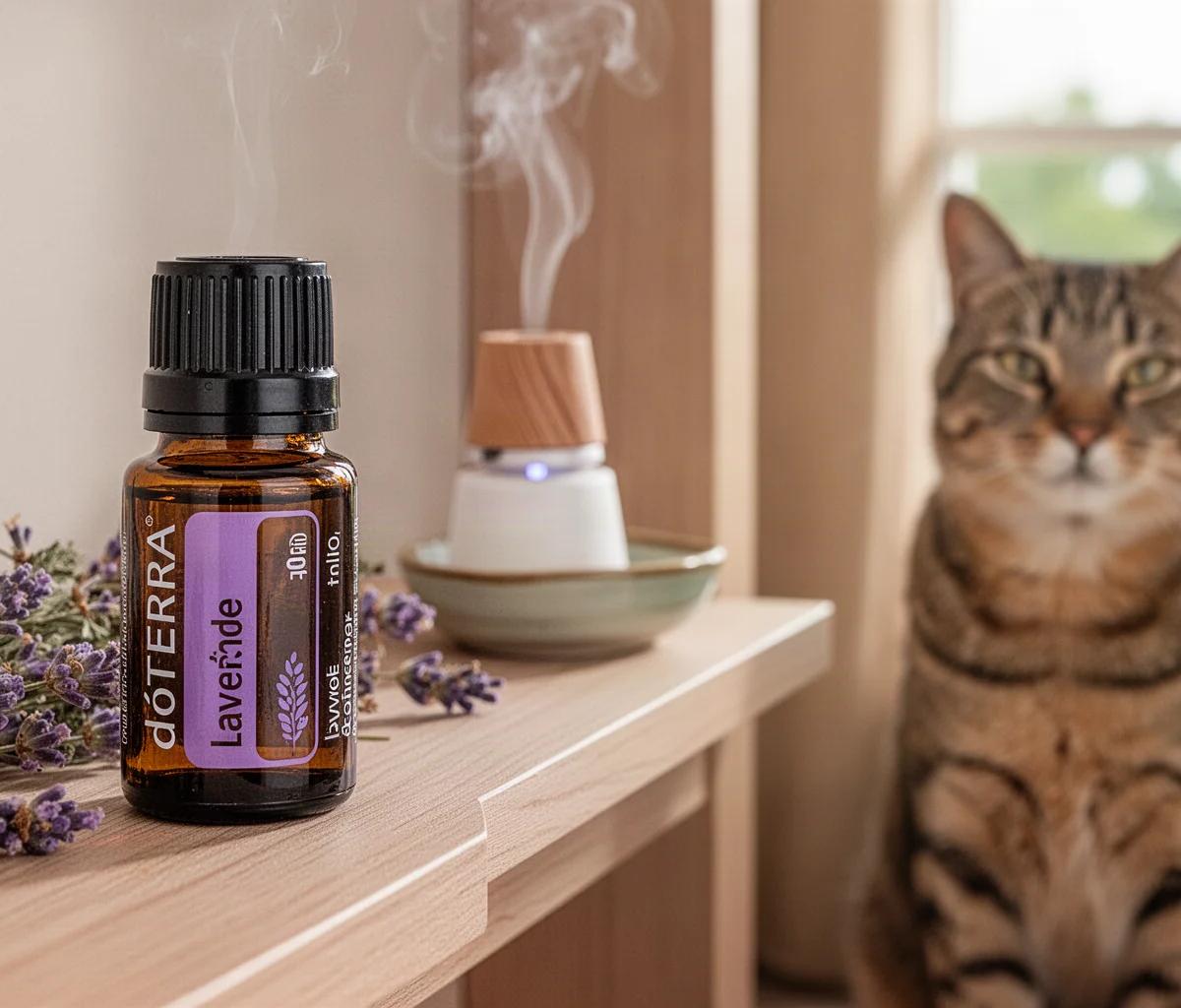
The first time I brought a diffuser home, my cat sat on the armchair staring at the little mist with an expression that clearly said "what have you done to my air?" I froze, wondering if I had just made a terrible mistake. If you are reading this, you are probably wondering the same thing. So let me say it plainly: yes, some essential oils are toxic to dogs and cats, and cats are especially vulnerable. The risk depends on the oil, the animal, the concentration, and whether they can leave the room. No essential oil should ever be applied to a pet or ingested by one, and any diffusing around animals needs to be light, in a well-ventilated space, with the door open so the animal can walk away. Most importantly, your veterinarian must always be your first call before you bring any new aroma into a pet household. This article walks you through which oils are the most dangerous, what to watch for, and how to build a pet-aware home that still smells wonderful, without a single drop of veterinary advice, because that is your vet's job, not mine.
The Oils Most Dangerous to Dogs and Cats
When pet owners ask me what the main offenders are, I always point them first to the list of oils that cats simply cannot process. Cats lack a specific liver enzyme (glucuronyl transferase), which means many compounds that are harmless to humans can build up to toxic levels in a feline body. Tea Tree (Melaleuca) is one of the worst, it should never be diffused near cats or applied to them. The phenolic oils, Oregano, Thyme, Cinnamon, and Clove, are also high-risk, along with most citrus oils (Lemon, Wild Orange, Bergamot, Grapefruit, Lime), Peppermint and other mints, Eucalyptus, Wintergreen, and Pine.
Dogs tolerate a broader range of aromas, but that does not mean they are immune. Tea Tree is still problematic for dogs, especially at high concentrations, and the same phenolic oils can irritate their respiratory tract or cause drooling, lethargy, and worse if they get too close. For a deeper dive into which oils to never use around felines, our guide on essential oils toxic to cats and what to avoid goes into more detail.
The table below gives a quick-reference overview, but remember, this is a starting point, not a veterinary clearance.
| Oil Group | Examples | Cats | Dogs |
|---|---|---|---|
| Tea Tree (Melaleuca) | Tea Tree | Extremely dangerous | High risk |
| Phenolic / "hot" oils | Oregano, Thyme, Cinnamon, Clove | Extremely dangerous | High risk |
| Citrus oils | Lemon, Wild Orange, Bergamot, Grapefruit, Lime | Very high risk | Moderate risk |
| Mint oils | Peppermint, Spearmint | Very high risk | Moderate risk |
| Camphoraceous oils | Eucalyptus, Wintergreen, Pine | Very high risk | Moderate risk |
What to Do If Your Pet Is Exposed
Accidents happen. A bottle tips over, a curious dog licks a drop, or a cat walks through a freshly-cleaned surface. The worst thing you can do is guess. Here is the only sequence that counts:
- Move the animal away, get them into fresh, clean air immediately.
- Do not induce vomiting, unless a veterinarian explicitly tells you to.
- Call your veterinarian or an animal poison control centre, right now, not after a web search.
- Bring the oil bottle with you, the label and ingredients help the vet act faster.
Never reach for a DIY antidote, milk, water, or activated charcoal. Dosing for pets is not the same as for humans, and you can make things worse before help arrives. If you want to understand more about how cats in particular react, our article on essential oils toxic to cats from a doTERRA perspective explores the topic further.
Building a Pet-Aware Home That Still Smells Beautiful
Knowing the risks does not mean you have to give up your diffuser. It means you become intentional. I keep a small collection of oils that I use lightly, and I stay miles away from anything on the danger list when my pets are around. Lavender and Frankincense tend to be the ones many pet owners recognise for their gentle aroma, and I diffuse them sparingly in a room the animals can leave. Cedarwood has a warm, grounding scent that I reach for in the evenings, again with the door open and the diffuser on the opposite side of the room. Roman Chamomile is another oil I keep in my cupboard, its soft, apple-like note is one I really enjoy on quiet winter afternoons, always with plenty of ventilation.
What I appreciate most about doTERRA is the transparency. Every bottle carries the CPTG quality standard, which is doTERRA's own purity and testing protocol, a genuine reason to trust what is inside the glass. I also find that starting with the company's dedicated animal-adjacent products, like TerraShield when used strictly per label and after a vet conversation, feels like a smarter path than experimenting with strong single oils. Another oil I own and love, again, for my own use, never on my pets, is Copaiba. It has a light, almost sweet-woody scent that plays well under lavender or cedarwood, and I diffuse it very occasionally in a largish, open space where my dog can wander off to the next room. For anyone building their first pet-aware collection from scratch, the Aroma Essentials Collection is a practical starting point, it includes lavender and frankincense alongside a few other staples, so you are not buying everything piece by piece.
Related reading
- Essential Oils Toxic to Dogs, The Complete List
- Essential Oils Toxic to Dogs List
- Essential Oils and Pets: The Complete Safety Guide
Frequently Asked Questions
What essential oils are toxic to dogs and cats? Tea Tree (Melaleuca), Oregano, Thyme, Cinnamon, Clove, most citrus oils, Peppermint, Eucalyptus, Wintergreen, and Pine are among the most dangerous. Cats are especially sensitive, and no oil should ever be applied to a pet or diffused in an enclosed space without a veterinarian's approval.
Is it safe to diffuse essential oils around my dog? Diffusing can be done, but only with great care. The room must be well-ventilated, the dog must be free to leave, and the oil you choose matters enormously. Start with your veterinarian's guidance, never assume an oil is safe just because it is natural.
What should I do if my cat licks essential oils? Contact your veterinarian or an animal poison control centre immediately. Do not induce vomiting, do not give food or water, and bring the oil bottle with you so the vet knows exactly what the cat was exposed to.
Are any essential oils safe for cats? I never label any oil as safe for cats in this blog because cats lack the liver enzyme needed to process many essential-oil compounds, and the consequences can be severe. The only safe advice is to consult a veterinarian who knows your cat's health history.
Can I use essential oils on my dog's skin? Never apply an undiluted essential oil to a dog, and never apply any oil without your veterinarian's explicit direction. Essential oils are concentrated plant compounds, and a dog's skin can react, absorb them systemically, or be irritated by something that seems mild to us.
The more time I spend with my animals, the more I realise that caution is the most loving thing I can offer them. Essential oils have a real place in a pet-friendly home, they just cannot be treated like air fresheners. When I switched to lighter, fewer oils and kept the door open, I noticed my pets were calmer and so was I. Your veterinarian is your best partner in that journey, and a little bit of careful knowledge goes a long way toward a home that feels good for every creature in it.
This content is for general information only and is not veterinary advice. Always consult a qualified veterinarian before using essential oils in a home with animals.